Historic depiction of native nations’ emotional dispossession and enduring resilience
Story by Tawheed Yakub
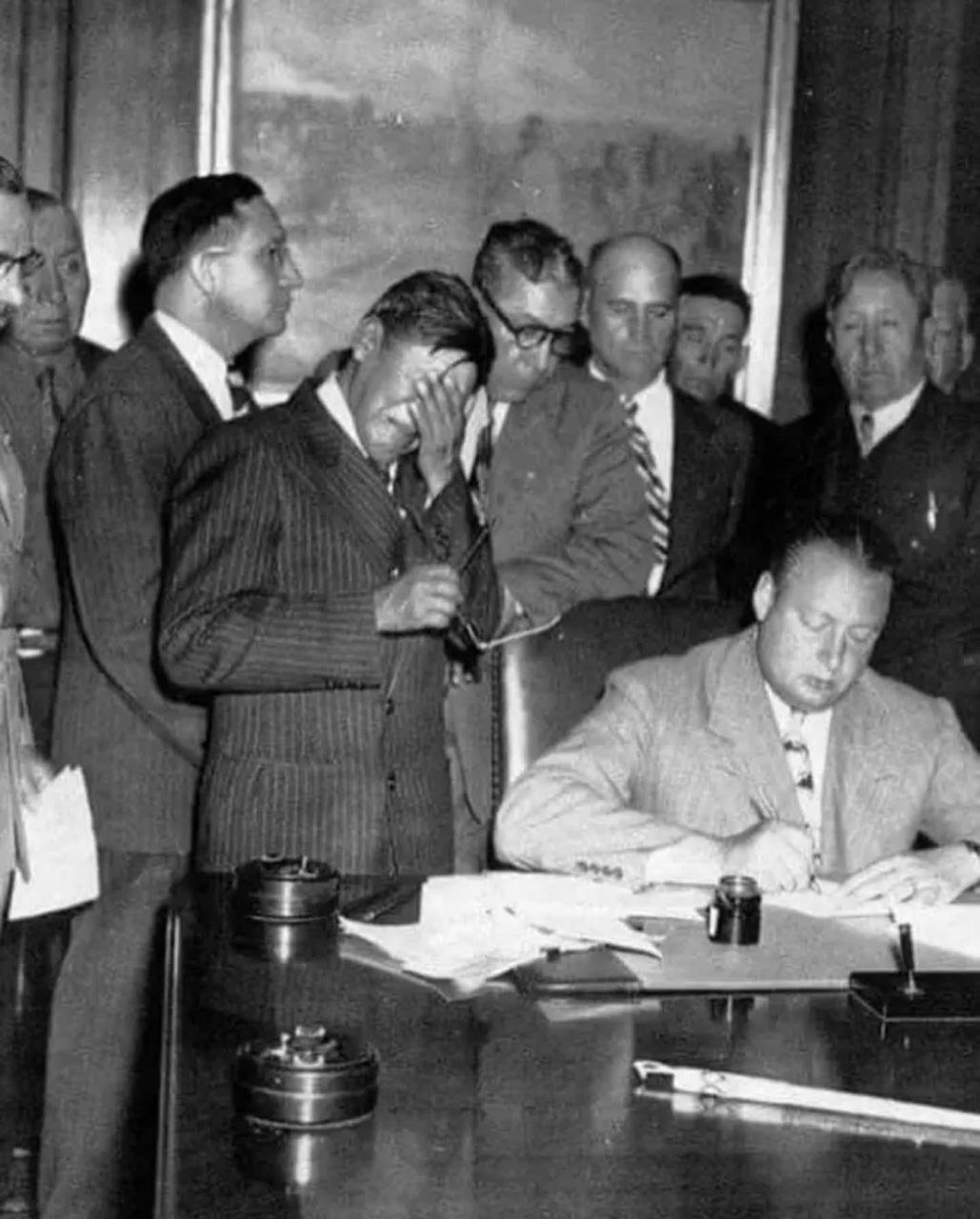
This powerful and emotional photograph, taken in 1948, captures a deeply painful moment in Native American history.
The man seen wiping away tears is George Gillette, chairman of the Fort Berthold Indian Tribal Business Council.
Read also: African Literature and the passage of the Aku Uka, by Andrew Agbese
Sitting beside him is U.S. Secretary of the Interior Julius Krug, signing a contract that would force the sale of 155,000 acres of tribal land in North Dakota to the federal government.
The land was needed for the construction of the Garrison Dam—a project that would displace hundreds of Native families and submerge ancestral territory beneath a man-made reservoir.
Gillette’s visible anguish reflects not just the personal heartbreak of that day, but the broader tragedy of broken promises and lost homelands endured by Indigenous peoples across the United States.
The Fort Berthold Reservation, home to the Mandan, Hidatsa, and Arikara Nation, had already suffered decades of displacement and cultural erosion. This forced land cession was yet another blow, made under pressure and with limited options.
Read also: Crawford shocks Alvarez for historic undisputed super middleweight world title
Though the government framed the deal as progress, for the tribal communities involved, it was a moment of profound loss.
The image has since become a symbol of the emotional toll of dispossession and the resilience of Native nations. Gillette’s tears speak volumes about the cost of “development” when it comes at the expense of heritage and identity.
It’s a moment that still resonates today, a stark reminder of the ongoing need for justice, respect, and acknowledgment of the deep scars left by these historic decisions.
Follow the Neptune Prime channel on WhatsApp:
Do you have breaking news, interview request, opinion, suggestion, or want your event covered? Email us at neptuneprime2233@gmail.com