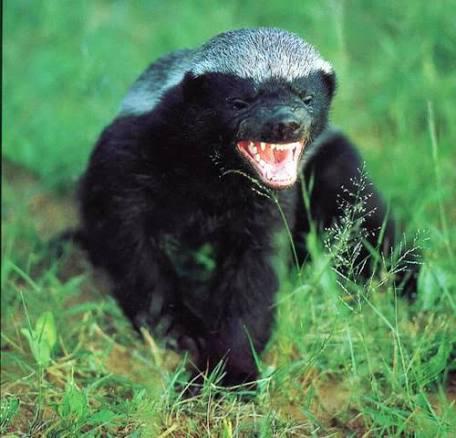
Honey Badgers: Fearless survivors and formidable predators, by Gift Luckson
The honey badger (Mellivora capensis) is one of the most captivating creatures in the animal kingdom. Small in size yet legendary for its fearlessness, intelligence, and remarkable adaptability.
Found across Africa, the Middle East, and parts of Asia, this tough little carnivore has earned a reputation that far exceeds its modest appearance.
Honey badgers have a stocky, low-slung body covered in coarse fur, with a distinctive grey or white “cape” running from head to tail. Although they typically weigh between 7–14 kilograms, they possess powerful forelimbs, sharp claws, and strong jaws that allow them to tackle prey larger than themselves.
Their tough, loose skin acts as natural armour. Even when grabbed by a predator, the honey badger can twist within its own skin to bite back, one of the many reasons even lions approach them cautiously.
Despite their name, honey badgers are not obsessed with honey alone. They are opportunistic feeders with one of the most varied diets among carnivores. Their meals include:
• Rodents, birds, reptiles, and amphibians
• Scorpions and venomous snakes
• Roots, berries, and insects
• Honey and bee larvae, often raided from wild hives
Their resistance to certain venoms, including cobra neurotoxins, allows them to take on dangerous prey. Even when stung by bees or bitten by snakes, honey badgers often recover quickly and resume feeding.
Honey badgers are widely regarded as one of the world’s most fearless animals. Their courage stems from:
• Remarkable tenacity: They rarely back down from a fight, even against larger predators.
• High pain tolerance: They can withstand bee stings, porcupine quills, and snake bites.
• Boundless determination: Once they focus on a target—food, escape, or defence—they persist with surprising strength.
This fearlessness has been documented in countless wildlife encounters, cementing the honey badger’s almost mythical reputation.
Beyond physical toughness, honey badgers are exceptionally intelligent. Their cleverness, paired with their physical prowess, makes them formidable survivors in the wild.
Honey badgers are mostly solitary animals, travelling long distances each night in search of food. They occupy diverse habitats—savannas, grasslands, forests, and even semi-deserts. Their adaptability allows them to thrive across a wide geographical range, though habitat loss and human conflict pose growing threats.
Currently listed as Least Concern by conservation authorities, honey badgers remain relatively widespread. However, they face rising challenges, including: Habitat fragmentation, persecution by farmers and declining prey in some regions.
Conservation efforts often focus on reducing human-wildlife conflict and protecting their natural habitats.
More than just a tough carnivore, the honey badger symbolises fearlessness, intelligence, and survival against the odds.
READ ALSO: Samuel Green: The escaped slave who waged justice from the shadows, by Gift Luckson
Whether raiding a beehive, battling a venomous snake, or outsmarting much larger predators, this remarkable creature continues to fascinate scientists and wildlife lovers alike.
In the vast and competitive world of the wild, few animals match the honey badger’s combination of courage, adaptability, and sheer determination, qualities that have earned it a place among the most respected species on Earth.
Follow the Neptune Prime channel on WhatsApp:
Do you have breaking news, interview request, opinion, suggestion, or want your event covered? Email us at neptuneprime2233@gmail.com