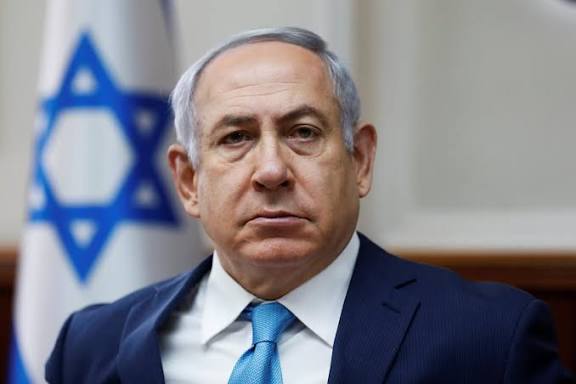
Israeli PM Netanyahu says Saudi-Qatar-Turkey alliance is undermining ‘Abraham Accords’
Israeli Prime Minister Benjamin Netanyahu has said that Saudi Arabia’s pivot toward Turkey and Qatar is being viewed as a threat to the expansion of the so-called Abraham Accords, indicating growing unease in Tel Aviv about the emerging regional alliance.
Netanyahu told The Times of Israel in a press conference that he is closely following Saudi Arabia’s pivot towards Turkey and Qatar and views the move as a major obstacle to any future normalisation agreement with Riyadh, given both countries’ strong criticisms of Israel.
Saudi Arabia appeared to be heading towards joining the Abraham Accords, particularly when relations between Abu Dhabi and Riyadh were strong, but the war in Gaza has frozen any movement on this issue.
Saudi Arabia’s unofficial alliance with Qatar and Turkey is viewed by many as a way of countering the spread of UAE and Israeli influence in the region.
READ ALSO: Iran calls for Muslim unity after Israeli airstrike on Qatar, urges strong regional response
“We expect from anybody who wants normalisation or peace with us that they not participate in efforts steered by forces or ideologies that want the opposite of peace,” Netanyahu told the press conference.
The emerging Riyadh-brokered regional alliance rejects “the legitimacy of the State of Israel, and nurture all kinds of forces that attack the State of Israel”, Netanyahu said.
“[Israeli is] happy to have a normalisation agreement with Saudi Arabia… [provided] they want normalisation and peace with a secure and strong Israel”, he added.
The Saudi-Qatar-Turkey formation comes after a very public spat between Riyadh and Abu Dhabi after years of close relations.
The UAE has spearheaded the Abraham Accords, which Bahrain, Morocco, and Sudan have signed, and massively expanded political, security, and economic cooperation with Israel, something viewed with scepticism in many regional capitals.
Tensions between Saudi Arabia and the UAE came to a head in Yemen in December, where Abu Dhabi-sponsored southern separatist forces advanced into government areas and toward the Saudi and Omani borders.
This was viewed as a red line by Riyadh, with Saudi coalition airstrikes on an alleged UAE arms shipment at a Yemeni port heading for the Southern Transitional Council (STC) forces, leading Abu Dhabi to announce it was pulling its troops from the country.
Since then, Saudi social media profiles and media have criticised the UAE over its regional expansionism and said Abu Dhabi is working with Israel to undermine Riyadh, a traditional powerbroker in the region.
Talks are also underway to bring Turkey into a long-standing Saudi-Pakistan alliance, something recently formalised under a Riyadh-Islamabad mutual assistance agreement dubbed as an “Islamic NATO”, which would bring the powerful military coalition close to Israel’s borders.
READ ALSO: Netanyahu orders closure of Al Jazeera in Israel
The UAE appears to have responded in kind, with outreach to Islamabad’s long-time adversary, India.
Israel has greatly expanded its regional reach in the region since the war on Gaza began with strikes on Lebanon, Syria, Iraq, Iran, and Yemen, viewed as contributing toward destabilisation in the region.
Follow the Neptune Prime channel on WhatsApp:
Do you have breaking news, interview request, opinion, suggestion, or want your event covered? Email us at neptuneprime2233@gmail.com