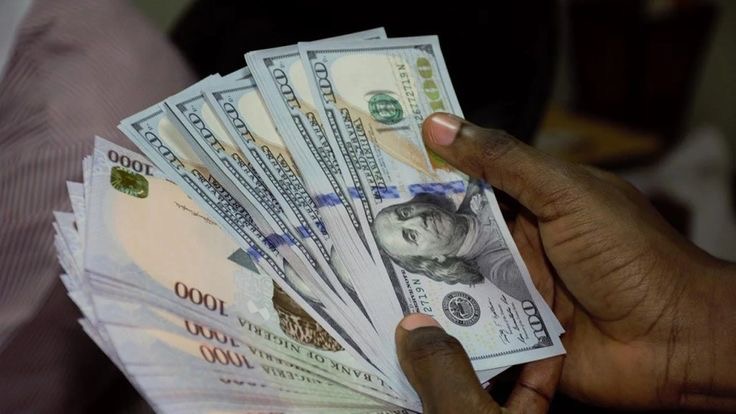
Naira trades steady amid tight FX liquidity and persistent market divergence
Story by Martha Gwary
The Nigerian naira maintained a relatively stable trajectory across key market segments on Tuesday, 21 October 2025, as foreign exchange (FX) conditions remained tight despite sustained Central Bank of Nigeria (CBN) interventions. At the official Nigerian Foreign Exchange Market (NFEM), the local currency traded within a narrow band of ₦1,468 to ₦1,470 per US dollar, according to CBN data and market dealers’ reports.
In contrast, activity in the parallel market continued to reflect underlying FX demand pressures, with the greenback exchanged at approximately ₦1,480 on the buy side and ₦1,495 on the sell side in major Lagos trading hubs. This represents a marginal depreciation from the preceding week’s levels, reinforcing the persistent spread between the official and informal market rates — a gap analysts say highlights the structural inefficiencies within Nigeria’s dual FX framework.
Market participants attribute the continued premium in the informal market to limited dollar supply across authorised dealer banks, coupled with elevated retail demand from importers, manufacturers, and business travellers. Data from commercial bank sources suggest that dollar allocations remain constrained due to subdued foreign portfolio inflows, delayed oil receipts, and seasonal import demand pressures.
READ ALSO: Nigeria’s current account surplus rises sharply to $5.28 billion in Q2 2025 — CBN
The mid-market rate, which had strengthened briefly to around ₦1,460–₦1,465 per US dollar in mid-October, has since stabilised, although analysts warn that near-term volatility remains likely as market participants price in policy expectations and external factors such as global oil prices and US interest rate movements.
The CBN has in recent months intensified efforts to restore confidence in the FX market through a series of policy measures, including enhanced transparency in rate determination, closer supervision of Bureau De Change (BDC) operators, and the adoption of market-driven pricing mechanisms at the NFEM window. Additionally, reforms targeting the repatriation of diaspora remittances through formal channels are expected to improve liquidity over time.
Despite these initiatives, dollar scarcity persists. Data from the Nigerian Upstream Petroleum Regulatory Commission (NUPRC) indicate that crude oil output remains below pre-pandemic levels, limiting export proceeds and reducing the CBN’s capacity to supply the official market adequately. Meanwhile, demand-side pressures remain elevated, with Nigeria’s import bill exceeding $6 billion in Q2 2025, according to National Bureau of Statistics (NBS) data.
The widening spread — currently estimated at 1.5% between the official and parallel markets — continues to influence inflation expectations, import costs, and private sector pricing decisions. Economists caution that sustained arbitrage opportunities could undermine ongoing monetary policy tightening and delay the full convergence of FX windows envisaged under the government’s economic reform agenda.
READ ALSO: Nigerian crude climbs to $70 per barrel as global tensions intensify
For corporates, particularly in manufacturing, aviation, and fast-moving consumer goods sectors, the current FX environment poses cost management challenges. Many firms continue to rely on the parallel market to meet operational FX needs, increasing exposure to exchange rate volatility and profit margin compression.
Foreign exchange analysts maintain that the outlook for the naira in the near term will depend on three critical factors: the pace of oil output recovery, the success of ongoing fiscal consolidation efforts, and renewed confidence from foreign portfolio investors. Improved external reserves — which stood at $42.2 billion as of early October — could offer limited support, though consistent inflows are required to sustain market stability.
In the medium term, the CBN’s policy stance will likely remain focused on balancing market flexibility with macroeconomic stability. Market observers expect continued interventions to smooth volatility while authorities pursue broader structural reforms aimed at achieving a unified and transparent FX regime.
Follow the Neptune Prime channel on WhatsApp:
Do you have breaking news, interview request, opinion, suggestion, or want your event covered? Email us at neptuneprime2233@gmail.com