William Godang Walbe: A soldier’s defining role in Nigeria’s military and political landscape
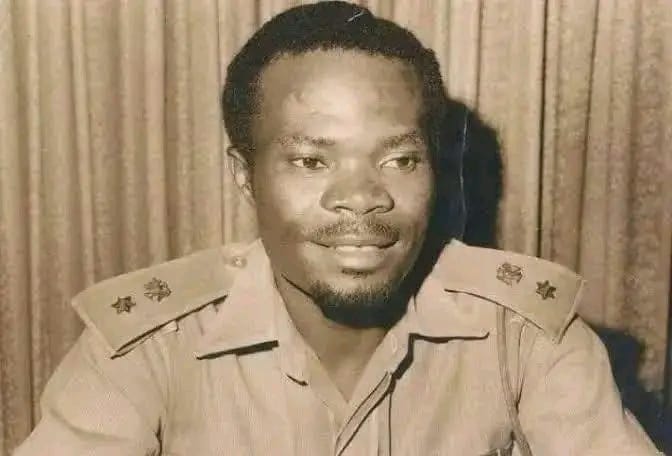
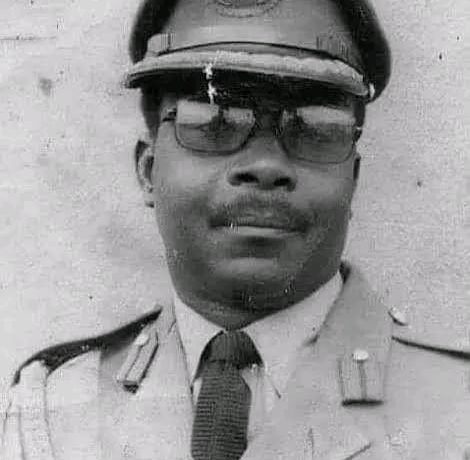
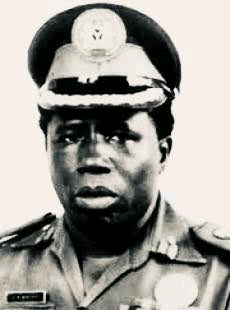
William Godang Walbe was a Nigerian Army colonel who became widely known for serving as the military aide de camp to General Yakubu Gowon, Nigeria’s third Head of State.
He was born on 13 July 1943 in Kabwir District, Kanke, in present-day Plateau State, Nigeria. He was the son of Tokmuwa and Ngot.
Walbe received his secondary education at the Nigerian Military School in Zaria, one of the country’s foremost institutions for military training at the secondary level. After completing his studies, he joined the Nigerian Army and in 1962 he was commissioned as a second lieutenant.
In the early years of his career, he served in several operational and administrative roles, including Anti-Tank Platoon Commander in the 2nd Battalion and General Staff Officer Grade III in the 2nd Brigade. These assignments formed the foundation of his military experience during a period when Nigeria’s armed forces were expanding rapidly.
Walbe gained historical prominence through his involvement in the events surrounding the 1966 Nigerian coup d’état. At the time he held the rank of lieutenant and was part of the security detail of General Johnson Aguiyi-Ironsi, who had assumed power earlier in the year following the 1966 Nigerian coup d’état.
Walbe served alongside Major Theophilus Danjuma within Ironsi’s protective unit. Despite their official duties, both officers became associated with a group of northern military personnel who opposed Ironsi’s government.
The grievances that fuelled the July uprising were largely linked to the aftermath of the January coup, which had resulted in the deaths of several prominent political and military leaders. Among those killed were Prime Minister Abubakar Tafawa Balewa and the Premier of Northern Nigeria, Ahmadu Bello.
Many officers in the northern ranks of the army believed the handling of the crisis had deepened political tensions and undermined trust within the military.
The counter coup of July 1966 ultimately led to the deaths of General Aguiyi Ironsi and Lieutenant Colonel Adekunle Fajuyi, who was then serving as the Military Governor of the Western Region. The uprising involved a number of officers who would later play important roles in Nigeria’s political and military history.
Among them were Lieutenant Colonel Murtala Muhammed, Major Martin Adamu, Lieutenant Muhammadu Buhari, and Captain Joseph Garba.
After the upheavals of 1966, Walbe continued his service in the Nigerian Army and later became the aide de camp to General Yakubu Gowon during Gowon’s tenure as Head of State.
His career reflected the experience of many officers of his generation whose professional lives were shaped by the turbulent political developments of post-independence Nigeria.
Colonel William Godang Walbe died on 27 June 2011. His life remains closely connected with the defining military and political events that transformed Nigeria in the 1960s.