Beyond the Strait of Hormuz: Trump’s Mission to Dismantle Global Energy Independence & The New Era of American Energy Hegemony, by Abubakar M. Kareto
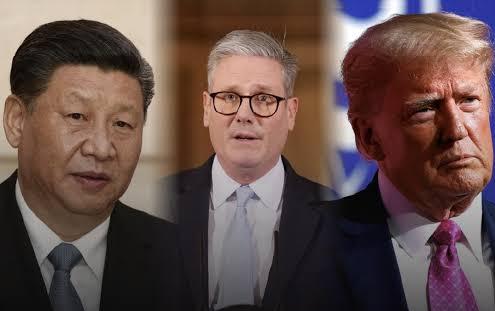
Beyond the Strait of Hormuz: Trump’s Mission to Dismantle Global Energy Independence & The New Era of American Energy Hegemony, by Abubakar M. Kareto
The global energy landscape is currently undergoing its most seismic shift since the 1973 oil embargo. At the heart of this transformation is an aggressive strategy by the Donald Trump administration to leverage a historic crisis in the Middle East to cement United States energy dominance, bypass traditional Gulf partners, and isolate geopolitical rivals most notably China.
- The Chokepoint: The 2026 Strait of Hormuz Crisis
The “game plan” described by observers began to materialize following joint U.S.-Israeli military strikes on February 28, 2026, which targeted Iranian leadership. In retaliation, Iran effectively closed the Strait of Hormuz, a maritime artery that typically carries 20% of the world’s daily oil supply (roughly 16–21 million barrels per day).
The Impact: As of late March 2026, tanker traffic through the Strait has dropped to near zero.
The “Choice” for Allies: President Trump has explicitly told allies, including the UK and EU, that if they are upset by record-high fuel prices, they should “go get their own oil” by force or pivot their entire demand to American sellers.
Escalation: Trump has threatened to “completely obliterate” Iran’s critical infrastructure, including the Kharg Island export terminal, unless a deal is reached on U.S. terms.
- The Trade Ultimatum: “Buy American or Face Tariffs”
For Europe, the strategy is not just about security but economic survival. Under a framework trade deal reached in 2025 and reinforced in early 2026, the Trump administration has linked energy purchases directly to trade standing.
The Demand: The EU has been pressured to procure up to $750 billion in U.S. energy products (oil, LNG, and nuclear fuel) by 2028.
The Threat: Trump has issued a “tariffs all the way” ultimatum, warning that any failure to close the trade deficit through large-scale U.S. energy purchases will result in crushing tariffs on European exports.
Market Realities: Analysts note that meeting these demands would require the EU to triple its U.S. imports, potentially shunning cheaper alternatives like Norwegian gas.
- Impact on the Gulf and Global Economy
The closure of the Strait and the U.S. push for market share are devastating traditional oil-producing economies in the Gulf.
Production Halt: Countries like Kuwait, Saudi Arabia, and the UAE have been forced to declare force majeure and shut in wells as storage facilities hit capacity with no export route.
Economic Shock: Oil prices surged past $120 per barrel in March 2026. The crisis is projected to lower global real GDP growth by nearly 3 percentage points if the disruption persists through the second quarter of 2026.
- The China Factor: Fossil Fuels vs. The Green Transition
The administration’s plan targets China on two fronts: immediate energy security and long-term technological competition.
Energy Starvation: China is the world’s largest importer of Gulf oil, with 60–75% of its crude passing through the Strait. The closure creates an immediate “oil shock” heading West but hitting Asia hardest first.
Countering the Transition: While China has “gone beyond fossil oil” into renewables, the Trump administration is actively working to dismantle international support for “Net Zero” goals, giving the IEA a one-year deadline to stop advocating for emissions reductions. By forcing a return to a hydrocarbon-dominated global economy, the U.S. aims to neutralize China’s lead in green technology.
- The “Sovereignty Trap”: Weaponizing the Atlantic Alliance
The administration’s strategy hinges on a clever psychological pivot: framing American energy not as a commodity, but as “Strategic Autonomy” for Europe. By highlighting the vulnerability of the Strait of Hormuz and the UK’s historical struggle to protect its own tankers Trump is effectively presenting a choice between chaos and costly stability. For the British government, still reeling from post-Brexit economic adjustments, the offer of a “Special Energy Relationship” with the U.S. is a double-edged sword. It promises a shield against Middle Eastern volatility, but the fine print reveals a permanent subordination of European industry to American price-setters, potentially pricing EU and UK manufacturing out of the global market for decades.
- Conclusion: A New Era of Energy Subordination?
This “energy trap” represents a shift from asymmetric partnership to overt dominance. By weaponising the U.S. energy surplus and the vulnerability of global chokepoints, the administration is attempting to replace Europe’s former dependence on Russian gas with a total dependence on American “freedom gas”. For the affected nations, the choice is increasingly clear: coordinate to diversify and accelerate their own energy transformations, or risk permanent economic subordination to Washington’s strategic priorities.
Written by Abubakar M. Kareto, a Public Affairs Analyst.