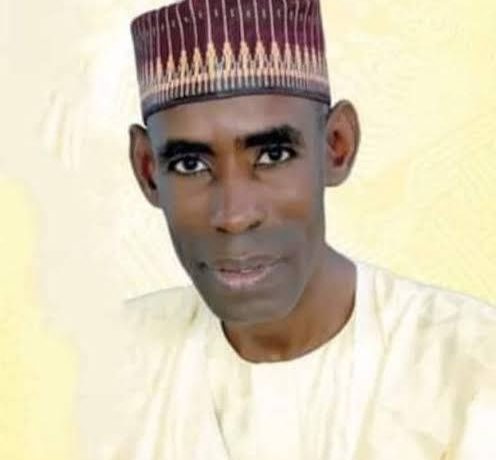
The Creeping Shadow of a One-Party State: A threat to Nigeria’s democratic future, by Abubakar M. Kareto
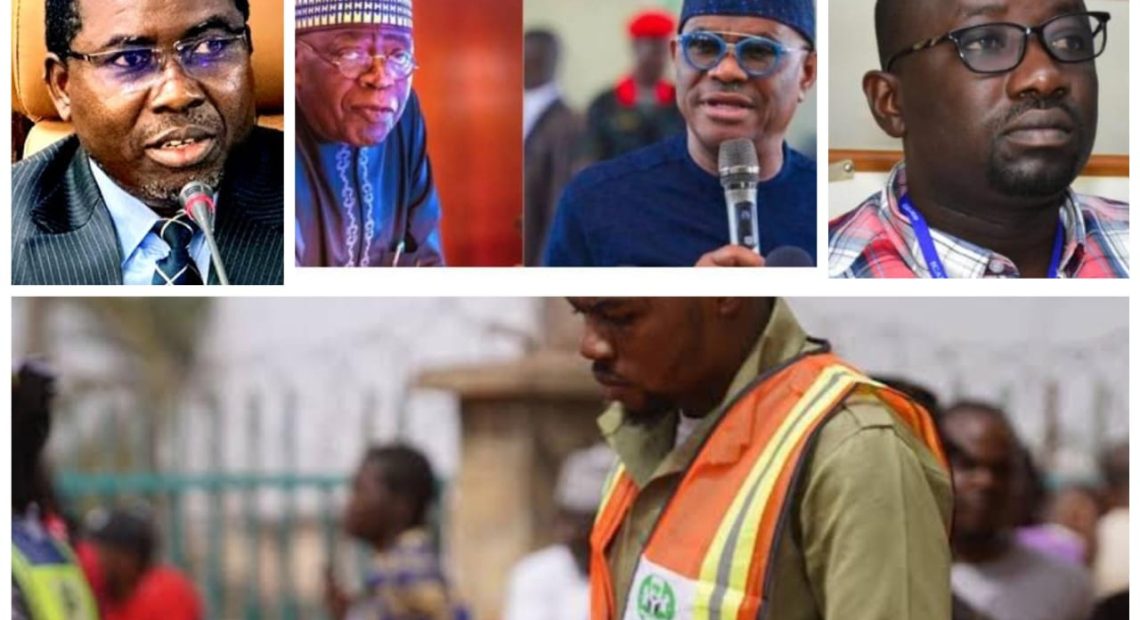
Nigeria stands at a precarious crossroads. For a nation that fought hard to transition from the shackles of military juntas to the promises of a multi-party democracy in 1999, the current political trajectory is deeply unsettling. As a public affairs analyst and a concerned citizen, I find it imperative to voice the growing alarm regarding the systematic erosion of political opposition. We are witnessing a calculated drift toward a one-party system, a monolithic hegemony that threatens to render our hard-earned democracy useless. Historically, political opposition served as the heartbeat of our republic. Even under the administration of Muhammadu Buhari, despite its various challenges, the opposition maintained a degree of structural integrity. There was a clear, albeit often heated, contest of ideas. However, since the emergence of President Bola Tinubu, the landscape has shifted toward what many perceive as a deliberate neutralization of dissenting voices. This is not merely a series of internal party squabbles; it appears to be a coordinated effort involving state institutions to consolidate power within a single political umbrella, the All Progressives Congress.
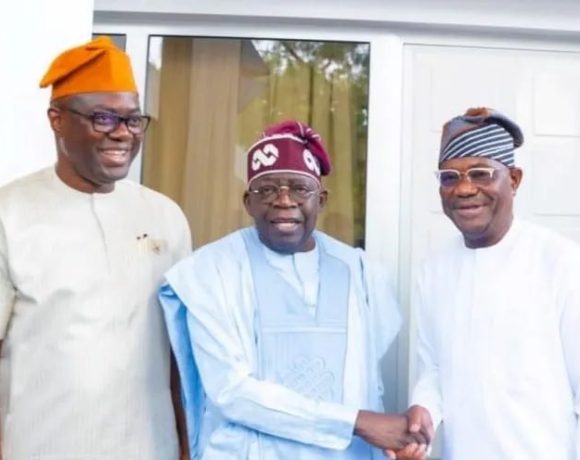
The crisis within the People’s Democratic Party is a primary exhibit of this structural decay. The internal friction, largely fueled by the FCT Minister, Nyesom Wike, has transcended typical party politics. It is deeply concerning to observe how judicial interventions and the perceived wait and see posture of the Independent National Electoral Commission have seemingly favored factions that align with the interests of the ruling center. By allowing a sitting minister in an APC cabinet to maintain a stranglehold on the primary opposition party’s leadership, the system is essentially orchestrating a controlled opposition. The Labour Party has not been spared either. Following the 2023 elections, where the Obidient movement proved that a third force was possible, the party was immediately plunged into a leadership abyss. The protracted legal battles have effectively paralyzed the party’s ability to act as a cohesive watchdog. When the judiciary becomes the primary decider of party leadership, the voter’s choice is secondary to legal technicalities.
This phenomenon of fractionalisation is spreading like a virus to the state level, with Osun State serving as a stark warning. When Governor Ademola Adeleke officially resigned from the PDP to join the Accord Party, a new faction emerged almost instantly, leading to disputed parallel primaries and a hijack of the political process. These are not organic political evolutions; they are disruptions designed to keep governors and regional leaders in a perpetual state of defensive maneuvering rather than governance. One element that cannot be overlooked is the growing judicialization of our elections. In a healthy democracy, the ballot box is the final authority. However, we have entered an era where INEC and the Courts have become more influential than the voters themselves. When the judiciary begins to determine the internal leadership of opposition parties, it creates a litigation trap. By the time an opposition leader clears their name in court, the election cycle is over, and the ruling party has already consolidated its hold.
A one-party system is the graveyard of accountability. When a single party, aided by the courts and the electoral umpire, eliminates the possibility of a credible alternative, the government no longer fears the electorate. History provides grim warnings of what happens when the option is removed. In Zimbabwe, under ZANU PF, the systematic crushing of the opposition led to hyperinflation and economic collapse. In Russia, the transition to a managed democracy resulted in the total suppression of dissent and the imprisonment of rivals. In Cambodia, the dissolution of the main opposition party by the courts in 2017 turned the country into a de facto one-party state, leading to international sanctions and the death of political pluralism. In these instances, the one-party push was always marketed as a means of stability or national unity, but it invariably led to the enrichment of a tiny elite while the masses suffered under the weight of unchallenged corruption.
Perhaps the greatest irony is that President Bola Tinubu is himself a quintessential product of a vibrant opposition. He was a leading figure in the NADECO struggle and later used the platform of the ACN and the APC to challenge the then-dominant PDP. He benefited from the maturity of former President Goodluck Jonathan, who famously declared that his ambition was not worth the blood of any Nigerian and allowed the opposition to flourish, eventually handing over power peacefully. It is disheartening that the very ladder used to reach the pinnacle of power is now being pulled up behind the current establishment. We must remind the current administration of this Jonathan Standard. Former President Jonathan was not a weak leader; he was a democratically matured one. He understood that for Nigeria to breathe, the opposition needed space to organize, protest, and compete.
Many Nigerians are currently distracted by the harsh economic climate, the rising cost of living, and the struggle for daily bread, but they must realize that this political crisis is their fight. Without a viable opposition, there is no pressure on the government to fix the economy. Our democracy is premature and fragile; it cannot grow in a greenhouse where only one plant is allowed sunlight. To save our democracy, we need systemic guardrails, such as the unbundling of INEC to remove the appointment of its leadership from the President’s powers. We also need strict constitutional timelines for court cases to ensure leadership disputes are resolved before certificates of return are issued.
President Tinubu must decide what his legacy will be: the leader who stabilized Nigeria’s democracy or the one who presided over its funeral. As for the Nigerian people, we must wake up. A democracy without an option is not a democracy; it is a dictatorship with an expensive wardrobe. The fight for a multi-party Nigeria is not a fight for the PDP or the Labour Party; it is a fight for the soul of the Republic. If we allow the 2027 cycle to approach with the opposition in ruins, we are not just losing a party, we are losing our country. Nigeria belongs to all of us, not to a single political machinery.
Written by Abubakar M. Kareto, a Public Affairs Analyst.
AM Kareto can be reached on amkareto@gmail.com