Colonel Ibrahim Taiwo: A lasting legacy of significant influence in administrative and military history
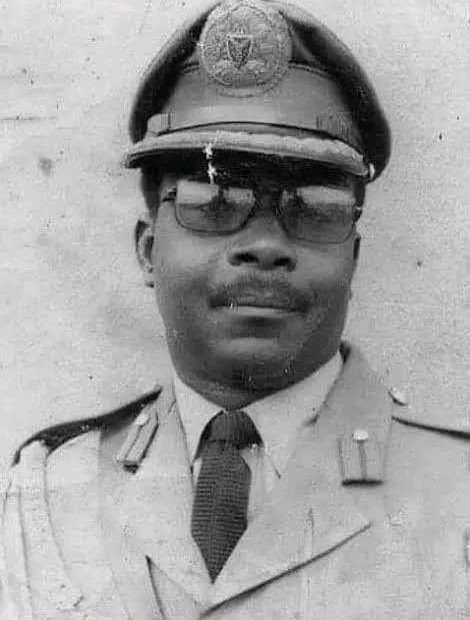
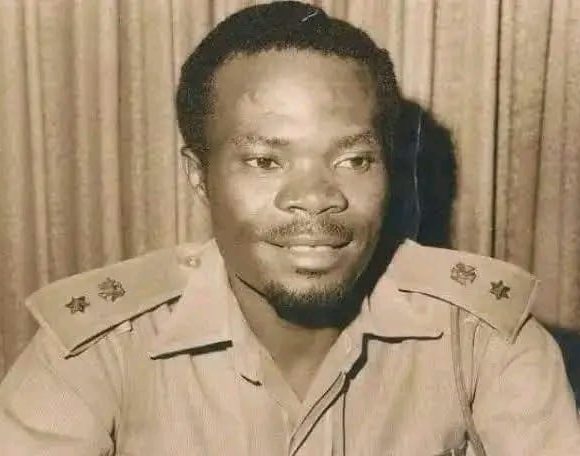
Colonel Ibrahim Taiwo (died February 13, 1976) belonged to the generation of Nigerian military officers whose careers were shaped by the political upheavals of the 1960s and 1970s.
His life reflects the transformation of the Nigerian military from a colonial institution into the central arbiter of national politics. As Military Governor of Kwara State between July 1975 and February 1976, Taiwo played a significant administrative and political role during the brief but consequential regime of General Murtala Ramat Mohammed.
Although his tenure was short, his involvement in key military transitions and his contributions to institutional development, especially in education, secured him a lasting place in Nigerian history.
Ibrahim Taiwo was born in Wushishi, in present-day Niger State, into the family of Adeosun and Emily Taiwo. He was raised in Kagara, a town that influenced his early identity and earned him the nickname Ibrahim Kagara during his formative years. His father traced ancestry to Ogbomosho in present-day Oyo State, reflecting the complex regional mobility that characterised many Nigerian families in the late colonial period.
Taiwo’s education followed the pattern of colonial-era mobility. He attended Senior Primary School in Minna and Bida Middle School before briefly enrolling at the Provincial Secondary School in Okene for his Higher School Certificate. Like many of his contemporaries, he entered the military before completing a full secondary education, drawn by the expanding opportunities in the Nigerian Army during the early post-independence years.
Taiwo joined the Nigerian Army in 1961 and trained at the Nigerian Military Training College in Kaduna, one of the earliest institutions for officer formation after independence. He later attended Mons Officer Cadet School in Aldershot in the United Kingdom, which exposed him to British military doctrine and logistics organisation.
His early career was rooted in transport and logistics, a specialisation that proved critical during the years of military expansion and war. He served as a mechanical transport officer and later became Officer Commanding 2 Brigade Transport in Apapa. He also held staff roles at Army Headquarters in Lagos and commanded logistical formations in Asaba and Kaduna. During the Nigerian Civil War from 1967 to 1970, Taiwo headed the transport and supplies division of the Nigerian Army, a role that underscored the importance of logistics in sustaining federal military operations.
The political radicalisation of young officers after the January 1966 coup reshaped Taiwo’s trajectory. At the time, a captain stationed with the Lagos Garrison in Yaba, he joined a network of northern and middle belt officers who opposed the government of Major General Johnson Aguiyi Ironsi.
The counter coup of July 1966, driven by grievances over perceived ethnic imbalance and the abrogation of federal structures, brought officers such as Murtala Mohammed, Theophilus Danjuma, Muhammadu Buhari, and others into prominence.
Taiwo’s participation positioned him within the emerging military elite that would dominate Nigerian politics for the next decade. Although not among the most publicly visible actors, his involvement deepened his ties to the cohort that later executed further regime changes.
Taiwo’s influence became more pronounced during the palace coup of July 1975 that removed General Yakubu Gowon from power. By then an experienced logistics officer, Taiwo contributed under the cover of his supply and transport responsibilities. His collaboration with officers like Lieutenant Colonel Muhammadu Buhari and General Murtala Mohammed demonstrates the continuing importance of logistical control in military conspiracies.
The 1975 coup marked a turning point in Nigerian military governance. It ushered in a reformist phase characterised by attempts at bureaucratic discipline, anti-corruption campaigns, and preparations for a return to civilian rule. Taiwo’s loyalty to the new leadership earned him appointment as Military Governor of Kwara State.
As Military Governor from July 1975, Taiwo oversaw a period of administrative consolidation in Kwara State. His most enduring contribution was his role in the establishment of the University of Ilorin, created by federal decree in August 1975. The founding of the university reflected broader national efforts to expand access to higher education and reduce regional disparities in educational infrastructure.
Although his tenure lasted less than a year, Taiwo’s governance aligned with the reformist ethos of the Murtala Mohammed administration. He emphasised institutional development and continuity rather than personal political ambition, a trait often associated with the technocratic wing of the military establishment.
Colonel Taiwo’s life ended abruptly during the failed coup of 13 February 1976, led by Lieutenant Colonel Buka Suka Dimka. The coup resulted in the assassination of Head of State General Murtala Mohammed in Lagos and targeted several officers associated with the regime. Taiwo was killed because of his close alignment with the leadership and his role within its command structure.
The failure of the coup led to a rapid consolidation of authority under Lieutenant General Olusegun Obasanjo, who preserved much of Murtala Mohammed’s chain of command and reform agenda. Taiwo thus became one of the most prominent casualties of the attempted overthrow, symbolising the vulnerability of military elites in a period of recurring coups.
Colonel Ibrahim Taiwo’s career illuminates the structural dynamics of Nigerian military politics in the first decade after independence. His trajectory from logistics officer to state governor reflects the increasing politicisation of the armed forces. His participation in successive coups illustrates how networks formed during moments of upheaval shaped later political outcomes.
His role in the founding of the University of Ilorin remains his most tangible civilian legacy. The institution continues to stand as a reminder of the developmental ambitions of the mid 1970s military reformers. More broadly, Taiwo represents a category of officers who operated behind the scenes yet exerted considerable influence through administrative and logistical competence.
His life underscores both the opportunities and dangers faced by officers who navigated an era defined by coups, counter coups, and fragile institutional transitions. Though not as widely remembered as some of his contemporaries, his contributions to state formation and educational expansion justify sustained historical attention.