REJOINDER: All the President’s Enemies: How President Tinubu lost the nation’s faith, by Engr. Bello Gwarzo Abdullahi, FNSE
The article by Nnaoke Ufere, “All the President’s Enemies – How President Tinubu Lost the Nation’s Faith,” contends that Bola Ahmed Tinubu has become widely unpopular across Nigeria due to economic hardship, insecurity, and perceived deficiencies in leadership. It asserts that virtually every segment of society—ordinary citizens, elites, regional blocs, business owners, farmers, youth, the diaspora, investors, the military, the media, and the international community—now views his administration unfavorably.
Among the reasons advanced are subsidy removal, inflation, currency instability, business collapse, worsening rural insecurity, regional dissatisfaction across the North, Southeast, and Southwest, as well as a leadership style perceived as distant, unempathetic, and rooted in patronage. The article concludes that the administration risks harsh historical judgment and that 2027 may prove a decisive political turning point driven by widespread dissatisfaction.
This argument cannot be dismissed as mere sentiment or political bias; it reflects observable national realities. Across Nigeria, economic strain is evident in markets, transport costs, food prices, and the steady erosion of purchasing power. When policies consistently translate into hardship for the majority, public discontent becomes inevitable—simply a matter of cause and effect.
READ ALSO: ADC & APC Playbook: A cause for concern, by Engr. Bello Gwarzo Abdullahi, FNSE
The critique of the administration’s economic direction is particularly weighty. Reform must ultimately be judged by outcomes, not intentions. Where policies impose disproportionate burdens without visible short- to medium-term relief, the language of “necessary sacrifice” begins to lose credibility. Governance demands not only boldness but precision—careful sequencing, effective cushioning measures, and responsiveness to social realities. The absence of these has fueled much of the current frustration.
On insecurity, the article strikes at a fundamental obligation of the state: the protection of life and property. When farmers abandon their lands, transport corridors become unsafe, and communities feel exposed, confidence in leadership naturally erodes. No volume of official reassurance can substitute for tangible security on the ground.
Equally important is the observation that dissatisfaction is no longer sectional but national. Once discontent transcends regional, ethnic, and social boundaries, it signals a systemic challenge rather than isolated grievances. Such a broad erosion of trust carries significant political and historical consequences.
The emphasis on perception and leadership style is also well placed. Governance is not solely about policy; it is about connection. A leader perceived as distant, insulated, or dismissive in times of hardship risks forfeiting moral authority, regardless of policy intent. In this regard, perception becomes a powerful force shaping public judgment.
It must, however, be acknowledged that Nigeria’s challenges did not originate with Bola Ahmed Tinubu. Structural weaknesses, institutional decay, and policy inconsistencies are longstanding. Yet leadership is ultimately measured within the context of its tenure. History does not grade on a curve—it judges by outcomes.
READ ALSO: Political Amnesia: Betrayal and the 2027 reckoning, by Engr. Bello Gwarzo Abdullahi, FNSE
The warning regarding 2027 should therefore not be taken lightly. Nigeria’s political history demonstrates that when economic strain converges with widespread dissatisfaction, electoral outcomes can shift decisively. This is not conjecture; it is established pattern.
In the final analysis, the article succeeds in capturing a prevailing national mood marked by fatigue, skepticism, and a growing insistence on results over rhetoric. Whether one agrees fully with its tone or not, its central message remains compelling: governance must reconnect with the people, or the people will ultimately recalibrate the system themselves.
It is, in sum, a factual, timely, and thought-provoking intervention—a clarion call for patriotic Nigerians to remain vigilant and engaged in confronting a trajectory that, if left unchecked, could yield deeply debilitating consequences for the nation.
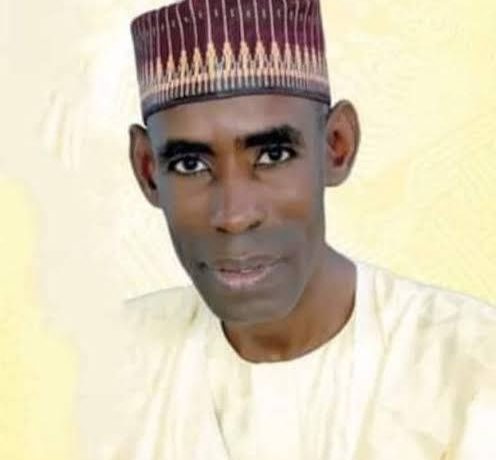
Written by Engr. Bello Gwarzo Abdullahi, FNSE.
Email: bgabdullahi@gmail.com