

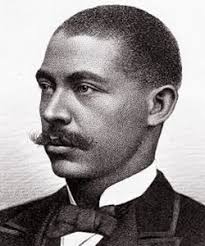
Outlasting Slavery: How George Freeman Bragg Jr. became a force for racial justice, by Gift Luckson
George Freeman Bragg Jr. (1863–1940) was a pioneering African American priest, journalist, and social activist who became a central figure in the Episcopal Church and the fight for civil rights in the late 19th and early 20th centuries.
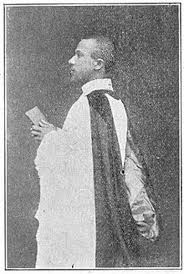
Born into slavery in Warrenton, North Carolina, Bragg rose to become a formidable voice for racial equality and a leading historian of the Black presence within the Episcopal Church.
Early Life and Journalism
Bragg grew up in Petersburg, Virginia, where he was heavily influenced by his grandmother, a founder of St. Stephen’s Episcopal Church for Negroes. His early career was defined by his tenacity:
• The “Not Humble Enough” Incident: In 1880, he was expelled from the Theological School for Negroes (later Bishop Payne Divinity School) because his rector claimed he was “not humble enough.”
• The Petersburg Lancet: Following his expulsion, he founded The Petersburg Lancet in 1882 at just 19 years old. The weekly newspaper became a powerful platform for Black political issues and civil rights during the Jim Crow era.
Ministry and Leadership
Despite his earlier setback, Bragg re-entered the seminary and was ordained as a priest in 1888, becoming only the twelfth Black priest in the history of the Episcopal Church in the U.S.
READ ALSO: Harriet Jacobs: A voice of courage against slavery, by Gift Luckson
St. James Episcopal Church: In 1891, he became the rector of St. James in Baltimore, the oldest Black Episcopal congregation in the South. He served there for 49 years, transforming it into a self-supporting powerhouse.
Advocacy for Black Bishops: He was a leader in the Conference of Church Workers Among Colored People, where he lobbied tirelessly for the election of Black bishops to provide the community with its own leadership.
Social Activism and Historical Work
Bragg was a “bridge” between different eras of Black activism. He was a close associate of both Booker T. Washington (helping found the Committee of Twelve) and W.E.B. Du Bois (as a founding member of the Niagara Movement, the precursor to the NAACP).
The Historiographer: He is perhaps best known as the first major historian of Black Episcopalians. His seminal work, History of the Afro-American Group of the Episcopal Church (1922), remains a primary source for scholars today.
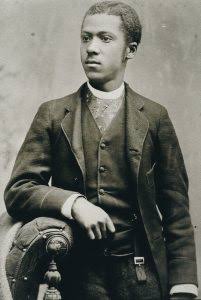
Community Building: In 1899, he established the Maryland Home for Friendless Colored Children, providing a sanctuary and foster care for Black orphans in Baltimore.
Key Contributions
Beyond ministry and scholarship, George Freeman Bragg was involved in social advocacy, promoting education, racial uplift, and greater inclusion within religious institutions.
His work helped inspire future generations and contributed to broader discussions about equality and representation within American society.
READ ALSO: Istanbul (Constantinople): The city of the world’s desire, rooted in antiquity, by Gift Luckson
He passed away in 1940, leaving behind a legacy as a spiritual leader, historian, and champion for African American heritage and progress.
Follow the Neptune Prime channel on WhatsApp:
Do you have breaking news, interview request, opinion, suggestion, or want your event covered? Email us at neptuneprime2233@gmail.com

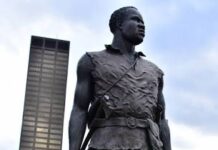

 was a pioneering African American priest, journalist, and social activist who became a central figure i)