


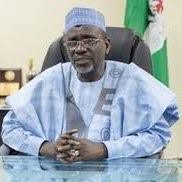
One of the clearest signs of political decline is when a leader who once stood at the peak of power gradually reduces his political horizon from national influence to the desperate pursuit of increasingly smaller offices.
That is the uncomfortable reality surrounding Ibrahim Shekarau today.
For a man who once governed Kano State for eight years and briefly pursued presidential ambition, Shekarau’s current political trajectory raises serious questions about long-term vision, strategic thinking, and leadership philosophy.
Politics is not merely about occupying offices. It is about growth, expansion, succession, and legacy. The most successful political figures constantly think beyond their current position. They build structures that outlive them while positioning themselves for greater national relevance.
Unfortunately, Shekarau appears to be moving in the opposite direction.
Instead of evolving into a respected elder statesman with national bargaining power, he increasingly appears trapped in survival politics, constantly chasing offices that should ordinarily serve as stepping stones for the younger politicians around him.
And that is where the problem begins.
Political ambition reflects political mindset.
Across Nigeria today, many politicians who rose around the same era as Shekarau are thinking in larger national directions. Some are positioning themselves for presidential tickets, vice-presidential negotiations, regional influence, or long-term coalition building.
Even younger politicians are operating with broader political imagination.
Take Seyi Makinde for example. Whether one agrees with his politics or not, it is obvious that his political calculations extend beyond remaining permanently confined within one office. His politics projects future national relevance.
The same applies to many contemporary political actors across party lines.
But what is Shekarau’s long-term political destination today?
That question becomes increasingly difficult to answer.
Because rather than projecting expansion, his recent political choices project contraction.
A former two-term governor repeatedly struggling for Senate relevance sends a troubling message about political ambition. It creates the impression of a politician whose strategic horizon has narrowed dramatically.
And politics is deeply psychological.
People naturally gravitate toward leaders who appear to be moving upward, not leaders constantly circling the same level of political relevance.
Perhaps the greatest damage caused by Shekarau’s approach is not even personal. It is structural.
Every major office occupied by a political leader is also an office denied to someone within that political family.
That is why mature political leaders eventually stop competing for every available position themselves. They begin empowering others while preserving influence from above.
Strong political movements survive through political multiplication.
But when a leader continuously returns to occupy positions that loyal followers are prepared to inherit, frustration quietly grows within the structure.
This is precisely where many of Shekarau’s loyalists now find themselves.
Positions that should naturally help consolidate and expand his political family often end up becoming personal political battles for Shekarau himself.
That approach weakens morale.
Because ambitious young politicians eventually begin asking difficult questions:
“If the leader himself will always return to take every available opportunity, then what exactly are we building toward?”
That question is dangerous for any political structure.
No movement survives when followers begin feeling permanently blocked by the same leader they are expected to defend.
This is also why the contrast between Shekarau and Rabiu Musa Kwankwaso continues to grow wider politically.
Recently, Shekarau alleged that Kwankwaso is working politically for Bola Ahmed Tinubu. But regardless of political disagreements, one reality remains undeniable: Kwankwaso continues to operate with national-scale ambition.
He contested for President. He continues to position himself within national coalition discussions. There are even conversations around future vice-presidential possibilities and broader national negotiations.
Whether those ambitions succeed or fail is secondary.
The important point is that Kwankwaso continues thinking nationally and strategically.
That matters in politics.
Leadership is partly sustained by perception of momentum. Followers remain emotionally invested when they believe their leader is moving toward larger relevance.
Shekarau, on the other hand, increasingly projects the image of a politician fighting to preserve shrinking territory rather than expanding influence.
And people can sense the difference.
His Presidential Ambition Does Not Change the Current Reality
Supporters of Shekarau may point out that he once contested for President after leaving office as governor.
That is true.
But politics is not judged only by what a politician once attempted years ago. It is judged by current direction, present momentum, and sustained ambition.
A single presidential contest long ago cannot permanently define a political legacy if subsequent political behavior reflects retreat instead of expansion.
In fact, that earlier presidential ambition makes the present situation even more striking.
Because the expectation after such a trajectory would normally be continued national positioning, coalition influence, ideological leadership, or elder statesmanship.
Instead, what Nigerians increasingly see is a politician repeatedly returning to smaller contests that should ordinarily strengthen younger loyalists within his camp.
That contradiction is difficult to ignore.
Politics punishes stagnation very harshly.
Leaders who stop evolving eventually become trapped in defensive politics. They begin fighting merely to remain visible instead of shaping the future.
This appears to be the deeper crisis facing Shekarau politically today.
Rather than building a clear succession ladder beneath him, his politics increasingly revolves around personal retention of relevance.
And when a political structure revolves too heavily around one individual’s continuous survival, it becomes difficult for that structure to grow organically.
The irony is painful.
Shekarau once had all the ingredients necessary to build one of the strongest long-term political dynasties in Northern Nigeria. He had credibility, visibility, loyal followers, and years of executive experience.
But political legacy is not sustained by past achievements alone.
It is sustained by the ability to transition from office-holder to institution-builder.
That transition requires empowering others.
At the current pace, many observers may begin asking uncomfortable questions about how far this pattern could go.
If a former governor and former presidential aspirant remains consumed by battles for Senate relevance, what stops the downward political contraction tomorrow?
Would it eventually become contests for the House of Representatives? Or even State House of Assembly seats?
Those questions may sound harsh, but they emerge naturally from the trajectory itself.
Because politics without long-term vision eventually becomes politics of mere survival.
And survival politics rarely produces enduring legacy.
The tragedy of Ibrahim Shekarau may not ultimately be political defeat.
The greater tragedy may be political underachievement.
A leader with the stature, experience, and history to stand above everyday political struggles now increasingly appears trapped inside them.
While others around his generation are negotiating national futures, Shekarau still appears occupied with battles that should have become stepping stones for the next generation beneath him.And that is the real cost of political myopia.
Because in politics, leaders are ultimately remembered not just for the offices they occupied, but for the future they inspired, the structures they built, and the generations they empowered.
On that measure, Shekarau’s political journey is increasingly beginning to look less like a dynasty in progress and more like a legacy gradually shrinking inward.
Follow the Neptune Prime channel on WhatsApp:
Do you have breaking news, interview request, opinion, suggestion, or want your event covered? Email us at neptuneprime2233@gmail.com