The Ancient City of Nineveh: From world-ruling empire to ruins of history, by Gift Luckson
Nineveh was one of the greatest cities of the ancient world and a powerful capital of the Assyrian Empire, located near modern-day Mosul in northern Iraq.
Its history stretches back to at least 3000 BCE, but Nineveh reached its height between the 7th and 8th centuries BCE, when it became the centre of Assyrian political, military, and cultural life.
Advanced and Urban Planning
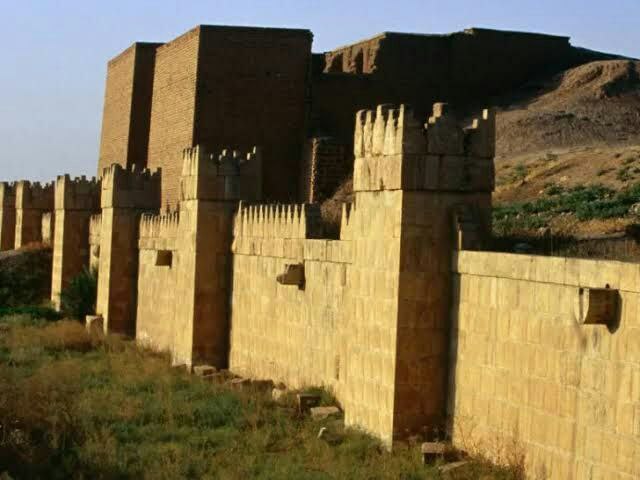
The city was renowned for its massive walls, grand palaces, and advanced urban planning. One of its most famous rulers, King Ashurbanipal, established an extraordinary royal library that housed thousands of clay tablets.
READ ALSO: Nigeria Not Another Iraq or Libya: Dr. Hassan Gimba warns against western “Imperial agenda”
This library preserved important works of literature, science, and law, including the Epic of Gilgamesh, one of the oldest known literary texts.
Religious Centre
Nineveh was also a major religious centre, dedicated to the goddess Ishtar, whom the city regarded as its patron deity.
Despite its power and wealth, Nineveh fell in 612 BCE after a coalition of Babylonians and Medes attacked and destroyed it, marking the collapse of the Assyrian Empire.
Today, the ruins of Nineveh stand as a powerful reminder of ancient Mesopotamian civilisation and its lasting influence on history, governance, literature, and urban development.
The Ruins of Nineveh
Large numbers of Assyrian sculptures and other artefacts have been excavated from the ruins of Nineveh, and are now located in museums around the world.
READ ALSO: Over 5,000 Nigerian women stranded in Iraq – Dabiri-Erewa
The location of Nineveh was known, to some, continuously through the Middle Ages. Benjamin of Tudela visited it in 1170; Petachiah of Regensburg soon after.
The remains of ancient Nineveh, the areas of Kuyunjiq and Nabī Yūnus with their mounds, are located on a level part of the plain at the junction of the Tigris and the Khosr Rivers within an area of 750 hectares (1,900 acres) circumscribed by a 12-kilometre (7.5 mi) fortification wall.
This whole extensive space is now one immense area of ruins, roughly a third of which is overlaid by the Nebi Yunus suburbs of the city of eastern Mosul.
An Ancient Historical City
Nineveh itself was founded as early as 6000 BC during the late Neolithic period.
Deep sounding at Nineveh uncovered soil layers that have been dated to the early era of the Hassuna archaeological culture. The development and culture of Nineveh paralleled Tepe Gawra and Tell Arpachiyah a few kilometres to the northeast.
Nineveh was a typical farming village in the Halaf Period.
In 5000 BC, Nineveh transitioned from a Halaf village to an Ubaid village. During the Late Chalcolithic period, Nineveh was one of the few Ubaid villages in Upper Mesopotamia which became a proto-city.
Others include Ugarit, Brak, Hamoukar, Arbela, Alep, and regionally Susa, Eridu, and Nippur.
During the period between 4500 and 4000 BC, it grew to 40 hectares in size. The greater Nineveh area is notable in the diffusion of metal technology across the Near East as the first location outside of Anatolia to smelt copper.
Tell Arpachiyah has the oldest copper smelting remains, and Tepe Gawra has the oldest metal work. The copper came from the mines at Ergani.
Follow the Neptune Prime channel on WhatsApp:
Do you have breaking news, interview request, opinion, suggestion, or want your event covered? Email us at neptuneprime2233@gmail.com