


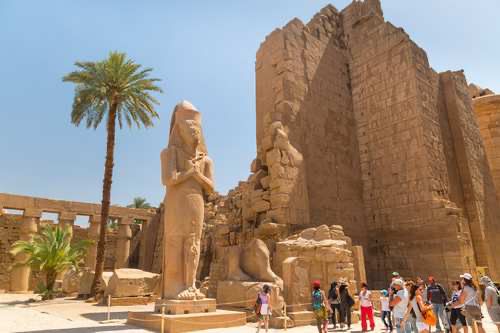
Luxor: The timeless artistic capital of ancient Egypt, by Falmata Ma’aji Muhammad
Story by Falmata Ma’aji MUHAMMAD (Student at Helwan University, Cairo, Egypt)
Luxor is more than a city of ruins, it is a living testament to human ingenuity, where architecture, civilisation, and hidden stories converge along the Nile.
Once Thebes, the beating heart of Egypt’s New Kingdom, Luxor embodies the ambition of Pharaohs and the artistry of a people who believed their monuments could defy time itself.
Architectural Innovation: Engineering Eternity
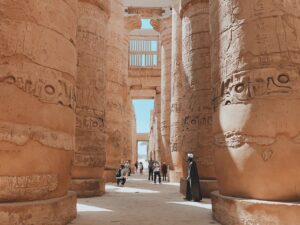
Luxor’s temples and tombs were not merely built, they were engineered with precision that still astonishes modern architects.
The Hypostyle Hall at Karnak, with its 21-meter-high columns, was designed to mimic a papyrus swamp, symbolising creation itself. Its alignment with the solstices ensured that sunlight illuminated sacred spaces at key moments of the year, blending astronomy with architecture.
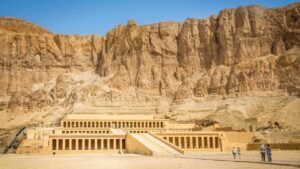
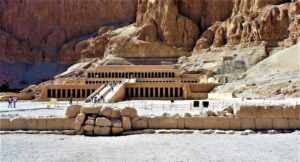
The Temple of Hatshepsut at Deir el-Bahari is another marvel: terraces carved into cliffs, ramps connecting levels, and colonnades that harmonise with the desert backdrop.
This integration of natural landscape and monumental design was revolutionary, influencing later architectural traditions across the Mediterranean.
Even tombs in the Valley of the Kings reveal innovation, hidden entrances, complex passageways, and painted ceilings that map the stars, reflecting both security concerns and cosmic symbolism.
Civilisation: The Beating Heart of the New Kingdom
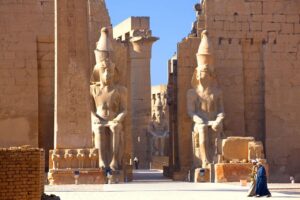
Luxor was not just a religious capital, it was the centre of a thriving civilisation. Thebes became the hub of diplomacy, art, and wealth during Egypt’s imperial zenith.
Tribute from Nubia, Syria, and Mesopotamia flowed into its temples, funding colossal projects and sustaining a cosmopolitan society.
Priests of Amun wielded immense power here, rivaling Pharaohs themselves. Luxor’s monuments thus reflect not only royal ambition but also the balance of political and spiritual authority in Egyptian civilisation.
Living Legacy
Today, Luxor continues to inspire. Hot-air balloons rise over temples at sunrise, Nile cruises retrace ancient routes, and festivals celebrate Egypt’s heritage.
For Egyptians, Luxor is not just a tourist site, it is a symbol of resilience, artistry, and national pride, where civilisation’s achievements remain etched in stone.
Follow the Neptune Prime channel on WhatsApp:
Do you have breaking news, interview request, opinion, suggestion, or want your event covered? Email us at neptuneprime2233@gmail.com