The execution of the 1976 coup plotters in Nigeria
On Friday, February 13, 1976, Nigeria was shaken by a tragic and violent coup d’état led by Lieutenant Colonel Bukar Suka Dimka.
The most devastating outcome of this failed coup was the assassination of the nation’s then Head of State, General Murtala Ramat Muhammed. He was gunned down in Ikoyi, Lagos, as he travelled unescorted to his office at the Dodan Barracks.
His death sent shockwaves across the country and marked a dark chapter in Nigeria’s post-independence political history.
General Murtala Muhammed had only been in office for approximately 200 days, yet he was deeply admired for his bold reforms, anti-corruption stance, and efforts to return Nigeria to civilian rule. His untimely death sparked outrage, mourning, and swift retribution by the military establishment.
READ ALSO: Nigeria condemns military coup in Guinea-Bissau
The coup, though partially successful in its initial hours, quickly collapsed. Loyalist forces, particularly those under the command of then Chief of Staff, Supreme Headquarters, Lieutenant General Olusegun Obasanjo, and General Theophilus Danjuma, regained control of strategic institutions.
Dimka had temporarily seized the state radio to broadcast his justification for the coup, accusing the Muhammad regime of corruption and maladministration. However, his broadcast was cut short, and he fled Lagos.
Olusegun Obasanjo, after initial hesitation, accepted the call to leadership and succeeded Muhammad as Head of State. His new regime was determined to punish the conspirators severely and deter future insurrections. What followed was one of the most publicised military trials and mass executions in Nigerian history.
Over 100 military personnel and civilians were arrested in connection with the failed coup. Following military investigations and tribunals, dozens were convicted of plotting, aiding, or executing the coup attempt. The convicted officers were sentenced to death by firing squad, and the executions were carried out in two major rounds.
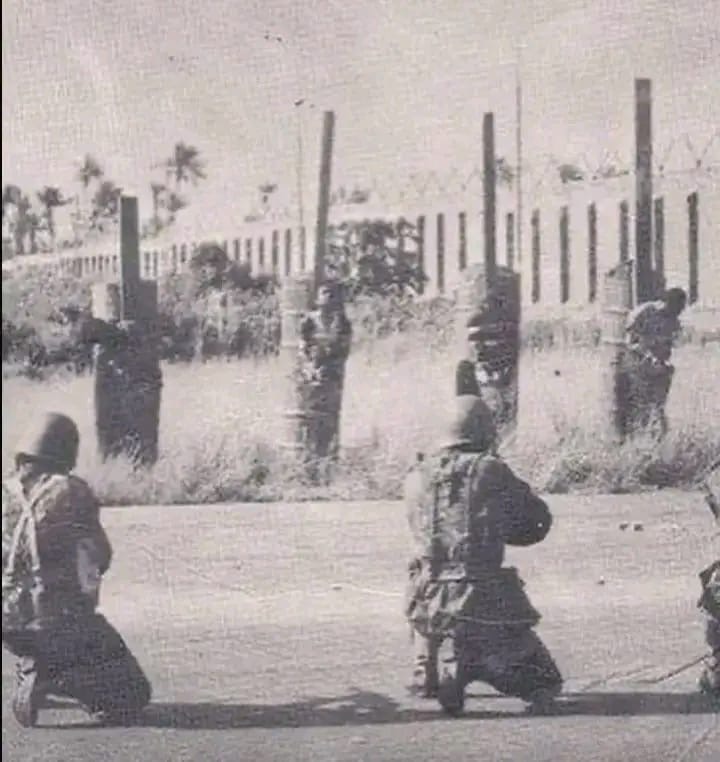
The first set of executions took place on March 11, 1976, at Bar Beach, Lagos, a location known at the time for public executions. Under the supervision of General Obasanjo’s military government, 31 individuals were executed, including senior officers, junior ranks, and one civilian. These included:
1. Major General I. D. Bisalla (former Commissioner for Defence)
2. Warrant Officer II Monday Monchon
3. Staff Sergeant Richard Dungdang
4. Sergeant Sale Pankshin
5. Lieutenant Colonel A. R. Aliyu
6. Captain M. Parvwong
7. Captain J. F. Idi
8. Captain S. Wakins
9. Lieutenant Mohammed
10. Lieutenant E. L. K. Shelleng
11. Lieutenant Colonel Ayuba Tense
12. Colonel A. D. S. Way
13. Lieutenant Colonel T. K. Adamu
14. Lieutenant Colonel A. B. Umaru
15. Captain A. A. Aliyu
16. Captain Augustine Dawurang
17. Major M. M. Mshelia
18. Lieutenant William Seri
19. Major I. B. Ribo
20. Major K. K. Gagra
21. Captain M. R. Gelip
22. Mr Abdulkarim Zakari (a civilian who assisted in the radio broadcast)
23. Lieutenant Peter Ggani
24. Major Ola Ogunmekan
25. Lieutenant O. Zagmi
26. Lieutenant S. Wayah
27. Sergeant Ahmadu Rege
28. Sergeant Bala Javan
29. Warrant Officer II Sambo Dankshin
30. Warrant Officer II Emmanuel Dakup Seri
31. Major J. W. Kasai
READ ALSO: January 1966: The precision killing that exposed the brutal heart of Nigeria’s first coup
A second round of executions took place between May 15 and 17, 1976, following the capture and trial of the coup leader and his key accomplices. This final round included:
32. Lieutenant Colonel Bukar Suka Dimka (leader of the coup)
33. Joseph D. Gomwalk (former Military Governor of Benue-Plateau State)
34. Lieutenant S. Kwale
35. Warrant Officer H. E. Bawa
36. Colonel I. Buka
37. Major J. K. Afolabi
38. H. Shaiyen
Dimka was captured after a nationwide manhunt and interrogation. During his trial, he remained defiant and refused to express remorse. His execution, along with the others, was carried out in secrecy, though public knowledge of it spread quickly.
These executions were meant to send a clear signal that treason and political instability would not be tolerated. While controversial, especially due to the scale and speed of the trials, the actions taken by the Obasanjo-led government reinforced military discipline and temporarily stabilised Nigeria’s political environment.
General Olusegun Obasanjo would go on to continue the reform agenda of the late Murtala Muhammed and, in 1979, became the first military leader in Nigeria to voluntarily hand over power to a democratically elected civilian government. This marked the beginning of Nigeria’s Second Republic.
The 1976 coup attempt remains one of Nigeria’s most defining political crises, remembered not only for the tragic loss of a visionary leader but also for the massive response it provoked from the military and the Nigerian public.
Follow the Neptune Prime channel on WhatsApp:
Do you have breaking news, interview request, opinion, suggestion, or want your event covered? Email us at neptuneprime2233@gmail.com