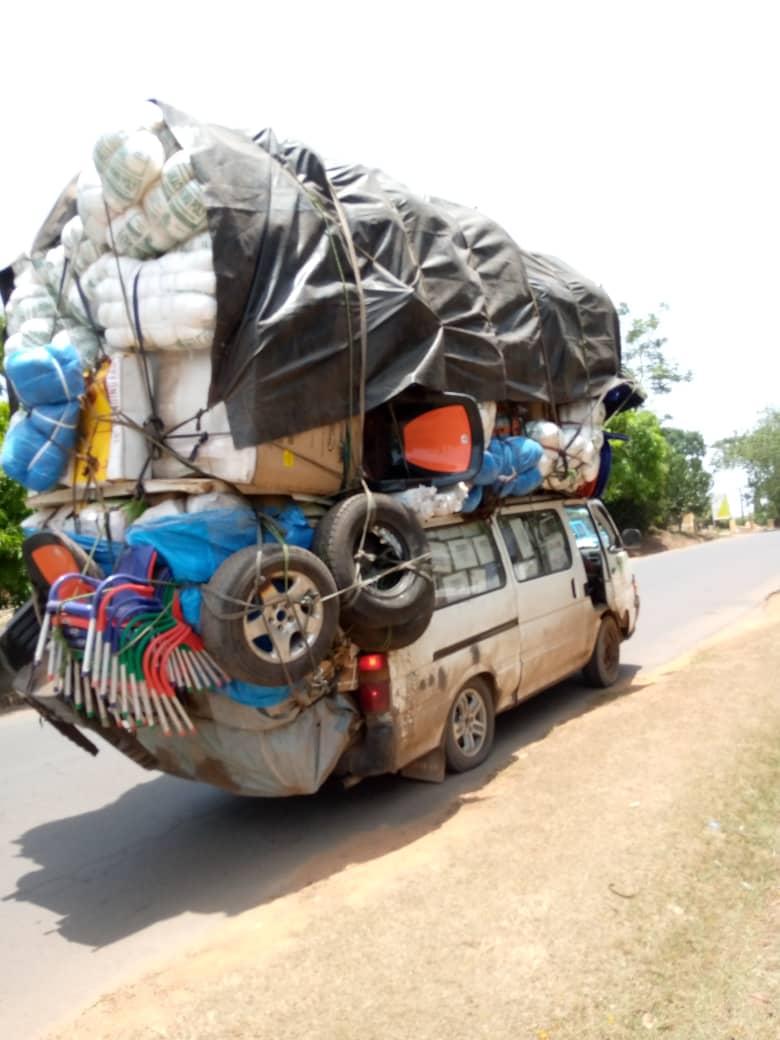
The Glaring Peril of Overloading: When the quest for financial relief turns deadly, by Kasim Isa Muhammad
Overloading by commercial vehicles has become one of the most persistent and dangerous features of Nigeria’s road transport system.
Across highways, urban expressways and rural roads, buses, minibuses, vans and trucks routinely carry far more passengers and goods than they were designed to handle.
A Neglected Danger
What many commuters accept as a normal inconvenience is, in reality, a major contributor to road crashes, severe injuries and avoidable deaths. Safety experts, transport unions and bereaved families continue to warn that overloading significantly worsens the already alarming state of road safety in Nigeria.
Nigeria remains one of the countries with the highest number of road traffic crashes in Africa. Data from the Federal Road Safety Corps and the National Bureau of Statistics show that thousands of road crashes are recorded annually, leading to several thousand deaths and tens of thousands of injuries.
Recent official figures place annual road fatalities at more than 5,000 nationwide, with commercial vehicles responsible for a significant proportion of fatal crashes. Although authorities admit that many crashes go unreported, the available statistics alone highlight the severity of the crisis on Nigerian roads.
An Alarming Increase in Road Crashes
The National Bureau of Statistics reported that in the first quarter of 2024, there were 2,967 road traffic crashes nationwide, representing an 8.6% increase compared to the previous quarter.
READ ALSO: Yobe at 32: Reflecting on the journey thus far, by Kasim Isa Muhammad
These crashes resulted in 1,112 deaths and over 4,500 injuries, with commercial vehicles accounting for nearly 40% of the fatalities. The report emphasised that most accidents occurred on major highways linking Lagos, Abuja, Kano, and Port Harcourt, where overloading is most common.
According to the NBS, data from 2023 revealed that vehicle overloading contributed to approximately 28% of crashes involving commercial vehicles. In that year, the North Central and South West regions recorded the highest number of road accidents, with Lagos state alone accounting for more than 15% of nationwide crashes.
The NBS highlighted that while speeding and poor road conditions remain key factors, overloading significantly increases both the likelihood of a crash and the severity of injuries when accidents occur.
In another statistical observation, the NBS indicated that from 2021 to 2023, there was a consistent upward trend in injuries related to overloaded vehicles, with an average annual increase of 6.2%.
The data also showed that crashes involving overloaded commercial cars were more likely to result in multiple fatalities per incident, unlike single-vehicle crashes involving private cars.
The Need for Targeted Enforcement
Analysts suggested that this trend demonstrates the compounded risks of overloading and the urgent need for targeted enforcement.
Neptune Prime gathered that overloading plays a major role in these accidents because it directly affects how vehicles respond in emergency situations. Vehicles are designed to carry a specific number of passengers and a defined weight of goods. When these limits are exceeded, braking systems weaken, tyres overheat, and steering control becomes difficult.
Overloaded vehicles take longer to stop and are more likely to suffer tyre bursts or mechanical failure. When a crash occurs, the excessive number of passengers increases the likelihood of multiple injuries and deaths, as people are forced into cramped spaces with little room to absorb impact.
The risk increases further when goods are placed on rooftops or packed unevenly inside vehicles. This alters the balance of the vehicle and raises its centre of gravity, making it more likely to overturn, especially on bends or bad roads.
Investigations by road safety authorities have repeatedly shown that many high-fatality crashes involving commercial vehicles were worsened by overloading, often combined with speeding and poor vehicle maintenance.
Harsh Economic Realities
Commercial drivers admit that overloading is common, but many say it is driven by harsh economic realities. Ibrahim, a commercial bus driver operating between Abuja and Lagos, described the pressure in clear terms. “If I load my bus with only the exact number of passengers, I will struggle to survive,” he said.
“Fuel prices keep rising, police checkpoints cost money, and vehicle parts are expensive. Passengers want cheap fares, but they do not understand the cost of operating a bus. Sometimes you overload because you are trying to balance your expenses, even though you know the risk involved.”
Another driver, Chukwudi, who operates a minibus route in Abuja, explained how competition worsens the situation. “This business is very competitive,” he said. “If I refuse extra passengers, another driver will take them immediately. At the end of the day, I will go home with less money, but the risks on the road remain the same. Many drivers overload not because they want to, but because the system forces them to do so. If there were fixed fares and better regulation, things would be different.”
For some drivers, fear has replaced confidence after witnessing crashes linked to overloading. Sadiq, a long-distance commercial driver who frequently travels from Abuja to Minna, recalled a frightening experience. “I once lost control of my vehicle because it was too heavy,” he said. “The bus did not respond when I applied the brakes, and people inside were shouting. By the grace of God, we survived, but that day changed me. Overloading reduces your control as a driver. You are sitting behind the wheel, but the vehicle is no longer fully under your command.”
Severe Consequences
Road safety officials argue that while economic pressure is real, the consequences of overloading are far more severe. The Federal Road Safety Corps has warned that overloaded vehicles are involved in many of the deadliest crashes on Nigerian roads.
According to officers who investigate accidents, overloading often turns minor collisions into fatal incidents because the vehicle cannot respond effectively in emergencies.
It was learned that families affected by such crashes continue to call for stricter enforcement and accountability. Many argue that the pain of losing loved ones far outweighs any financial gain made from carrying extra passengers. The emotional and economic impact on families, including hospital bills, loss of income and long-term trauma, adds to the national burden caused by road traffic crashes.
The damage caused by overloading extends beyond human loss. Roads and bridges deteriorate faster when subjected to excessive weight, leading to potholes and structural weaknesses that further increase crash risks for all road users.
Experts estimate that the economic cost of road crashes, including healthcare expenses, infrastructure repairs and lost productivity, runs into billions of naira each year.
READ ALSO: YOSEMA, please stop marginalising Yobe South, by Kasim Isa Muhammad
Despite laws regulating vehicle capacity and weight limits, enforcement remains inconsistent. Many highways lack functional weighbridges, and monitoring is often limited to periodic checks. Where enforcement exists, allegations of corruption reduce its effectiveness. Road safety advocates insist that transparent, consistent enforcement and better use of technology are essential to reducing overloading.
The Complicity of Passengers
According to reports, passengers also play a role in the problem. Many knowingly enter overloaded vehicles to save time or money, indirectly encouraging unsafe practices. Safety campaigners stress that passengers must take responsibility by refusing to board overloaded vehicles and reporting dangerous drivers. However, they note that this will only work if authorities show a strong commitment to protecting compliant drivers and commuters.
Experts agree that solving the problem of overloading requires comprehensive measures. This includes stronger enforcement, fair transport policies that allow drivers to earn a living without risking their lives, access to credit for vehicle maintenance and replacement, improved driver training, and sustained public awareness campaigns.
Follow the Neptune Prime channel on WhatsApp:
Do you have breaking news, interview request, opinion, suggestion, or want your event covered? Email us at neptuneprime2233@gmail.com