
Unlocking Genius: How the right role changes everything, by
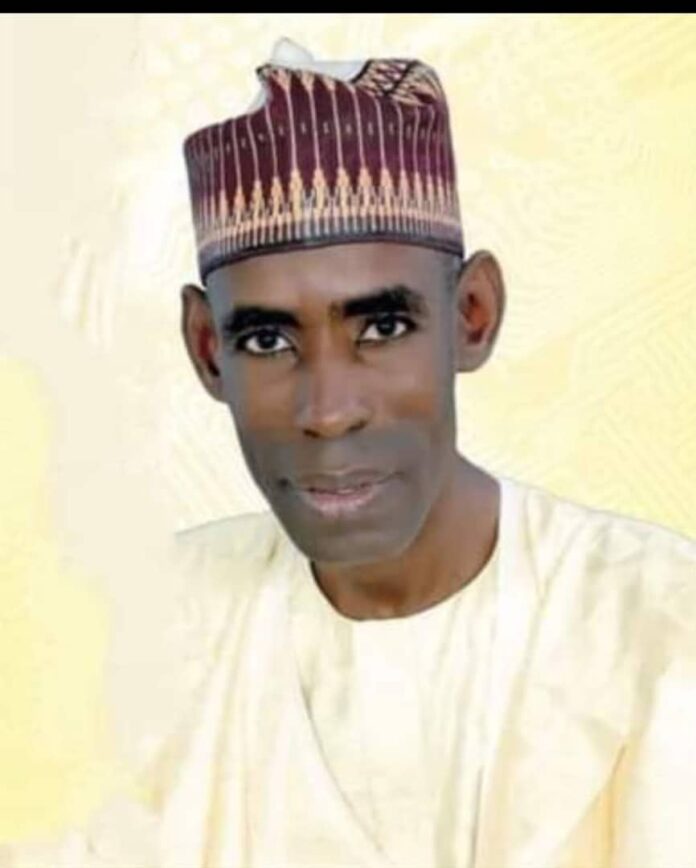
Engr. Bello Gwarzo Abdullahi, FNSE
In leadership, placement is not an administrative routine; it is a strategic decision with long-term consequences. Institutions—political, religious, corporate, or civic—rarely collapse because they lack capable people. They falter because capable individuals are wrongly positioned. Excellence emerges only when what a person knows, what they can do, and what they are naturally wired for converge. When these forces are misaligned, performance declines. When they align, results accelerate.
Clarity begins by distinguishing three terms that are often used interchangeably: talent, knowledge, and skills. They are not the same. They are the structural components of performance. Talent reflects natural wiring—the instinctive patterns of thinking, feeling, and responding. Strategic foresight, emotional composure, analytical instinct, persuasion, and creativity are largely inborn capacities.
Talent can be refined, but it cannot be manufactured. Knowledge, by contrast, is acquired understanding. It comes through education, training, exposure, and experience. It defines systems, principles, and context, yet it evolves; what is cutting-edge today may be obsolete tomorrow. Skills are developed capabilities—the disciplined application of knowledge. Negotiation, communication, planning, and execution are strengthened through repetition and practice. Skills convert theory into measurable output.
Their relationship is not additive; it is multiplicative. Performance can be expressed simply as talent multiplied by skills and knowledge. When one variable weakens, overall performance declines. Talent without knowledge becomes misdirected. Knowledge without skills remains theoretical.
Skills without talent may produce competence, but rarely distinction. One of the most costly errors in leadership is attempting to train talent into existence. Training strengthens what already exists; it does not implant natural disposition. Development must be built around innate capacity, not against it.
This principle applies across sectors. In politics, charisma without governance knowledge produces emotional momentum but unstable policy. Knowledge without instinct leads to technically sound yet politically tone-deaf decisions. In religious or traditional institutions, deep doctrinal knowledge without empathy weakens pastoral effectiveness, while empathy without grounding creates confusion.
READ ALSO: Rethinking Productivity: Beyond the hustle, by Engr. Bello Gwarzo Abdullahi, FNSE
In corporate environments, promotion based solely on seniority or certificates rather than temperament and strategic fit produces organisations that are administratively functional but strategically average. Loyalty is rewarded, but capacity is diluted.
Serious leadership requires disciplined placement. It demands the courage to look beyond credentials and discern natural strength, to build skills around that strength, and to ensure knowledge remains current and mission-aligned. It requires resisting the temptation to force uniformity and instead leveraging the diverse wiring of individuals.
READ ALSO: The North Must Hold the Centre: A strategic imperative, by Engr. Bello Gwarzo Abdullahi, FNSE
Knowledge informs. Skills execute. Talent accelerates. When leaders deliberately align these dimensions, institutions move beyond routine operation and achieve sustained relevance and measurable growth. Placement, handled with strategic clarity, does not merely improve performance—it unlocks genius.
By Engr. Bello Gwarzo Abdullahi, FNSE.
Email: bgabdullahi@gmail.com
Follow the Neptune Prime channel on WhatsApp:
Do you have breaking news, interview request, opinion, suggestion, or want your event covered? Email us at neptuneprime2233@gmail.com