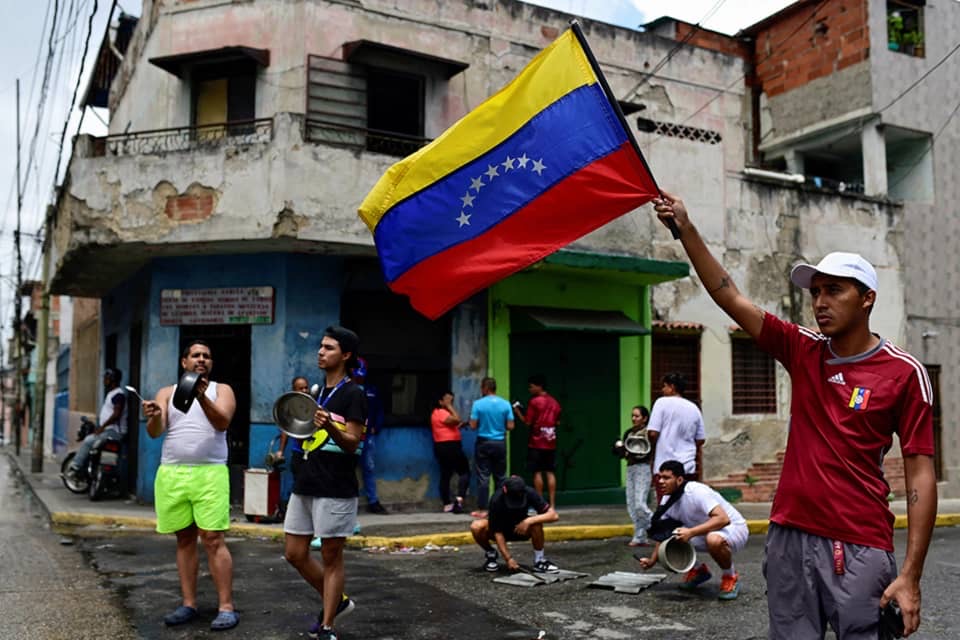
“Who holds sovereignty? Examining Venezuela’s crisis,” by Love Obiani Arugu
Looking at my perspective, the crisis in Venezuela is often framed in economic, political, or humanitarian terms. Yet at its core lies a more fundamental and enduring question: where does sovereignty truly reside? Is it vested in the state and its institutions, in the ruling government, or ultimately in the people themselves—the very source of democratic legitimacy?
Venezuela forces, both domestic actors and the international community to confront this dilemma, revealing deep tensions between legal sovereignty, political power, and external influence.
Sovereignty in Theory and Law
Classical political and legal theory defines sovereignty as the supreme authority within a territory, free from external control and internally indivisible. In modern democratic constitutions, however, sovereignty is not the exclusive property of the state or its government; it resides in the people. Governments merely exercise it on behalf of citizens.
Venezuela’s Constitution affirms this principle explicitly: sovereignty belongs inalienably to the people, who exercise it directly through participation and indirectly via elected institutions. This legal foundation aligns with global democratic norms: authority derives from the consent of the governed, not from the mere occupation of power.
Sovereignty in Practice: Power vs. Legitimacy
While law defines sovereignty, its exercise in practice is far more complex. In Venezuela, sovereignty has become contested and fragmented.
Governmental Authority: The Maduro administration emphasises the preservation of state institutions, territorial integrity, and resistance to foreign interference as expressions of sovereignty. From this perspective, control over the state apparatus is the measure of sovereign power. Sanctions, external pressure, or diplomatic isolation are framed as attacks on Venezuela’s independence.
Popular Sovereignty: Opposition movements counter that sovereignty without legitimacy is hollow. When elections are disputed, institutions lack independence, and dissent is suppressed, sovereignty is effectively concentrated in the hands of a ruling elite. In this view, sovereignty is meaningful only when it reflects the people’s will. Without credible democratic processes, claims to authority are politically and morally fragile.
External Actors and the Global Dimension
The Venezuelan crisis has drawn regional and global actors into what is effectively a contest over sovereignty itself. External powers justify intervention using appeals to democracy, human rights, and regional stability. Venezuela, in turn, invokes sovereignty as protection against perceived interference.
This dynamic illustrates a broader global paradox: while sovereignty remains a cornerstone of international law, it increasingly intersects with human rights, democracy, and transnational norms. In a globalised world, sovereignty is no longer absolute; it is negotiated, challenged, and interpreted.
Territorial Integrity and Resource Control
The long-standing territorial dispute between Venezuela and Guyana over the Essequibo region further complicates the sovereignty question. Territorial control is one of the most tangible expressions of sovereignty. Competing claims over land and natural resources heighten the stakes, intertwining questions of legitimacy, authority, and national identity.
The Core Question: Who Owns Sovereignty?
Ultimately, the Venezuelan crisis asks whether sovereignty resides with the state or the people:
If sovereignty rests with the state alone, institutional control justifies authority.
If sovereignty resides with the people, legitimacy and consent are essential.
Modern democratic theory increasingly favours the latter: sovereignty without accountability is empty, and authority without consent is unsustainable.
In Conclusion, Reclaiming Sovereignty Through Legitimacy
The Venezuelan crisis demonstrates that sovereignty cannot be reduced to the mere control of institutions, territory, or coercive power. While the state remains the legal vessel of sovereignty in international law, its legitimacy is hollow when detached from the will and welfare of the people.
Sovereignty, in its fullest democratic sense, is not simply about who governs, but how and for whom governance is exercised.
For Venezuela, the path forward lies not in the absolutist defence of state authority nor in externally imposed solutions, but in restoring popular sovereignty through credible democratic processes, independent institutions, and genuine political inclusion. Only when citizens are free to choose their leaders, hold them accountable, and participate meaningfully in public life can sovereignty regain its moral and legal coherence.
For the international community—particularly actors in the Global South, the Venezuelan case offers a cautionary lesson. Sovereignty must be respected, yet it must not become a shield for democratic erosion or human suffering. The challenge, therefore, is to strike a principled balance: defending non-intervention while supporting the universal right of people to self-determination.
In the final analysis, sovereignty does not belong to governments by default, nor to external powers by design. It belongs to the people—always. Where that principle is ignored, crises persist; where it is honoured, political renewal becomes possible.
Follow the Neptune Prime channel on WhatsApp:
Do you have breaking news, interview request, opinion, suggestion, or want your event covered? Email us at neptuneprime2233@gmail.com