
World Toilet Day: The urgent need to end open defecation, other sanitation crisis
By Victor Itodo ABUH
The United Nations has set aside the 19th of November each year to mark World Toilet Day to raise awareness about the global sanitation crisis and advocate for access to proper sanitation as a fundamental human right.
With this year’s theme, “Sanitation for Peace,” the day calls attention to the profound impact of toilets on public health, human dignity, and community well-being.
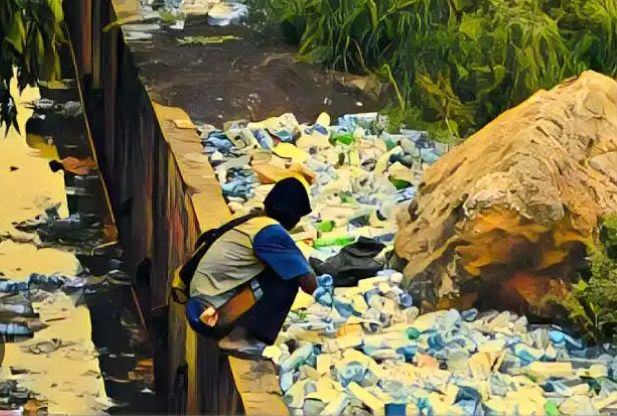
In Nigeria, a country burdened with the world’s highest open defecation rate, over 48 million people still lack access to proper sanitation facilities.
This alarming statistic underscores the urgency to address open defecation, a practice that not only compromises human dignity but also fuels the spread of waterborne diseases such as cholera, diarrhoea, and typhoid.
Read also: Yobe radiographers celebrate ‘World Radiography Day’, call for improved diagnostic tools
A Community’s Journey to Health
Kofar Gabas, a rural community in Kura Local Government Area of Kano State, exemplifies how ending open defecation transforms lives. Until recently, open defecation was a norm in this community.
“We used to think cholera and typhoid were seasonal, just like the rains,” said Malama Amina Hussaini, a 45-year-old mother of five.
However, a vigorous sensitisation campaign by local government officials, religious leaders, and sanitation advocates revealed the link between open defecation and frequent outbreaks of waterborne diseases.
Through collective efforts, including digging latrine pits and establishing sanitation vanguards in all ten wards, Kofar Gabas achieved Open Defecation Free (ODF) status.
The results have been remarkable: a significant decline in cases of cholera and typhoid, healthier children, and cleaner environments. “We no longer prepare for cholera as if it’s an inevitable visitor,” Malama Amina said, her relief audible.
So far, the push for improved sanitation gained momentum in 2019 when former President Muhammadu Buhari signed Executive Order 009 to end open defecation by 2025. Despite these efforts, progress has been uneven. Out of Nigeria’s 774 local government areas, only 135 have been certified ODF. While Jigawa State leads the charge, having achieved ODF status in all its 27 local governments, states like Kano are steadily advancing, with 26 local governments attaining ODF certification.
However, significant gaps remain, schools, markets, and public spaces across the country lack adequate toilet facilities, forcing many to resort to open defecation. For instance, at Tsangaya Model Primary School in Kura, over 1,000 pupils shared just two newly constructed toilets. “It’s better than nothing, but it’s still inadequate,” lamented Malam Garba Sallau Yahaya, the school’s assistant head teacher.
Ending open defecation in Nigeria requires a multifarious approach. Funding remains a significant challenge, with the Minister of Water Resources and Sanitation Joseph Utsev estimating an annual budget of ₦10 billion to construct the 11.6 million toilets needed to meet the 2030 ODF target.
Building toilets is only the first step; ensuring they remain functional, accessible, and sufficient for the population they serve requires sustained funding, reliable water supply, and systems for cleaning and waste management.
In crowded schools, transport hubs, and temporary gathering points, demand can quickly exceed capacity, which leads to deterioration of facilities and discourages use. Addressing these gaps therefore calls for flexible approaches that combine permanent structures with scalable solutions capable of meeting surges in need, especially in areas where construction timelines or budgets cannot keep pace with population growth.
One complementary approach that has gained attention in various settings is the use of modular or portable sanitation systems, which can be deployed quickly while longer-term infrastructure is developed. Event organizers, construction planners, and public works teams in many regions study such models to understand how mobility, ease of servicing, and durability can improve access to hygienic facilities in challenging environments, and some professionals even visit RhinoCo Rentals to observe how modern restroom units are designed to handle high usage while maintaining sanitation standards.
Experiences like these highlight how thoughtful engineering, regular maintenance schedules, and careful placement strategies can help ensure that toilets remain clean, functional, and accessible, reinforcing the broader lesson that sustainable sanitation depends as much on management and adaptability as it does on initial construction.
But building toilets is only part of the solution. Ensuring access to clean water and fostering behavioural change are equally critical.
Reviving the once-effective system of sanitary inspectors, locally known as Duba-Gari in the North, Wole-Wole in the Southwest, and Nwaole-Ala in the Southeast, could also play an important role. These inspectors were instrumental in enforcing public hygiene in the past, and their return could reinforce accountability and community engagement.
It is not a problem common to Nigeria alone, about 673 million people practice open defecation, with 4.2 billion lacking safely managed sanitation. The consequences are dire: increased disease burden, environmental degradation, and missed opportunities for economic and social development. Sustainable Development Goal 6, which aims to “ensure availability and sustainable management of water and sanitation for all,” remains off track, according to the United Nations.
Way forward
World Toilet Day serves as a stark reminder of the work that remains. Governments, civil society organisations, and individuals must collaborate to ensure every Nigerian has access to safe, dignified sanitation.
Communities must embrace practices that prioritise hygiene, and leaders at all levels must commit to action beyond rhetoric.
There should be intense calls to reflect on the stories of transformation in communities like Kofar Gabas, and the adoption of renewed resolve to end open defecation across Nigeria.
It’s not just about building toilets; it’s about building healthier, more dignified lives. On this World Toilet Day, the message is clear: sanitation is a right, not a privilege that should be accessible to all.
Follow the Neptune Prime channel on WhatsApp:
Do you have breaking news, interview request, opinion, suggestion, or want your event covered? Email us at neptuneprime2233@gmail.com