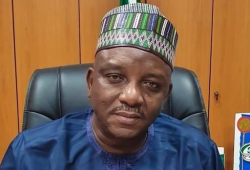

Nigeria’s opposition politics witnessed a fresh twist on Sunday as former Anambra State governor, Peter Obi, and former Kano State governor, Senator Rabiu Musa Kwankwaso, formally dumped the African Democratic Congress (ADC) for the National Democratic Coalition (NDC), triggering intense reactions across the political space ahead of the 2027 general elections.
The two politicians were seen in a viral video receiving membership cards from the leadership of the NDC, shortly after a closed-door meeting with party leaders at the Abuja residence of former Bayelsa State governor and NDC National Leader, Seriake Dickson.
Kwankwaso was presented with his membership card first before Obi, signalling their formal entry into the party.
Speaking shortly after joining the party, Obi urged NDC members to avoid internal crises and court cases, warning that litigation has historically weakened political parties in Nigeria.
“Please let there be no litigation. Party members, please don’t go to court. We want to build a party; we are not lawyers,” Obi said in a video circulated online.
Obi, who also confirmed his resignation from the ADC in a statement posted on X, blamed the internal atmosphere within the party for his decision.
“We now live in an environment that has become increasingly toxic, where the very system that should protect and create opportunities for decent living often works against the people,” he stated.
He, however, denied that his exit was targeted at party leaders such as Senator David Mark or former Vice President Atiku Abubakar.
Kwankwaso’s spokesperson, Saleh Muhammad, said the decision to leave the ADC followed consultations with stakeholders and supporters.
“It was unanimously agreed that we should move out of the ADC,” he said.
Presidency, APC React
The Presidency and the ruling All Progressives Congress (APC) swiftly reacted to the defections.
Special Adviser to the President on Information and Strategy, Bayo Onanuga, described Obi as a “political nomad,” accusing him of constantly changing parties in search of political advantage.
“He pursues the easy road; that will only lead him to doom, like in 2023,” Onanuga wrote on X.
The APC also mocked Obi’s frequent defections, describing him as a “rolling stone” in search of an uncontested presidential ticket.
ADC Stakeholders Raise Concerns
Within the ADC, concerns emerged over the impact of the defections on ongoing opposition coalition efforts.
A prominent party chieftain, Salihu Lukman, warned Kwankwaso against repeated political movements, saying such actions could diminish his political standing and create the impression of personal ambition over collective opposition interests.
In an open letter titled “You can’t run away from yourself,” Lukman stressed the importance of opposition unity ahead of the 2027 elections.
“Unity of all opposition leaders under one platform is a critical success factor for electoral victory,” he said.
He further disclosed that consultations involving Obi, Atiku Abubakar and other opposition figures had been ongoing since 2024 to build a united front against the APC.
NDC Welcomes Defectors
Welcoming the new members, NDC National Leader Seriake Dickson described the party as a growing political force capable of challenging the ruling party.
“NDC is prepared to box above its weight… a party that has no faction, no litigation whatsoever,” Dickson said.
Concerns Over Ideology-Free Defections
Meanwhile, the Civil Society Legislative Advocacy Centre (CISLAC) criticised the wave of defections in Nigeria’s political system, warning that politics without ideology weakens democracy.
In a statement signed by its Executive Director, Auwal Musa Rafsanjani, the group said political movements should be based on clear policy direction and national interest rather than political convenience.
“Political parties should represent coherent visions for national development, and any movement across party lines should be anchored on well-articulated programmes that address Nigeria’s pressing challenges,” the statement read.
CISLAC urged Obi and Kwankwaso to clearly explain how their new political alignment would benefit Nigerians and strengthen democratic accountability.
The group also called on the Independent National Electoral Commission (INEC) to ensure that all processes surrounding the defections comply with constitutional and electoral guidelines.