
Nigeria has confirmed a new case of COVID-19 in Cross River State, involving a 53-year-old Chinese national working with Lafarge in Akamkpa Local Government Area.
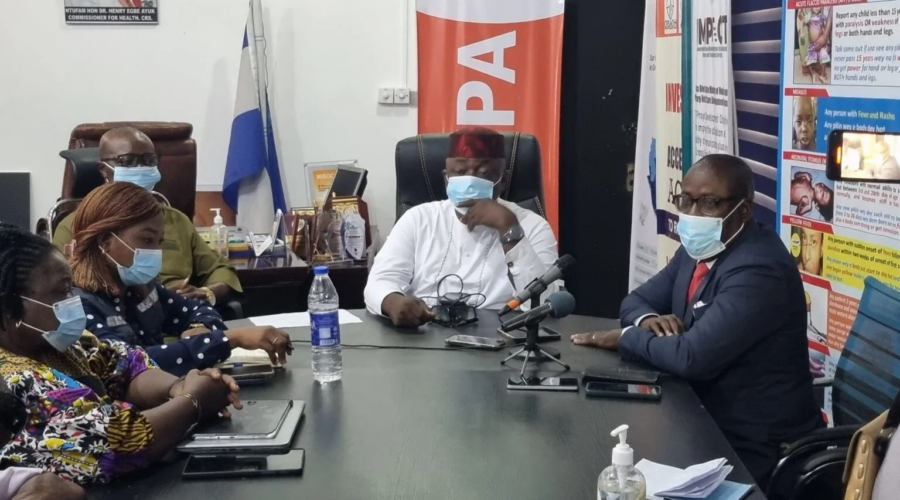
The State Commissioner for Health, Henry Ayuk, disclosed this during a press briefing in Calabar on Tuesday. He said the patient arrived in Nigeria on March 17 and later developed symptoms while in the state.
According to Ayuk, the individual was initially treated at a government health facility before being transferred to the University of Calabar Teaching Hospital (UCTH), where samples were collected and standard protocols followed. Laboratory results subsequently confirmed the infection.
He, however, assured that the patient is in stable condition, adding that there is no cause for alarm as the state’s health system remains prepared to handle such cases.
Also speaking, the State Epidemiologist, Inyang Ekpenyong, said emergency response measures were immediately activated following confirmation of the case, with contact tracing already underway to identify possible exposures.
She noted that the patient developed symptoms on April 10, explaining that the incubation period for COVID-19 typically ranges from two to 14 days, raising the possibility of local transmission.
Ekpenyong emphasised that while the disease may not be entirely preventable, outbreaks can be controlled through early detection and swift containment efforts.
Meanwhile, the state coordinator of the World Health Organization, Yewande Olatunde, reiterated that COVID-19 remains a public health concern and urged residents to adhere strictly to preventive measures.
Health authorities said surveillance has been intensified across the state as investigations continue.