

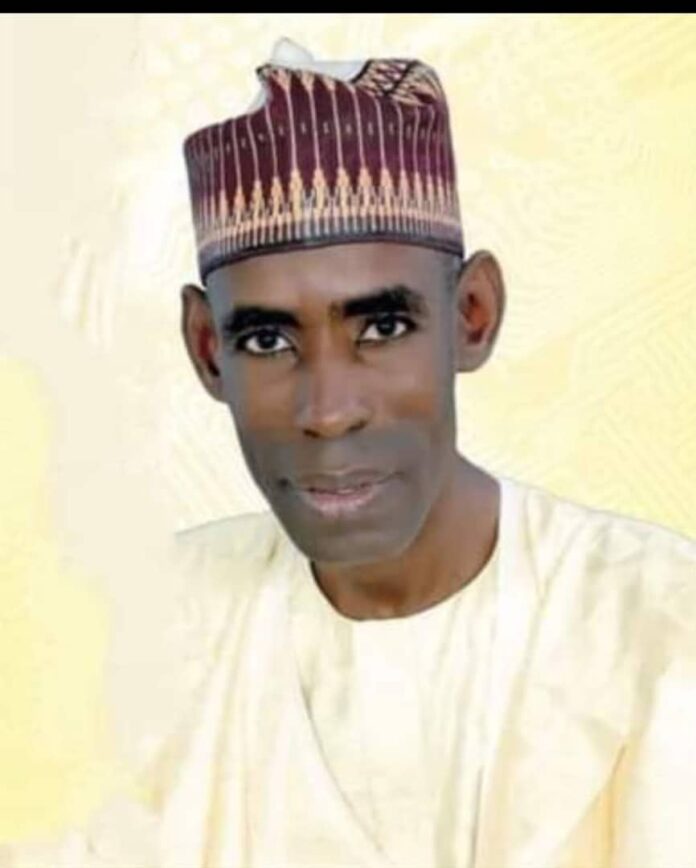
When opposition collapses, democracy follows, by Engr. Bello Gwarzo Abdullahi, FNSE
What started as a rumour is beginning to feel uncomfortably real: the reported intention of Governor Abba Kabir Yusuf to defect to the ruling APC. The signs are increasingly hard to ignore, and many now believe the decision has, in effect, already been made. This possibility forces us to ask some difficult but necessary questions. What happens to the NNPP and the millions of Kwankwasiyya supporters who invested hope, loyalty, and sacrifice in the movement? What becomes of Kano’s long-standing reputation as a stronghold of opposition politics? How sincere are our political leaders, really? Do they truly act in the national interest? And, most importantly, what future awaits a country where opposition no longer matters?
READ ALSO: The North We Once Knew: Lessons in managed diversity, by Engr. Bello Gwarzo Abdullahi, FNSE
These are not abstract concerns. They cut straight to the heart of Nigeria’s democratic survival. In politics, just like in everyday life, shock absorbers matter. Power has a way of clouding judgment. It feeds ego, weakens restraint, and slowly creates distance between leaders and the daily struggles of ordinary people. Nigerians must therefore be prepared for the shocks that come with elite political manoeuvring and be ready to respond thoughtfully and firmly. Seen in this light, the rumoured defection should not be waved off as normal political bargaining. It points to something deeper: a steady erosion of political values and democratic balance.
What we are witnessing goes beyond elections and party competition. It is about the gradual shrinking of space for real opposition. Increasingly, the ruling party appears more focused on absorbing or neutralising dissent than engaging it. Influential opposition figures are brought into the fold, creating a narrow elite consensus where conformity is rewarded and resistance is discouraged. Through a mix of incentives and pressure—sometimes subtle, sometimes overt—the room for principled disagreement continues to shrink. Over time, ideology loses meaning, and politics becomes transactional: party labels change, but interests remain the same. The public is left with choices that feel real on paper but hollow in practice.
READ ALSO: The North We Once Knew: Lessons in managed diversity, by Engr. Bello Gwarzo Abdullahi, FNSE
The consequences for Nigeria are serious. When a country drifts toward one-party dominance, accountability suffers. Leaders who no longer fear being voted out lose urgency in addressing the real problems facing citizens—rising prices, insecurity, unemployment, and failing public services. People grow frustrated when elections seem like rituals where power simply rotates among familiar faces. In such an environment, trust in democracy weakens, and apathy or dangerous alternatives begin to take root.
For Kwankwasiyya, the stakes are especially high. The movement was born as a grassroots response to exclusion and the arrogance of power. It thrived on discipline, sacrifice, and a shared sense of purpose. A move into the ruling party would empty that spirit of its meaning, turning a movement built on conviction into a bargaining chip in elite negotiations. The sense of betrayal among supporters would be deep, and rebuilding trust would not be easy.
Stopping this drift will take more than speeches and statements. Opposition politics must move away from personalities and toward strong institutions. Alliances should be built around clear ideas and policies, not short-term access to power. Internal democracy must replace hero-worship, and accountability must go beyond elite deals to include sustained scrutiny from civil society, the media, and professional groups. Above all, opposition leaders must stay connected to the everyday pain of Nigerians. That connection is what keeps judgment grounded and power in check.
When leaders lose that connection, restraint disappears and democracy suffers. Nigeria cannot afford to become a place where every dissenting voice is eventually bought off or silenced. The slide toward one-party dominance must be confronted now. If it is not, the next election may feel less like a genuine choice and more like a post-mortem on Nigerian democracy.
Written by Engr. Bello Gwarzo Abdullahi, FNSE.
Email: bgabdullahi@gmail.com
Follow the Neptune Prime channel on WhatsApp:
Do you have breaking news, interview request, opinion, suggestion, or want your event covered? Email us at neptuneprime2233@gmail.com