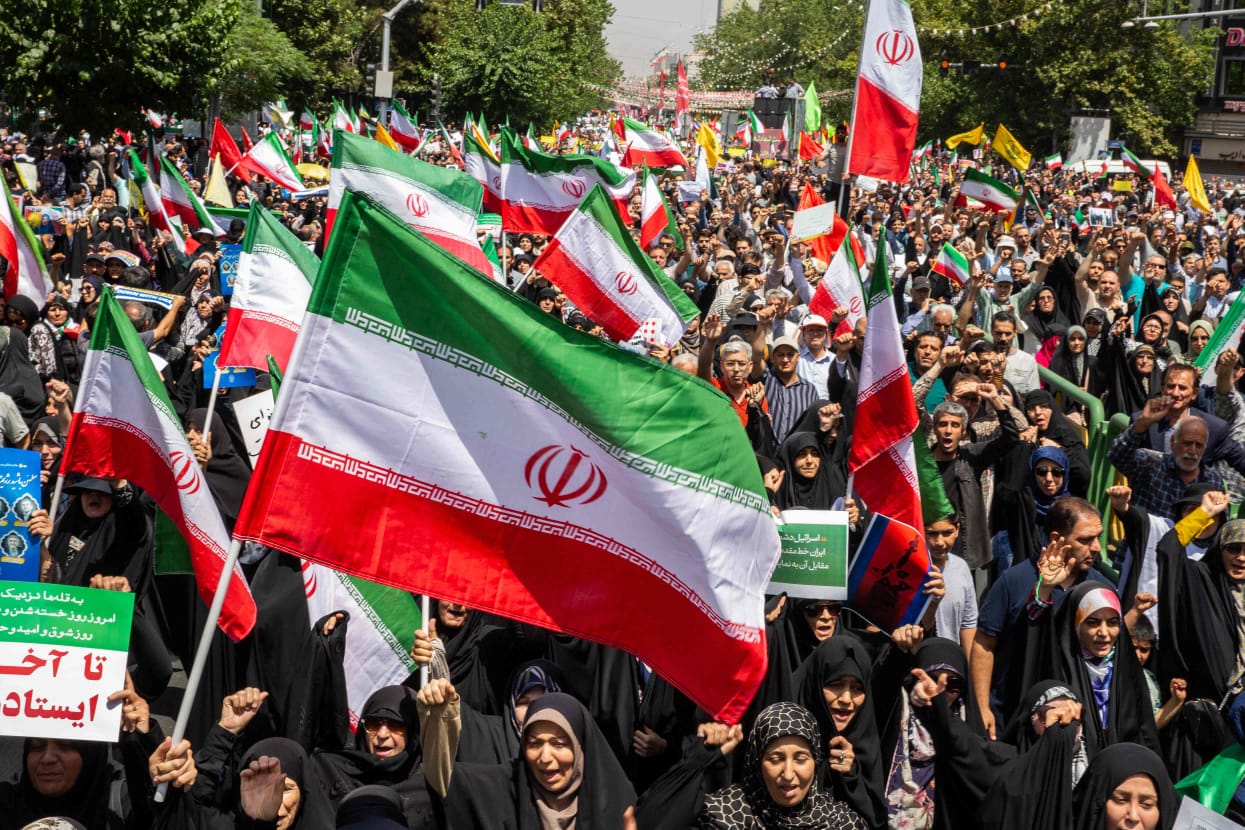
Rhythms of the latest mass uprising in Iran, by Ayuba Ahmad
Starting effectively on the 28th of December, 2025, the ongoing Iranian mass uprising, is, in terms of intensity and spread, only comparable to the nation’s experience of 1979. That year, a sustained nationwide mass action culminated in the termination of the monarchical reign of Shah Reza Pahlavi and the emergence of the Islamic Republic.
While the 1979 uprising reflected the people’s anger against the repressive regime of the Shah and the then prevailing economic difficulties, the ongoing riots were triggered, essentially, by the raging record-high inflation, reaching up to 42%, the depreciation of the national currency, the Ria, with the attendant high cost of living. Like in the 1979 episodes, millions of Iranians are involved in the present riots.
Beginning with the closures of bazaars, the coteries of shops in the capital city of Tehran, the protests soon escalated to hundreds of cities in all thirty-one provinces. Also, what started out as peaceful protests soon became acts of unbridled violence such as the burning and wanton destruction of public buildings, looting and assaults on security agents.
After a week of unrelenting violence and the failures of entreaties or other peaceful approaches, the authorities responded by using counterforce against the rioters. In the process, an estimated 2000 people including security agents, were reportedly killed, with several others injured or arrested.
Expectedly, the Iranian protests have generated several issues, opinions and responses in different parts of the world that need to be thoroughly interrogated. First is the question of economic difficulties and the consequential effects on the masses of the Iranian people.
READ ALSO: Perspectives on the USA invasion of Venezuela, abduction of President Maduro, by Ayuba Ahmad
Without doubt, Iranians have been going through very hard times due to what is unarguably, an unprecedented downturn of the country’s economy. With a spiralling inflation reaching the unbearable degree of over 42%, rising costs of food and other basic essentials, and the depreciation of the country’s currency exchange rate to the dollar, it is indeed an understatement to say that the Iranians were getting to breaking points.
While admitting that Iranians had, understandably, been pushed to the wall as a result of the economic crunch, it is only logical to address the opinion that the situation was the result of mismanagement by the government.
Besides blaming Iran’s huge spending on defence budgets as a wasteful drain on its resources, proponents of this view, however, further contend that the prevailing Iranian economic peril was, largely, due to its self-imposed burdens of funding to Hezbollah in Lebanon, the Houthis in Yemen, Hamas and Syria, before the fall of Bashar Al-Assad.
Occupying the third position in the world’s proven oil reserves and being stupendously endowed with several other natural resources, Iran should not, ideally, be going through its present economic challenges. Critically, however, the situation goes beyond the rather simplistic and cavalier explanations usually spurned by hostile analysts in the USA, Israel and their allies in the West.
From 1979 to date, the raft of sanctions imposed by the United States, the European Union and the United Nations Security Council have had very crippling impacts on the Iranian economy. The sanctions, mainly targeted at the country’s oil and energy sector, have meant serious dislocation to the $480 billion oil-dominated economy. Described as, “tough and brutal”, Iran loses as much as 60 billion dollars annually.
Rather than blaming the Iranian economic challenges on mismanagement, the country’s political leadership should be commended for the monumental achievements achieved despite the debilitating sanctions, international conspiracy and sabotage in the last forty years.
Iran has since made giant strides in educational advancement, such that today, the country has a literacy level of 98%, against the figure of 28% of the USA; it is a global leader in medicine and other scientific fields; it produces high-calibre military hardware such as long-range missiles and drones.
It is as well, empirically inaccurate to ascribe the raging riots in Iran to the people’s quest for democracy and representative governance. This is in view of the fact that, apart from Israel, Iran is the only other country in the Middle East where regular and popular elections are held. Iran has the additional distinction of being the only country where special allocations are constitutionally provided for the representation of minority communities in the national parliament.
The current uprising in Iran is evidently the outcome of the machinations of external forces with an interest in seeing to a “regime change” or even outright disintegration of the country.
With a vibrant population of ninety-five million people, Iran’s potential and actual advancement is a source of discomfort to the nations with an interest in dominance in the Middle East. With its vast oil and other natural resources, Iran is being coveted and targeted for conquest by those with cravings for the country’s wealth.
After publicly threatening the fifteen million residents of Tehran to relocate to escape imminent US bombardments of the city, President Donald Trump was also reported at another forum to urge Iranians to keep “protesting, take over your institutions …help is on the way.”
Mike Pompeo, former US Secretary of State, in his so-called New Year message to Iranians, stated: “Happy New Year to every Iranian in the streets. Also to MOSSAD agents walking beside them”. Ex-Israeli Defence Minister, Yoav Gallant, was similarly unabashed: “The regime in Iran must fall, and we need to exercise strategic patience.
“At the moment, when what matters most is the mass action on the ground, we need to stay in the background and steer things with an invisible hand.”
READ ALSO: Beyond the resignations of Ahmed Farouk, Gbenga Komolafe, by Ayuba Ahmad
To the world, especially the segments of it that cherish global peace, security and love of humanity, it is an exciting piece of news that the Iranian protests have begun to thaw and calm is fast returning to the embattled nation. It is gratifying to know that, after all, the authorities in Tehran will not be executing those arrested and found guilty of participating in the protests.
However, lasting, enduring peace in the Middle East lies in a decision by Israel and Iran to take the pragmatic and rational path. Israel and allies in the West must acknowledge the fact that Iran is not, as such, a “theocracy” or one that is being ruled by a regime like that which existed in Iraq, Libya, Syria and Venezuela. It is a government and a system that is entrenched in the history, culture and traditions of the Iranians. Externally induced “regime change” does not appear to be feasible in the foreseeable future.
Iran on the other hand, must come to terms with the reality of the existence of the state of Israel. Tehran must come away from the dreams and hallucinations of obliterating Israel from the surface of the Earth. Ideological posturing does not, in the end, meet the existential requirements of the people.
Follow the Neptune Prime channel on WhatsApp:
Do you have breaking news, interview request, opinion, suggestion, or want your event covered? Email us at neptuneprime2233@gmail.com