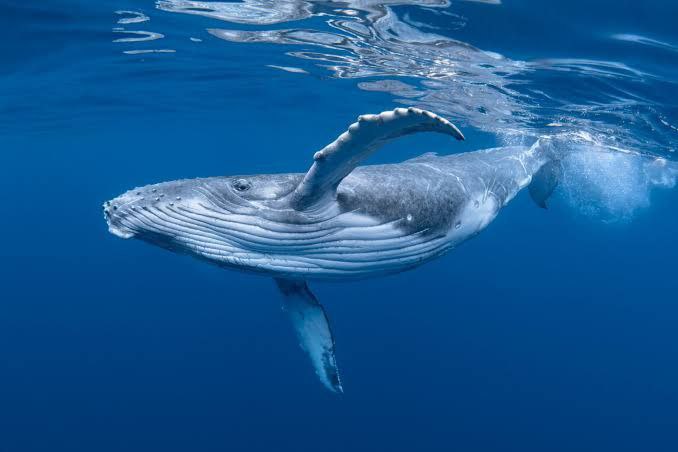
Whales: The undisputed masters of the deep, by Gift Luckson
Beneath the rolling surface of the world’s oceans lives a group of animals so vast, intelligent, and mysterious that they have shaped human imagination for centuries: whales.
These gentle giants are not fish, as many once believed, but mammals—warm-blooded, air-breathing creatures that nurse their young and communicate in ways that still amaze scientists.
The Largest Animals to Ever Live
The blue whale holds a record no other animal can rival. Growing up to 30 metres long and weighing as much as 180 tonnes, it is the largest animal known to have ever existed—bigger than the biggest dinosaurs.
Its heart alone can weigh as much as a small car, and a child could crawl through its major blood vessels. Yet despite their immense size, many whales feed on some of the smallest creatures in the ocean.
READ ALSO: Ships of the Desert: The enduring importance of camels to humanity, by Gift Luckson
Baleen whales, such as blue and humpback whales, consume tiny shrimp-like animals called krill, filtering thousands of them from seawater with comb-like plates in their mouths.
Whales are famous for their complex sounds. Humpback whales, in particular, produce long, haunting songs that can travel hundreds of kilometres underwater. These songs are not random; they follow patterns, change over time, and are shared among populations, suggesting a form of cultural learning.
Some whales also use echolocation—a biological sonar—to “see” their surroundings. Toothed whales like sperm whales and dolphins emit clicks that bounce off objects, helping them locate prey even in the darkest depths of the ocean.
Deep Divers and Long Travellers
Sperm whales are among the deepest-diving mammals on Earth, plunging more than 2,000 metres in search of giant squid. To survive these extreme dives, whales have special adaptations, including flexible rib cages and the ability to slow their heart rate to conserve oxygen.
Many whale species are also legendary travellers. Gray whales migrate up to 16,000 kilometres each year, journeying between feeding grounds in cold polar waters and breeding areas in warmer seas—one of the longest migrations in the animal kingdom.
Intelligence and Social Bonds
Whales are highly social animals. Orcas (killer whales) live in tight-knit family groups called pods, where knowledge about hunting and survival is passed down from older members to younger ones. Some whale species show signs of problem-solving, cooperation, and even mourning behaviour when a pod member dies.
READ ALSO: Henna: A natural tradition rooted in beauty, health, and heritage, by Gift Luckson
Whales play a crucial role in keeping the ocean healthy. Their movements help circulate nutrients, and their waste fertilises phytoplankton—tiny marine plants that produce a large portion of the Earth’s oxygen and absorb carbon dioxide. In this way, whales quietly help regulate the planet’s climate.
Once hunted to the brink of extinction, many whale species are slowly recovering thanks to conservation efforts. However, they still face threats from climate change, pollution, ship strikes, and noise in the oceans. Protecting whales is not just about saving a single group of animals—it is about preserving the balance of life in the seas.
Follow the Neptune Prime channel on WhatsApp:
Do you have breaking news, interview request, opinion, suggestion, or want your event covered? Email us at neptuneprime2233@gmail.com