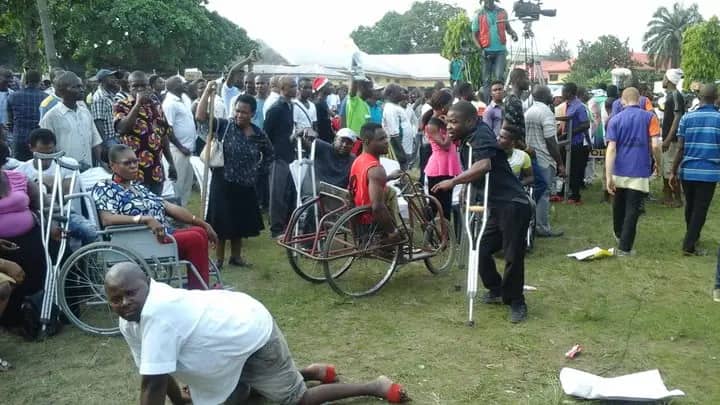
Ability in Disability: The entrepreneurial spirit of Persons with Disabilities, by Gift Luckson
In a world that often sees disability before ability, many persons with disabilities (PWDs) are redefining what it means to be capable, creative, and determined.
Across Nigeria and beyond, inspiring individuals are proving that disability is not a barrier to success — but a catalyst for innovation, resilience, and purpose.
For decades, society’s perception of disability has leaned toward sympathy and charity. Many people assume that those with physical or mental challenges must depend on handouts or public pity. But a quiet revolution is happening in communities everywhere.
From shoemaking to fashion design, tech innovation to agribusiness, people with disabilities are turning challenges into opportunities and rewriting their stories through entrepreneurship.
READ ALSO: Cuffy, Kofi Badu: A bold symbol of resistance against slavery, by Gift Luckson
Ifeanyi, a young man who lost his leg in an accident but refused to let that end his dreams. With a small loan and training from an empowerment programme, he now runs a thriving phone-repair business, employing two apprentices, both able-bodied. “I didn’t want people to feel sorry for me,” he says. “I wanted them to respect my work.”
His story is echoed by Aisha Mahmoud, a visually impaired woman in Kano who started selling food items in a small shop around her neighbourhood. Her business provides daily essentials to the community. “I may not see faces,” she laughs, “but I can smell opportunity.”
Determination and Hope
These stories showcase the entrepreneurial spirit that thrives when people are given access to the right tools, training, credit facilities, and encouragement. Rather than begging on the streets, many PWDs are choosing to earn with dignity, challenging stereotypes, and contributing to the economy in real ways.
Challenges
However, their journey is not without obstacles. Discrimination, lack of accessibility, and limited funding continue to hinder progress. Many microfinance institutions still view persons with disabilities as “high-risk borrowers,” while employers hesitate to include them in training or mentorship programmes.
The real challenge, therefore, is not the disability itself, but the society that limits opportunities. Government and private sector initiatives, such as skill-acquisition schemes by the National Directorate of Employment (NDE) and various NGOs, are helping bridge the gap. Yet, more needs to be done, especially in enforcing disability-inclusive policies, providing low-interest business loans, and ensuring public awareness that ability is not measured by physical perfection.
Societal Support
At its heart, “Ability in Disability” is more than a slogan — it’s a movement toward inclusion and empowerment. It celebrates determination over dependence, innovation over isolation, and purpose over pity.
The message is clear: Persons with disabilities don’t need sympathy; they need support, recognition, and opportunity. When society stops seeing limits and starts seeing potential, everyone wins.
Viable Businesses for PWDs
There are many businesses that people with disabilities can successfully do in Nigeria, depending on their interests, skills, and type of disability.
Tech & Digital Businesses
This is perfect for people with physical disabilities or mobility challenges who can work from home.
• Graphic design and branding
• Web design & development
• Social media management
• Digital marketing
• Content writing and copywriting
• Data entry or virtual assistance
• Online tutoring and transcription
These businesses require skill, not physical strength; they can be done with a phone, a laptop and internet access.
Fashion & Craft Businesses
Ideal for creative people, including those with hearing or speech impairments.
• Tailoring and fashion design
• Shoe and bag making
• Beadwork or jewellery design
• Knitting and embroidery
• Leatherworks and crafts
Nigeria has a large market for handmade goods, and training is available in many skill centres sponsored by the NDE and NGOs.
READ ALSO: Venture Smith’s courageous journey from slavery to freedom, by Gift Luckson
Food & Catering
This is great for those who love cooking or baking, including people with hearing or mild physical disabilities.
• Catering services and mobile kitchen
• Snacks and pastries production
• Homemade spices and packaged food
• Food delivery business
Small-Scale Trading & Retail
For people who want daily engagement and direct customer contact, running a small kiosk, table, or mobile shop with little capital is profitable and can guarantee self-reliance.
• Phone accessories or recharge card sales
• Boutique or cosmetics store
• Provision or grocery shop
• Stationery and school supplies
Follow the Neptune Prime channel on WhatsApp:
Do you have breaking news, interview request, opinion, suggestion, or want your event covered? Email us at neptuneprime2233@gmail.com