Hassan Usman Katsina: The soldier-statesman who steered Northern Nigeria through turbulent times
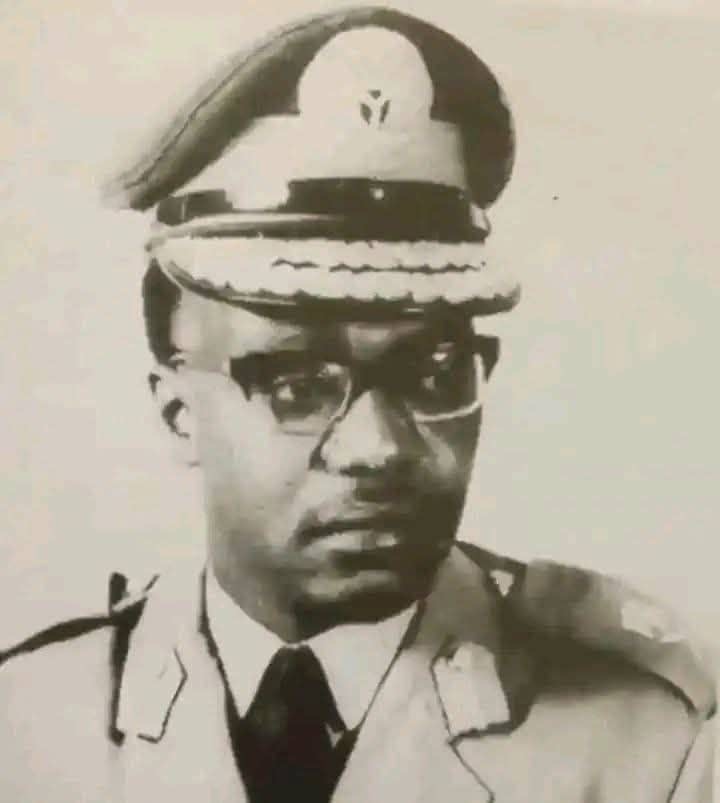
Hassan Usman Katsina, born on 31 March 1933 in Katsina, hailed from the Fulani royal family of the Sullubawa clan. A traditional titleholder, he served as the Chiroman Katsina and is widely regarded as the last Governor of Northern Nigeria. His distinguished career included serving as Chief of Army Staff during the Nigerian Civil War and later as Deputy Chief of Staff at the Supreme Headquarters.
He descended from a respected lineage of leaders. His father, Usman Nagogo, was Emir of Katsina from 1944 to 1981, while his grandfather, Muhammadu Dikko, ruled before him from 1906 to 1944. Growing up in this royal setting profoundly shaped his sense of leadership and public service.
Hassan Usman Katsina received his early education at Barewa College, a renowned institution in Northern Nigeria. He later attended the Nigerian College of Arts, Science and Technology in Zaria before opting for a career in the military.
READ ALSO: Ciroma, Coomasie: We Celebrate Life, We Thank God for It, by Hassan Gimba
Joining the Nigerian Army in 1956, at a time when it was under British command, he trained at the Mons Officer Cadet School and the Royal Military Academy, Sandhurst. After independence, his military career advanced rapidly. He held command roles in Kano and Kaduna and served in military intelligence during the Congo Crisis, earning the Congo Medal. His growing influence made him one of the notable Northern officers with deep ties to the political establishment.
The military coup of 1966 became a defining moment in his career. Following the assassination of Northern Premier Ahmadu Bello, Katsina was appointed Governor of Northern Nigeria. His leadership helped counterbalance the influence of military hardliners, including General Murtala Mohammed, who initially advocated for Northern secession. He played a key role in the July 1966 countercoup that removed General Johnson Aguiyi-Ironsi and brought General Yakubu Gowon to power. Katsina subsequently served on the Supreme Military Council during a period marked by national unrest.
As governor, he faced the delicate task of stabilizing a traumatized region grappling with the fallout of the killings of its political leaders and the subsequent anti-Igbo violence of 1966. Amid widespread fear and mistrust, he continued the development blueprint left by Ahmadu Bello and relied on competent administrators such as Ibrahim Dasuki, Ali Akilu, and Sunday Awoniyi. His tenure coincided with the rise of a new cadre of Northern intellectuals and officers later known as the Kaduna Mafia.
He oversaw the Interim Common Services Agency, which managed regional resources during Nigeria’s early decentralization. He also strengthened ties with traditional emirates and attempted to revive aspects of the former Native Authority system.
In 1968, he became Chief of Army Staff at the height of the Civil War. He presided over the expansion of the armed forces, reinforced the blockade against Biafra, and coordinated foreign air support. He was among those present when Biafra surrendered in 1970, bringing the war to an end.
General Katsina retired from service after the 1975 coup. Widely respected as a senior officer, he turned down several subsequent government appointments. His influence, however, endured, particularly through his mentorship of younger officers who later shaped Nigeria’s military leadership.
READ ALSO: From Shared Desks to Separate Worlds: The Price of Educational Apartheid, by Hassan Gimba
In civilian life, he remained active in national affairs. He contributed to the formation of the National Party of Nigeria and the Committee of Concerned Citizens. A passionate polo enthusiast, he served as president of the Nigerian Polo Association, continuing the legacy of his father, Emir Usman Nagogo, a pioneer of the sport in Nigeria.
General Hassan Usman Katsina died on 24 July 1995 in Kaduna. He is remembered as a soldier, administrator, traditional aristocrat, and a stabilizing figure during some of Nigeria’s most challenging moments.
Follow the Neptune Prime channel on WhatsApp:
Do you have breaking news, interview request, opinion, suggestion, or want your event covered? Email us at neptuneprime2233@gmail.com