Politics of Kano: Random musings, by
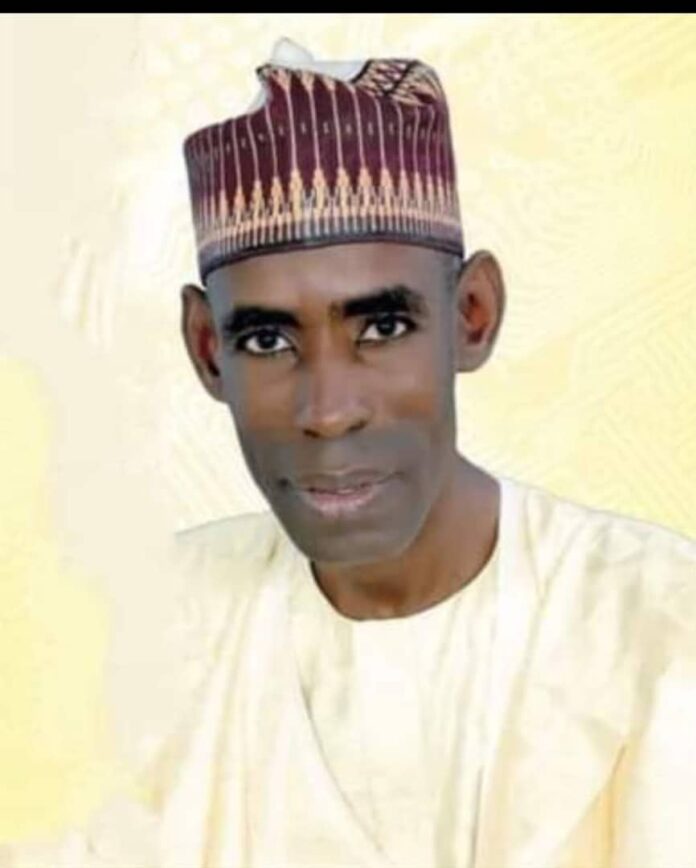
Engr. Bello Gwarzo Abdullahi, FNSE
For decades, Kano has occupied a unique and influential position within West Africa’s socio-cultural, economic, political, and religious landscape. From its highly organised pre-colonial Emirate system to its emergence as a major provincial centre during the colonial era, the ancient city has remained a powerful symbol of Islamic scholarship, commerce, and political relevance. Even today, Kano continues to stand at the centre of Nigeria’s democratic politics, commanding one of the country’s largest and most politically conscious voting populations. Judging by unfolding developments, it is becoming increasingly clear that Kano is once again preparing to shape the direction of national politics in a decisive way.
The political landscape shifted dramatically in January 2026 when Governor Abba Kabir Yusuf defected from the New Nigeria People’s Party (NNPP) to the All Progressives Congress (APC). That single move immediately altered Kano’s political equation and, once again, exposed the fluid and unpredictable nature of Nigerian politics. What followed was the emergence of a complex struggle for influence within the APC itself. At the centre of this unfolding political contest are three heavyweight actors: Dr. Abdullahi Umar Ganduje, former governor of Kano and former APC National Chairman; Senator Barau Jibrin, the Deputy Senate President; and Governor Abba Kabir Yusuf. Though public appearances suggest harmony and cooperation, beneath the surface lies a subtle but intense battle for political control ahead of the 2027 elections.
Governor Abba Yusuf’s decision to join the APC appears to have been driven largely by political survival and the desire to align more closely with the federal power structure rather than remain politically isolated. The move was understandable, depending, of course, on the perspective from which it is viewed. While some regard it as a betrayal and politically untimely, others see it as strategic and necessary. Nonetheless, the defection created serious tensions within the APC. Many long-standing party loyalists who spent years building the party and resisting the Kwankwasiyya movement now feel sidelined and betrayed. To them, the arrangement resembles an uncomfortable surrender of party leadership to former rivals — a perception that continues to generate quiet resentment within the ruling party.
At the same time, the long-standing rivalry between the camps of Senator Barau Jibrin and Dr. Abdullahi Umar Ganduje remains very much alive. Senator Barau has steadily positioned himself as a formidable political force through strategic outreach, constituency engagement, and carefully cultivated political networks across Kano North and beyond. However, there is little doubt that as the political calculations for 2027 become clearer, these competing factions will begin demanding concessions, influence, and recognition, thereby increasing the likelihood of internal conflicts, sabotage, and bitter primary contests.
For this reason, Ganduje’s public endorsement of Governor Abba Yusuf’s second-term ambition should be viewed with caution. Considering the fierce and deeply personal political battles he fought against the Kwankwasiyya movement during his tenure as governor, his current accommodation of Abba Yusuf appears more tactical than ideological. It is likely a temporary political compromise shaped by broader national calculations and the APC’s desire to consolidate power, even if that requires coexistence with former adversaries under the same political platform.
Still, political history is not easily forgotten. Many within Ganduje’s camp have not moved past Governor Abba Yusuf’s early actions in office, particularly the demolition of structures associated with the previous administration and attempts to dismantle aspects of Ganduje’s political legacy. Those events remain fresh in political memory and, as a result, genuine trust within the alliance remains limited.
Politics, after all, is ultimately local. The current arrangement therefore appears fragile and difficult to sustain over time. Ganduje, despite facing a gradual decline in political influence — particularly following his removal as APC National Chairman, which was publicly framed as a resignation on health grounds — as well as growing threats of political extinction even within his own Dawakin Tofa Local Government Area, is unlikely to quietly fade into irrelevance. He remains one of the most experienced political tacticians in northern Nigeria: a politician who survived the turbulence of the Fourth Republic and successfully navigated the internal crises of both the PDP and APC with remarkable resilience. His reputation has long rested on patience, calculation, and strategic timing, and he is unlikely to relinquish political relevance without resistance.
Senator Barau Jibrin’s camp is equally conscious of these evolving dynamics. Despite the public display of party unity, neither the Ganduje bloc nor the Barau camp is likely to stand aside while its influence is weakened by the governor’s new political alignment or by competing federal interests. Beneath the carefully managed appearances of solidarity lies a deeper struggle for relevance, influence, and political survival.
Ironically, this growing internal tension could create a major opportunity for the opposition. Kano’s political history shows that its electorate often reacts strongly whenever the ruling elite becomes fragmented or excessively polarised. The state has long maintained a deeply rooted anti-establishment political culture grounded in the Talakawa tradition. That tradition was evident in 1979 when Mallam Aminu Kano’s People’s Redemption Party (PRP) defeated the powerful National Party of Nigeria (NPN); in 2003 when Malam Ibrahim Shekarau unseated an incumbent administration; and again in 2023 when the NNPP disrupted and defeated the APC’s political dominance in the state.
These political realignments are also unfolding against the backdrop of severe economic hardship across the country. Rising inflation, worsening living conditions, currency instability, and the painful effects of fuel subsidy removal have left many young people in Kano frustrated, vulnerable, and increasingly disillusioned. Opposition interests are already attempting to channel this growing public frustration into political momentum.
In Kano, where political awareness runs deep and grassroots mobilisation has historically shaped electoral outcomes, economic hardship can quickly become a potent political weapon. If both the state and federal governments fail to provide visible and meaningful economic relief, elite endorsements and political agreements may ultimately prove insufficient to secure electoral support. A population that is both politically conscious and economically distressed rarely remains silent for long. In such circumstances, the ballot box often becomes the vehicle for protest.
The political situation in Kano is therefore approaching a delicate and critical stage. The apparent peace within the APC resembles more of a political truce than genuine unity — a temporary arrangement held together by convenience, caution, and competing ambitions. Beneath the calm surface lie unresolved grievances, quiet distrust, and suppressed rivalries waiting for the right moment to re-emerge.
Ultimately, how Kano manages the intersection between elite political realignments and growing grassroots economic frustration will have consequences far beyond the state itself. As has often been the case throughout Nigeria’s political history, Kano may once again serve as the clearest indicator of where the nation is headed politically in 2027. And perhaps, once again, the old political saying may prove true: as Kano goes, so goes the nation.
Written by Engr. Bello Gwarzo Abdullahi, FNSE.
Email: bgabdullahi@gmail.com
Follow the Neptune Prime channel on WhatsApp:
Do you have breaking news, interview request, opinion, suggestion, or want your event covered? Email us at neptuneprime2233@gmail.com