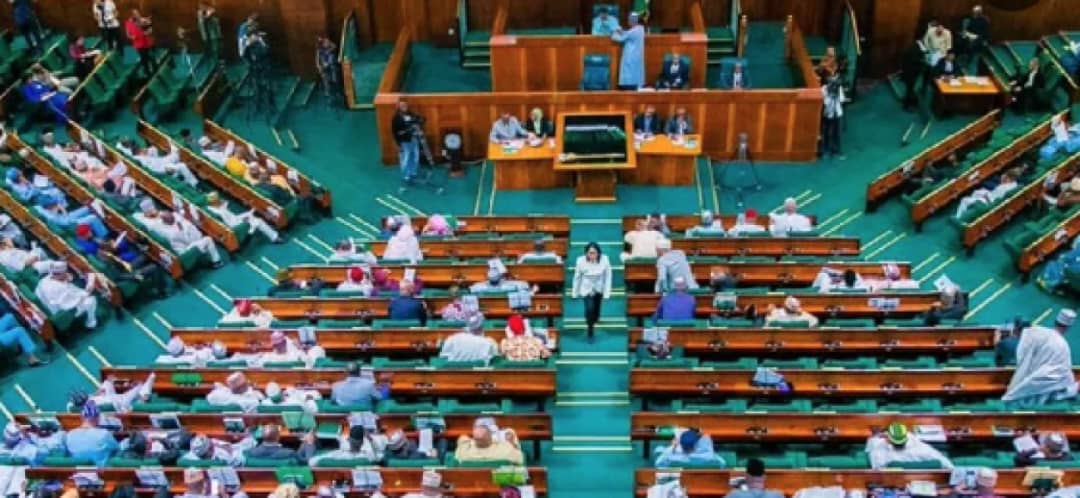
Reps pass revised ₦43.56tn, ₦48.31tn 2024, 2025 budgets
The House of Representatives on Tuesday approved the revised ₦43.56 trillion 2024 Appropriation Bill after adopting the report of the House Committee on Appropriations.
The approval followed the conclusion of clause-by-clause consideration by the Committee of Supply and the subsequent third reading of the bill at plenary, presided over by the Speaker, Tajudeen Abbas.
A breakdown of the revised 2024 budget shows that ₦1.74 trillion is allocated to statutory transfers, ₦8.27 trillion to debt servicing, ₦11.26 trillion to recurrent (non-debt) expenditure, while ₦22.27 trillion is set aside for capital expenditure and development fund contributions for the fiscal year ending December 31, 2025.
At the same sitting, the House also passed the revised ₦48.31 trillion budget for the 2025 fiscal year. Of this amount, ₦3.64 trillion is earmarked for statutory transfers, ₦14.31 trillion for debt servicing, ₦13.58 trillion for recurrent (non-debt) expenditure, and ₦16.76 trillion for capital expenditure through development fund contributions. The revised 2025 budget is expected to run until March 31, 2026.
The passage followed the transmission of the Appropriation (Repeal and Re-enactment) Bills for 2024 and 2025 to the National Assembly by President Bola Tinubu last Friday.
READ ALSO: Reps open investigation into tax law amendments as PDP calls for suspension
The first executive bill repeals the ₦35.05 trillion 2024 Appropriation Act and re-enacts it with an increased total expenditure of ₦43.56 trillion, to be funded from the Consolidated Revenue Fund of the Federation. The second bill repeals the ₦54.99 trillion 2025 Appropriation Act and replaces it with a revised spending plan of ₦48.31 trillion.
President Tinubu said the revisions became necessary to accommodate budgetary items not previously captured and to realign capital implementation targets with current fiscal realities. He explained that the revised framework adopts a more realistic 30 per cent capital implementation benchmark, considering Nigeria’s execution capacity and revenue constraints.
The president also acknowledged the challenge of poor capital budget implementation in 2024, which he said adversely affected infrastructure delivery and development projects nationwide. According to him, extending the lifespan of the 2025 budget to March 31, 2026, would give Ministries, Departments and Agencies adequate time to access and utilise the targeted capital releases.
Tinubu added that the revised budgets form part of a broader fiscal reform agenda aimed at addressing structural weaknesses in Nigeria’s budgeting process, including the problem of running multiple budgets concurrently. He said the approach would enhance planning, improve implementation, and strengthen transparency and accountability in public spending, while ensuring better value for money for Nigerians.
Follow the Neptune Prime channel on WhatsApp:
Do you have breaking news, interview request, opinion, suggestion, or want your event covered? Email us at neptuneprime2233@gmail.com