Sule Lamido, coalition, and 2027, by Engr. Bello Gwarzo Abdullahi, FNSE
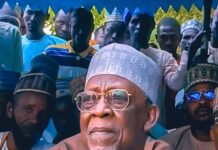
Alhaji Sule Lamido’s political profile is not a conventional résumé. It is better understood as a continuous, decades-long thread in Nigeria’s democratic fabric, beginning in 1979. His career arcs through ideological movements, opposition platforms, governance structures, and party leadership roles without losing its philosophical core. In an environment where political actors often evolve by reinventing themselves into ideological opposites, Lamido remains one of the rare figures who evolved by refining his beliefs, not erasing them.
Lamido’s formative political weight was shaped under the progressive movement of the People’s Redemption Party, where he served in the House of Representatives. His early politics were loud, principled, and grounded — less about titles, more about mission. That phase proved a lasting point: influence in Nigeria is ultimately validated by longevity and measurable outcomes, not entry hype.
His political reach expanded further under the Social Democratic Party, where he served during Nigeria’s foundational democratic coalition era of the 1990s, and later assumed the position of Chairman of the SDP in the former Kano State. That role was not symbolic. It was structural — contributing to democratic organising, opposition coordination, and political maturation in northern Nigeria. Lamido subsequently advanced to national party structuring roles, including serving as the National Secretary of the People’s Democratic Party, cementing his role as a behind-the-scenes architect of political direction, not just a participant.
As Minister of Foreign Affairs during the Obasanjo administration, Lamido operated on a diplomatic front that demanded strategic restraint, negotiation depth, and intelligence — proving that conviction can coexist with statecraft. But it was his tenure as Governor of Jigawa State that settled the debate on whether he could deliver what he preached. His administration focused on rural connectivity, state capacity building, education expansion, healthcare strengthening, and long-range governance planning. He governed by adapting his ideals into deployable methods, not surrendering them to political convenience.
Since 1998, Lamido has remained politically relevant at a level that exceeds transactional party politics — shaping narratives, mobilising networks, influencing direction, and setting tone without being scripted or predictable. Even his decision to publicly record his political journey while still fully active defied the typical Nigerian political lifecycle and reasserted his understanding of narrative as a tool of strategy, rather than a post-power reflection exercise.
Nigeria’s political climate in 2025 is not ordinary. The country faces economic pressure, security volatility, democratic space contraction, and a visibly deliberate centralisation of power by the ruling party. These dynamics carry a familiar arc: political monopoly always constricts progress, suffocates competition, and weakens institutions. This is the quiet but existential contest shaping the 2027 landscape — not simply one party versus another, but concentrated political dominance versus democratic plurality itself.
At moments like this, opposition fragmentation is not opposition. It is endorsement of the very political compression it claims to challenge. What Nigeria needs now is not the loudest voice, but the most coordinated structure. A next-generation opposition strategy has one logical architecture: coalition politics powered by negotiation, alignment, shared strategy, and collective objective — democratic defence first, political ego last.
Lamido’s generation holds what Nigeria urgently requires — institutional memory, ideological clarity, governance proof, legislative credibility, and diplomatic competence. These are not old-guard politics. They are strategic assets that a coalition-first opposition cannot ignore.
For 2027 to mean anything, the opposition must finally internalise the stakes and contest them in unified formation — deliberate, collaborative, and outcomes-driven. The goal now is functional alignment, not performative rivalry. Unity is no longer a political slogan. It is a democratic necessity.
Therefore, there is no better or more urgent time than now for Alhaji Sule Lamido to up the ante, walk into the coalition arena unapologetically, and become part of a synchronised opposition framework capable of challenging excessive power concentration and restoring competitive democratic energy under a shared national objective.
The coalition moment is not loading. It has arrived. So Alhaji Sule Lamido’s moment is now — to lead from conviction and join forces with a purpose-built opposition coalition that can defend Nigeria’s democratic future in 2027.
Written by Bello Gwarzo Abdullahi, FNSE.
Email: bgabdullahi@gmail.com
Follow the Neptune Prime channel on WhatsApp:
Do you have breaking news, interview request, opinion, suggestion, or want your event covered? Email us at neptuneprime2233@gmail.com