The Kamuka Tribe: Rooted in tradition, nurturing farming and discipline in modern times, by Tawheed Yakub
The Kamuku are one of Nigeria’s quietly resilient and culturally profound ethnic groups, rooted in the forested hills and plains of Northwestern Nigeria and predominantly found in Niger State with communities stretching into Kaduna, Kwara, and parts of the central belt. The Kamuku people represent a deep thread in the tapestry of Nigeria’s indigenous civilisations.
Known for their simple lifestyle, artistic craftsmanship, and strong communal values, the Kamuku have maintained their ancestral identity through centuries of political change, cultural encounters, and evolving systems of governance.
Despite interactions with Hausa-Fulani societies, colonial authorities, and modern Nigeria, the Kamuku continue to preserve their unique worldview grounded in the land, the spirit world, and the authority of ancestral tradition.
Origin and Early History
The history of the Kamuku is traced back to many centuries, long before the rise of Hausa-Fulani emirates in the region. Oral traditions point to an ancient and organised settlement known as Kankuma (or Kwangoma), believed to have served as one of their earliest cultural and political centres.
They are regarded as some of the earliest inhabitants of the North-Central forest belt, occupying rugged hill terrains and fertile plains near what is now Kamuku National Park in Kaduna State. From these ancestral homelands, they developed small autonomous settlements governed by elders, spiritual leaders, and age-grade systems.
Unlike centralised kingdoms that arose around them, Kamuku communities favoured decentralised social authority, where leadership was earned through age, wisdom, and service a system that sustained them through periods of migration, Jihad influence, and colonial restructuring.
Culture and Tradition
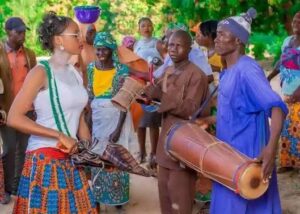
Kamuku culture is deeply communal, guided by tradition, kinship, and respect for the elders. Their villages are closely knit, with extended families forming the backbone of social life and decision-making.
The Kamuku language, part of the ancient Kainji branch of the Niger-Congo family, remains a cornerstone of identity. Though many also speak Hausa for trade and communication, the Kamuku tongue carries ancestral memory, songs, ritual speech, and oral wisdom.
Traditional religion among the Kamuku honours ancestral spirits, natural forces, and sacred shrines, often located near trees, hills, or springs. Rituals involve songs, offerings, and ceremonial dances believed to secure blessings, protection, and fertility.
Today, Islam and Christianity have a strong presence among the Kamuku, but many cultural practices endure, blending faiths in a way that reflects tolerance, continuity, and cultural strength.
Marriage Customs
Marriage among the Kamuku is a respected and community-centred institution, symbolising alliance not just between individuals, but between extended families.
Young men traditionally demonstrate responsibility through service, assisting the bride’s family in farming, providing gifts, or proving their work ethic to elders. This labour, like in many agrarian cultures, reflects readiness for family life.
Bride price is symbolic and often includes local produce, livestock, or crafted items, representing honour rather than commercial exchange.
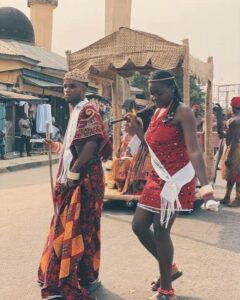
Wedding ceremonies are festive and colourful, marked by:
Drumming and dance
Gift presentation
Feasting and communal blessings
Cultural rites acknowledging ancestors.
Polygamy historically existed but is now less common, shaped by modern faith systems and changing economic realities.

Socio-Economic Life
Agriculture forms the heartbeat of Kamuku life. The people cultivate guinea corn, millet, maize, groundnuts among many others. Livestock rearing and hunting also play important roles, especially in the hill and forest zones of their homeland. Women are vital to the economy through farming, processing produce, and trading in local markets.
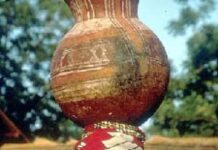
Kamuku craftsmanship is well-regarded, including basketry and mat weaving, pottery, woodcarving, and beadwork.
Knowledge of forest herbs and traditional medicine is highly valued, passed through generations as part of their indigenous knowledge tradition.
In recent decades, education and religion have expanded opportunities for Kamuku youth, leading many into the military, public service, trade, and religious commitments, reflecting the community’s adaptability and discipline.
Challenges
Despite their resilience, the Kamuku face several modern pressures:
Language Loss: The younger generations shift toward Hausa and English.
Limited Political Representation: When compared to the dominant regional groups.
Low infrastructural development in rural communities.
Security concerns in some parts of their ancestral lands.
Economic marginalisation and limited access to education and healthcare.
These factors pose risks to cultural preservation and community continuity, yet the Kamuku actively work to sustain their heritage through cultural organisations, communal leadership, and renewed interest in language and traditions.
Ceremonies and Cultural Practices
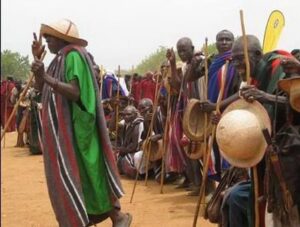
Kamuku festivals emphasise unity, harvest blessings, and continuity of ancestral customs. Celebrations feature:
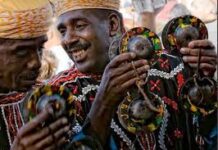
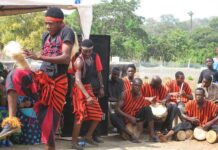
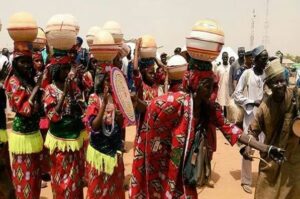
Drumming and horn music, ceremonial dance and masquerade displays, wrestling competitions, storytelling and folk songs, spiritual rites to honour ancestors and nature spirits
Rites of passage for youth, naming ceremonies, and agricultural rituals ensure that tradition remains alive, linking the living with the spirit world and the legacy of past generations.
The Kamuku people stand as an enduring pillar of Nigeria’s indigenous heritage resilient, humble, and culturally profound. From their ancient forest settlements to their modern communities, they embody values of unity, spirituality, hard work, and ancestral pride.
Though faced with contemporary pressures, the Kamuku continue to safeguard their language, festivals, and traditions, affirming their place in Nigeria’s cultural mosaic.
On a visit to a Kamuku farming settlement near the Kamuku hills, one elder revealed, ‘In our land, the soil remembers who cares for it.’ This sentiment reflects the quiet strength and cultural depth found in many of Nigeria’s minority ethnic groups guardians of heritage, land, and memory in a rapidly changing world.
Follow the Neptune Prime channel on WhatsApp:
Do you have breaking news, interview request, opinion, suggestion, or want your event covered? Email us at neptuneprime2233@gmail.com