


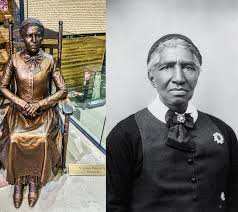
The legacy of Eliza Moore, one of America’s last survivors of slavery, by Gift Luckson
Eliza Moore (June 27, 1843 – January 21, 1948) was one of the last living African Americans proven to have been born into slavery in the United States.
Lineage
Her father’s name was Judge Moore and Eliza was his only child, whom he had in his old age. Moore was born a slave in Montgomery County, Alabama, in 1843.
She is considered by many historians as the last certifiable African American ex-slave in America. Moore is the only person to date whose claim can be supported due to the availability of adequate documentation.
Enslavers
During the American Civil War, Moore was reportedly enslaved by Dr Taylor, according to B. E. Bolser of Mt. Meigs, Alabama.
READ ALSO: Outlasting Slavery: How George Freeman Bragg Jr. became a force for racial justice, by Gift Luckson
She married Asbury Moore, who was also an enslaved person, and they went to the Gilchrist Place in Cordova, Alabama, together as sharecroppers after the war.
Eliza and Asbury had two children together, Asbury died in 1943 and was also said to be more than 100 years old. Eliza died five years after her husband’s death.
Death in Freedom
It is reported that Eliza Moore had been living on Gilchrist Place for about 65 or 70 years as a free woman at the time of her death in 1948.
Eliza Moore died at the age of 104 on January 21, 1948, at the home of Charlie Brown Jr. on the Gilchrist Place in Montgomery County.
Slavery in the United States
The legal institution of human chattel slavery, comprising the enslavement primarily of Africans and African Americans, was prevalent in the United States of America from its founding in 1776 until 1865, predominantly in the South.
Slavery was found throughout European colonisation in the Americas. From 1526, during the early colonial period, it was practised in what became Britain’s colonies, including the Thirteen Colonies that formed the United States.
READ ALSO: Harriet Jacobs: A voice of courage against slavery, by Gift Luckson
Under the law, children were born into slavery, and an enslaved person was treated as property that could be bought, sold, or given away. Slavery persisted in about half of U.S. states until abolition in 1865, and issues concerning slavery seeped into every aspect of national politics, economics, and social customs.
In the decades following the end of Reconstruction in 1877, many of slavery’s economic and social functions were continued through segregation, sharecropping, and convict leasing. Involuntary servitude as a punishment for crime remains legal.
Follow the Neptune Prime channel on WhatsApp:
Do you have breaking news, interview request, opinion, suggestion, or want your event covered? Email us at neptuneprime2233@gmail.com