
The Looming Debt Avalanche: Why Nigeria’s external borrowing is eating the future, by Abubakar M. Kareto
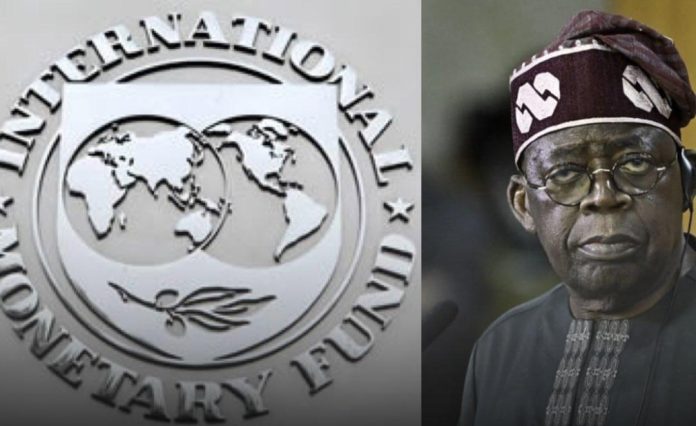
The International Monetary Fund has just fired a fiscal flare gun into Nigeria’s macroeconomic sky. In its newly released 2026 Article IV Consultation Report, the Fund projects that Nigeria’s public external debt is on track to climb from $51.9 billion to a staggering $72.6 billion by 2027. This represents a nearly 40 percent surge within a two-year window.
For an economy already grappling with profound structural vulnerabilities, this looming debt avalanche raises a fundamental question that every public affairs analyst and citizen must confront: Is this mountain of increased debt doing any good to our economy?
The short, unvarnished answer is no. This trajectory is not fueling industrial productivity or building enduring public wealth; it is increasingly funding consumer subsidies, election-year political calculations, and expensive sovereign financial engineering.
The 52 Percent Trap: Debt as a Consumer of Wealth
The most alarming metric buried in the IMF’s latest assessment is the projection that interest payments will continuously consume more than half of the Federal Government’s revenue through 2027. Specifically, interest obligations on public debt are set to spike from $2 billion to $3 billion annually, consistently absorbing over 52 percent of revenue.
When a country spends 52 kobo out of every single Naira earned just to service the interest on what it owes, that debt ceases to be an instrument of economic growth. Instead, it becomes a fiscal straitjacket.
This reality starves critical sectors of vital oxygen. The funds that should logically be channeled into fixing the national electricity grid, reviving decayed transport networks, equipping public health facilities, and investing in human capital are permanently diverted to foreign and domestic creditors. This creates a vicious cycle: because the government spends its revenues on debt servicing, it lacks the capital to build infrastructure, which in turn stifles the business productivity required to grow the tax base and pay off the debt.
Pre-Election Spending and the Opaque Total Return Swap
The IMF explicitly notes that elevated poverty, food insecurity, and escalating spending pressures ahead of the 2027 presidential election are key drivers widening the fiscal deficit. Historically, election cycles in Nigeria trigger a surge in non-productive public spending. When borrowed dollars are deployed into political overhead rather than capital projects that generate foreign exchange, the long-term capacity to repay that debt is eroded.
Compounding this concern is the administration’s pivot toward complex financial engineering to bypass traditional, high-cost global credit markets. The government’s proposed $5 billion Total Return Swap financing arrangement with First Abu Dhabi Bank is a prime example of this high-stakes strategy.
Under this arrangement, Nigeria plans to borrow foreign exchange by pledging Naira-denominated securities worth 133 percent of the loan amount as collateral. While officials argue this secures liquidity at lower rates than volatile Eurobond markets currently offer, the IMF Resident Representative, Christian Ebeke, rightly flagged the opacity and inherent risks of this derivative structure. If the foreign exchange value of the Naira securities drops, the Nigerian government faces aggressive dollar margin calls. This hitches the country’s fiscal stability to currency and market volatility, potentially converting an off-budget financing trick into an acute balance-of-payments crisis.
Reimagining the Debt Philosophy
Borrowing is not inherently bad; sovereign debt is a standard tool of economic management worldwide. However, the economic utility of debt depends entirely on its destination. If a nation borrows to build a high-speed rail corridor that slashes logistics costs for farmers, or to construct a deep-sea port that multiplies export capacity, that debt pays for itself by expanding the productive capacity of the state.
But when external debt spikes alongside a rising national poverty rate and a staggering 27 million citizens facing severe food insecurity, it proves that the borrowed billions are not translating into domestic prosperity.
If the Tinubu administration wishes to prevent the economy from buckling under the weight of a $72.6 billion external debt profile by 2027, a profound philosophical shift is required:
Halt Complex Financial Derivatives: The government should heed the IMF’s counsel and favor transparent, concessional financing or standard Eurobonds over opaque derivative structures like Total Return Swaps that carry hidden systemic risks.
Enforce a Fiscal Perimeter: Deficit financing must be strictly, legally ring-fenced for verifiable capital assets that directly improve the ease of doing business, rather than smoothing over structural cracks or funding pre-election patronage.
Aggressive Non-Oil Revenue Mobilisation: Rather than treating external debt as a primary revenue buffer, the administration must accelerate tax administration efficiency to correct one of the world’s lowest revenue-to-GDP ratios.
Without these adjustments, the aggressive accumulation of external debt leading up to the 2027 elections will not rescue the real economy. It will merely leave the next generation of Nigerians to pay an exorbitant price for a wealth they never got to experience.
About the Author:
Abubakar M. Kareto is a professional Public Affairs Analyst and Communication Strategist focusing on continental, national, and sub-national governance on socio-economic issues. He can be reached via email at amkareto@gmail.com.
Follow the Neptune Prime channel on WhatsApp:
Do you have breaking news, interview request, opinion, suggestion, or want your event covered? Email us at neptuneprime2233@gmail.com