


Security Cooperation and Pragmatic Peacebuilding: Reflections on the U.S.–Nigeria air strike, by Love Obiani Arugu
This piece of article represents my personal scholarly reflection, intended to stimulate constructive debate among colleagues in the academic and policy space.
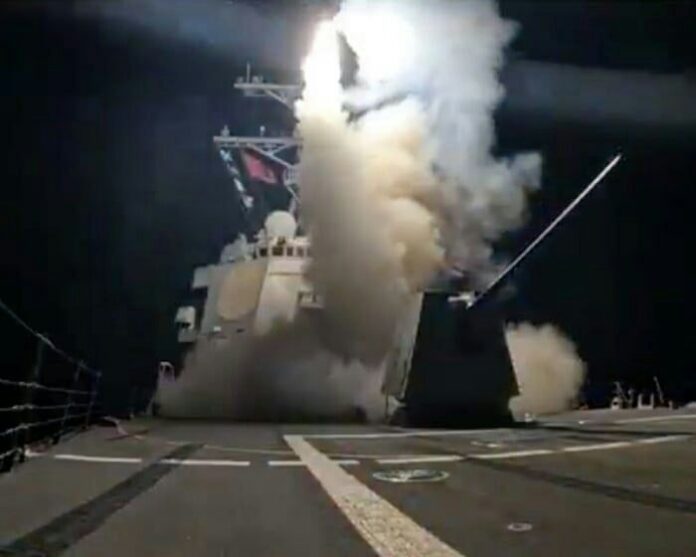
The recent air strike carried out through cooperation between the Nigerian government and the United States is, in the context of Nigeria’s current security realities, a welcome intervention. The country is presently confronted not by a single insurgent group, but by multiple terrorist factions and splinter networks whose operations have overwhelmed internal security mechanisms and devastated communities, particularly at the grassroots.
From a pragmatic security and governance perspective, international collaboration in counterterrorism is neither unusual nor inherently problematic. Terrorism has evolved into a transnational phenomenon, requiring intelligence sharing, advanced technology, and coordinated responses that often exceed the capacity of a single state acting alone.
READ ALSO: Trump recalls US ambassador to Nigeria
It must be acknowledged, without academic pretence, that the United States, like all major capitalist powers—does not engage in security cooperation without strategic interest or anticipated gain. This reality, however, should not distract from the more pressing concern: Nigeria’s persistent insecurity despite abundant internal resources. In my view, it is preferable to collaborate with an external partner pursuing its interests than to remain in a system where national resources are controlled by a few while insecurity continues to threaten the lives of the many.
Between these two options, carefully managed collaboration appears to be the more rational and defensible choice. At the very least, such cooperation directly confronts terrorist groups whose activities have crippled local economies, displaced populations, and weakened governance structures across several regions.
Nevertheless, collaboration must not amount to abdication. Security cooperation should remain Nigerian-led, intelligence-driven, and strategically coordinated, with clear boundaries that preserve sovereignty and national ownership. Military action alone cannot deliver lasting peace; sustainable security requires strengthening local governance, improving resource accountability, and rebuilding public trust.
Equally important is the management of public communication. While citizens deserve reassurance, security operations should not be sensationalised. Terrorist groups thrive on attention, publicity, and psychological impact. Effective security governance, therefore, balances transparency with strategic discretion.
In conclusion, while no foreign power acts without interest, it is better to collaborate wisely than to continue in a situation where internal mismanagement allows insecurity to flourish. The U.S.–Nigeria air strike should be understood as a tactical response within a broader peace and governance framework. Its true value will be measured by its contribution to restoring stability, strengthening institutions, and reducing the appeal of violence.
Follow the Neptune Prime channel on WhatsApp:
Do you have breaking news, interview request, opinion, suggestion, or want your event covered? Email us at neptuneprime2233@gmail.com