


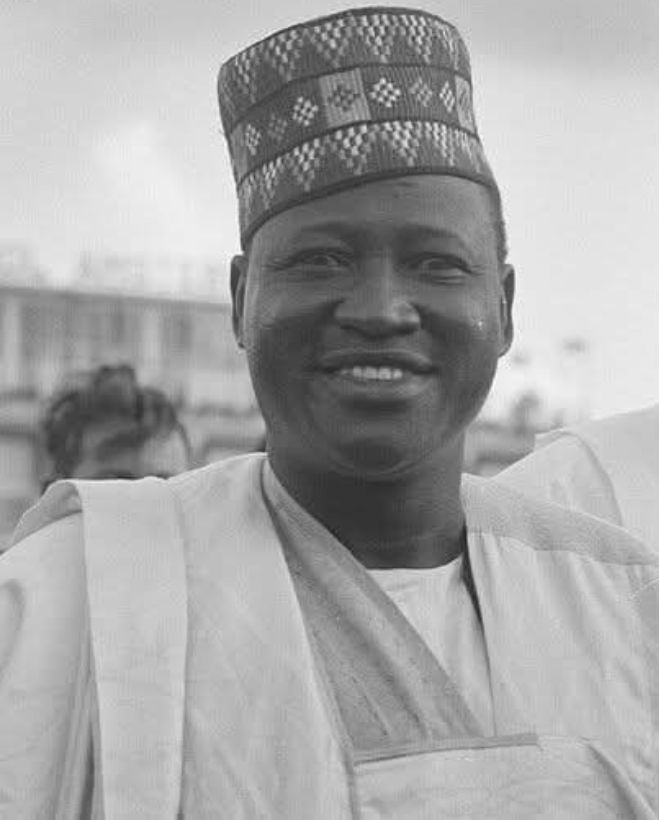
The Story Behind the “Zanna Bukar Cap”: How a Northern statesman became a symbol of leadership, by Tijjani Sarki
While gisting with my children this evening, I casually threw a simple question to them: “Do you know the history behind the famous Zanna Bukar Cap?”
The answer was an immediate “No.”
After several attempts to help them guess correctly, there was still no success. At that moment, I became deeply sceptical of how much of our rich Northern and Nigerian history is gradually fading away from the minds of our younger generation. Many of our children and youth proudly wear or recognise certain cultural symbols without knowing the remarkable personalities and stories behind them.
It is for this reason that I feel compelled to place this story before thousands of young Nigerians, so they may understand that the famous “Zanna Bukar Cap” was not merely a fashion identity, but a symbol connected to one of Northern Nigeria’s finest statesmen, Zanna Bukar Dipcharima.
From Borno to National Prominence
Born in 1917 in Dipchari village in present-day Borno State, Dipcharima came from a respected Kanuri family. His father, Lawan Dipchari, served as a District Head, exposing him early to the responsibilities of leadership and community service.
Unlike many elite politicians of his era, Dipcharima’s early career began in education. After attending Maiduguri Middle School and Katsina Higher Training College, he worked as a teacher across Northern Nigeria between 1938 and 1946.
READ ALSO: Tribute to Alhaji Zanna Bukar Dipcharima
Those years shaped his disciplined approach to public service. Teaching gave him a deep understanding of society, administration, and the importance of human development, values that later defined his political career.
A Nationalist Before Regional Politics
Dipcharima’s political journey first took shape through the NCNC, led by Nnamdi Azikiwe. In 1947, he joined the historic Nigerian delegation to Britain that advocated constitutional reforms and greater Nigerian representation.
This period revealed his broader nationalist outlook. He belonged to a generation of Nigerians determined to end colonial dominance and build indigenous political institutions.
Although he later left politics briefly to work with John Holt & Co., a British trading firm, his administrative competence and growing influence soon attracted the attention of the Northern People’s Congress (NPC).
By 1954, he was invited to lead the NPC in Borno Province, marking the beginning of his rise as one of Northern Nigeria’s most influential political voices.
The Administrator Who Challenged Corruption
As a member of the Borno Native Authority system, Dipcharima became known for promoting accountability and administrative reforms. At a time when local governance structures struggled with inefficiency and patronage politics, he earned respect for discipline and integrity.
In 1956, he assumed the traditional title of “Zanna” after becoming head of the Yerwa District, a development that strengthened both his political and cultural authority.
This blend of traditional leadership and modern governance became one of his defining characteristics.
Building Nigeria’s Economic Future
Dipcharima’s greatest national impact arguably came during his service in the Federal Government.
After becoming Parliamentary Secretary in the Ministry of Transport and later Minister of State, he eventually rose to become Federal Minister of Commerce and Industry.
At independence, Nigeria’s economy remained heavily dominated by British commercial interests. Dipcharima believed genuine independence required economic diversification, industrial development, and broader international partnerships.
In 1963, he travelled to the United States to encourage American firms to invest in Nigerian industries and manufacturing. He promoted Nigeria as a favourable investment destination, offering tax incentives and emphasising opportunities for industrial expansion.
His vision was bold and forward-looking. Long before economic diversification became a national slogan, Dipcharima already understood that Nigeria could not rely solely on foreign-controlled trade structures.
He wanted Nigeria to become a producing nation, not merely a consuming one.
Leadership During National Turmoil
By 1964, Dipcharima became Federal Minister of Transport, overseeing transportation policies during one of the most fragile periods in Nigeria’s political history.
The crisis leading to the January 15, 1966, military coup eventually brought the First Republic to collapse. Following the abduction of Prime Minister Abubakar Tafawa Balewa, Dipcharima presided over the cabinet that transferred authority to the military.
It was a painful chapter in Nigeria’s democratic journey, but his conduct during the uncertainty reflected calmness, institutional loyalty, and responsibility.
How the “Zanna Bukar Cap” Became an Identity
Perhaps one of the most enduring aspects of his legacy is the famous cap that became synonymous with his personality.
Dipcharima consistently wore a distinctive Yemeni cap during public appearances, political meetings, and official engagements. Over time, the style became widely admired across Northern Nigeria, particularly among Hausa communities.
Eventually, the cap earned a popular identity of its own, the “Zanna Bukar Cap.”
What began as a personal fashion preference transformed into a cultural symbol associated with elegance, authority, and leadership. Even decades after his death, the cap remains recognisable in Northern traditional attire circles.
READ ALSO: Great leaders, intellectuals of Borno descent
It is rare for a politician’s personal style to evolve into a lasting cultural identity. Yet Dipcharima achieved exactly that.
A Legacy Worth Remembering
The tragic air crash that killed Zanna Bukar Dipcharima in 1969 ended the life of a statesman whose contributions to Nigeria extended far beyond politics.
Today, the headquarters of Nigeria’s Federal Ministry of Transportation in Abuja bears his name, a fitting tribute to a man who helped shape the nation’s transport and economic policies during its formative years.
Yet perhaps his greatest legacy lies in the values he represented: discipline, reform, patriotism, and visionary leadership.
At a time when public trust in leadership continues to decline, the story behind the “Zanna Bukar Cap” serves as more than nostalgia. It is a reminder that Nigeria once produced leaders who combined cultural identity with national purpose.
“Zanna Bukar Dipcharima was not famous because of the cap.
The cap became famous because of the man who wore it”.
Tijjani Sarki writes from the ancient city of Kano.
Email: responsivecitizensinitiative@gmail.com
Follow the Neptune Prime channel on WhatsApp:
Do you have breaking news, interview request, opinion, suggestion, or want your event covered? Email us at neptuneprime2233@gmail.com