


The Timeless Majesty of Baalbek: Lebanon’s city of grandeur and civilisation, by Falmata Ma’aji Muhammad
Story by Falmata Ma’aji Muhammad (Student at Helwan University, Cairo, Egypt)
Baalbek is an ancient city in Lebanon located in the eastern part of Lebanon’s Beqaa Valley. It is renowned for its massive Roman temple ruins, most notably the Temple of Jupiter and the Temple of Bacchus.
The complex of temples at Baalbek is located at the foot of the south‑west slope of Anti‑Lebanon, bordering the fertile plain of the Bekaa at an altitude of 1150 meters.
These monumental structures stand as enduring symbols of the city’s grandeur and its pivotal role in the history of civilisations.
Historical Storyline
Baalbek began as a sacred Phoenician site before the Greeks renamed it Heliopolis, the “City of the Sun.” It flourished under Roman rule, with colossal temples like Jupiter and Bacchus showcasing unmatched grandeur.
READ ALSO: Angkor Wat: Where ancient monuments tell the story of Cambodia’s past, by Falmata Ma’aji Muhammad
As Christianity spread, the city’s sacred spaces were reshaped, and later, the Arab conquest in the 7th century introduced Islamic influence, marked by the Umayyad Mosque.
Over time, Baalbek endured Mongol invasions and devastating earthquakes, leading to decline under Uthman and modern periods. Its ruins continue to echo the voices of empires, faiths, and civilisations that once thrived there.
Cultural Significance
In 1984 Baalbek was added to UNESCO as a city of cultural and architectural importance, signifying its background history and enduring legacy.
During its civilisation, it became a ground floor for hosting the international music festival, where artists from around the globe perform. Through all changes and challenges, Baalbek still stands as Lebanon’s proud heritage.
Tourist Site and Architecture
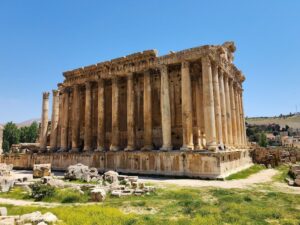
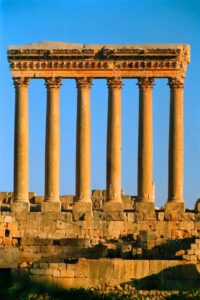
The first stop is usually the Temple of Jupiter, where six colossal columns rise nearly twenty meters high, a breathtaking reminder of Roman power and engineering. Just beside it, the Temple of Bacchus impresses visitors with its intricate carvings and remarkably preserved structure, offering one of the finest examples of Roman temple design in the world.
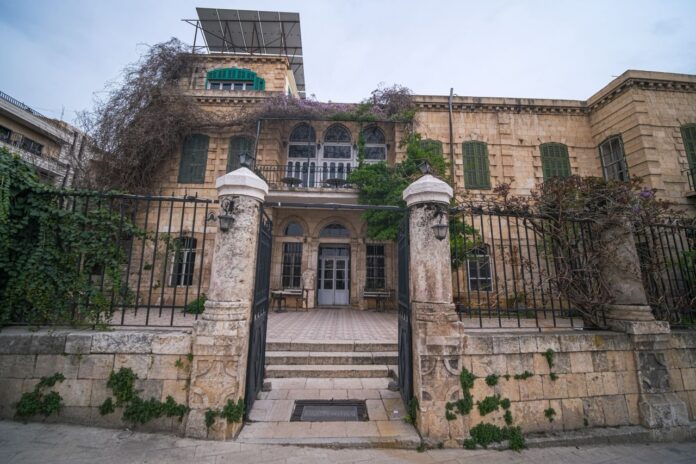
Next is the Hotel Palmyra, a 19th-century landmark that has hosted explorers, writers, and dignitaries.
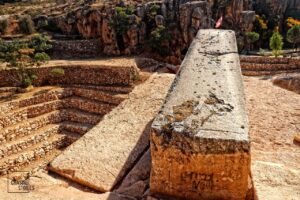
Nearby lies the famous Stone of the Pregnant Woman, a massive ancient monolith weighing over 1,000 tons, considered one of the largest stones ever quarried.
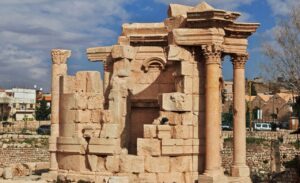
The Temple of Venus, also known as the Round Temple, is another highlight of the complex. Its unique circular architectural layout sets it apart from the grand rectangular temples, showcasing the diversity and creativity of Roman design in Baalbek.
Follow the Neptune Prime channel on WhatsApp:
Do you have breaking news, interview request, opinion, suggestion, or want your event covered? Email us at neptuneprime2233@gmail.com