


Beasts of Burden: Exploring the historical importance of donkeys in human civilisation, by Fatima Ma’aji Muhammad
Story by Fatima Ma’aji MUHAMMAD (Student at Helwan University, Cairo, Egypt)
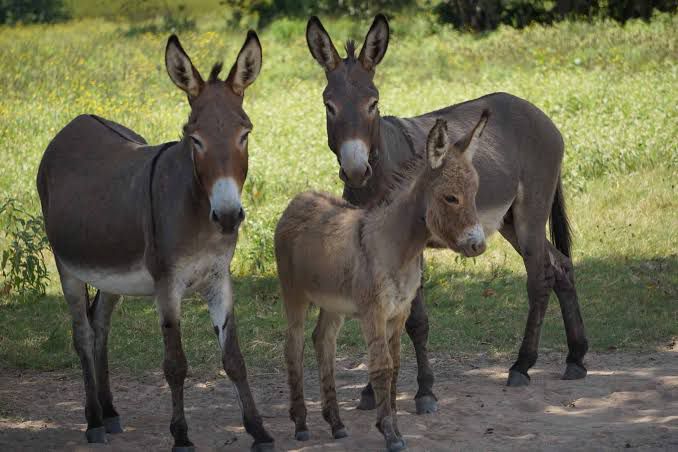
For thousands of years, donkeys have been close helpers to human beings. Even though they are small and simple animals, they have played a big role in farming, trade, and everyday life in many parts of the world.
The donkey or ass is a domesticated equine. It derives from the African wild ass, Equus africanus, and may be classified either as a subspecies thereof, Equus africanus asinus, or as a separate species, Equus asinus.
Donkeys were first trained and kept by people around 3000 BCE in North Africa, in places that are now called Egypt and Sudan. Old drawings on tomb walls and early writings show donkeys carrying heavy loads, helping farmers on their land, and walking in long trade caravans.
While horses were mostly used by kings and soldiers, donkeys were the animals of common people. Farmers and traders depended on them to move goods from one place to another. In early societies like Mesopotamia, donkeys helped make trade easier and more organised.
READ ALSO: Student rides donkey amid fuel price hike to portray Nigerian spirit of resilience
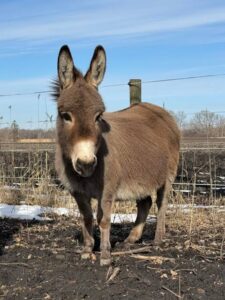
Even though donkeys are smaller than horses, they are very strong and hardworking. They can carry heavy items, about a quarter of their body weight and still walk long distances without getting tired quickly.
Their hard hooves help them walk safely on rocky and dry ground. This made them very useful in desert and dry areas where other animals could not survive easily.
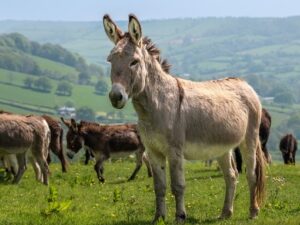
For many centuries, donkeys helped plough fields, carry harvested crops, and transport water and supplies. Big trade routes like the Silk Road and the trans Saharan routes depended on them.
Many cultures see donkeys as symbols of patience and humility. They are not truly stubborn; they are careful and smart animals. Even today, donkeys are still important in many rural communities around the world.
READ ALSO: Exploring the Fascinating Tails of Wildlife: 10 animals with the most unique tails
There are more than 40 million donkeys in the world, mostly in underdeveloped countries. While working donkeys are often associated with those living at or below subsistence, small numbers of donkeys or asses are kept for breeding, as pets, and for livestock protection in developed countries.
An adult male donkey is a jack or jackass, an adult female is a jenny or jennet, and an immature donkey of either sex is a foal. Jacks are often mated with female horses (mares) to produce mules; the less common hybrid of a male horse (stallion) and jenny is a hinny.
Follow the Neptune Prime channel on WhatsApp:
Do you have breaking news, interview request, opinion, suggestion, or want your event covered? Email us at neptuneprime2233@gmail.com