

Tripoli, Libya: An ancient city shaped by religion, power, and enduring civilisation, by Falmata Ma’aji Muhammad
Story by Falmata Ma’aji MUHAMMAD (Student at Helwan University, Cairo, Egypt)
Tripoli is an ancient city with an echo of culture. It carries stories that live across its long-lasting history. With many places of heritage, it bears the footprints of colonisation, Islamic architecture, and centuries of civilisation.
Location and Population
Tripoli, the capital and largest city of Libya, lies on the Mediterranean coast in the country’s northwest. With a population of about 1.2 million people, it serves as Libya’s political, cultural, and economic centre.
Ancient Echoes
The Romans left their mark with the Arch of Marcus Aurelius and the grand theatre that once entertained thousands. These monuments remind readers of Tripoli’s role as a vital Mediterranean hub. Later, Islamic dynasties and Uthman rulers added mosques and palaces, while Italian colonisers introduced European-style buildings, weaving together a mosaic of influences that still define the city today.
Landmarks of Legacy
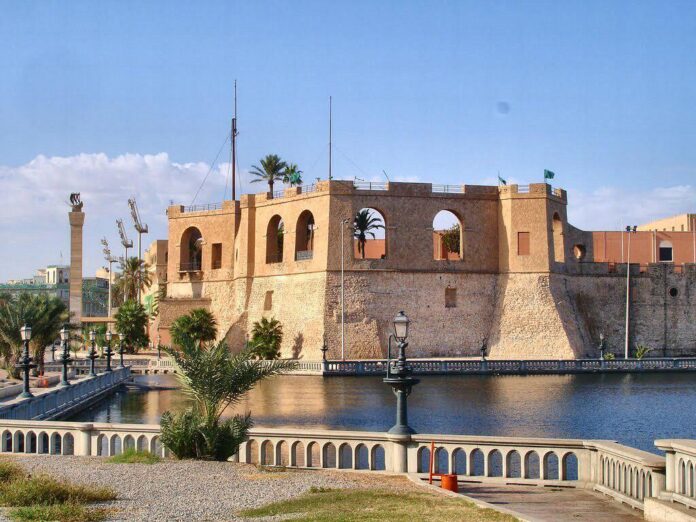
Walking through Tripoli, the past rises from its stones. The Red Castle, a fortress by the sea, embodies centuries of defence and heritage. The Gurgi Mosque and Karamanli Mosque reflect Uthman artistry and devotion, while the Tripoli Cathedral, built during Italian rule, stands as a reminder of colonial influence and cultural diversity.
READ ALSO: Luxor: The timeless artistic capital of ancient Egypt, by Falmata Ma’aji Muhammad
The Living Medina
The Medina, or Old Town, is a living museum of winding streets, vibrant bazaars, and Uthman-era houses. Here, the scent of spices mingles with the hum of daily life. The National Museum of Libya, housed in the Red Castle, preserves artefacts from Roman, Greek, and Islamic civilisations, while the bustling Souq al-Jum’a offers textiles, crafts, and local produce that capture the spirit of Libyan tradition.
The Gaddafi Era
Tripoli’s modern identity is inseparable from Muammar Gaddafi, who ruled Libya for over four decades. His rise to power in 1969 turned the city into the political stage of his regime. Green Square became the site of his fiery speeches and military parades, while monuments and government buildings reflected his ideology.
READ ALSO: Nigeria meets Egypt through football, by Falmata Ma’aji Muhammad
A City Shaped by Time
Today, Tripoli stands as a place where Roman arches whisper of empire, Uthman mosques echo with faith, and modern squares recall political drama. For travellers, it offers architectural wonders, cultural experiences, and a deeper understanding of Libya’s journey through time.
Follow the Neptune Prime channel on WhatsApp:
Do you have breaking news, interview request, opinion, suggestion, or want your event covered? Email us at neptuneprime2233@gmail.com