
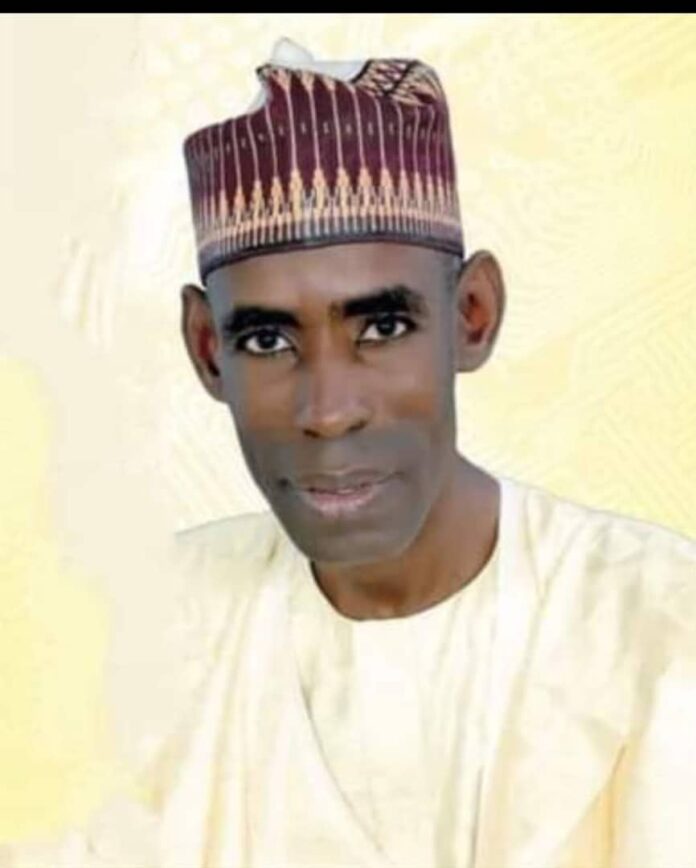
Political power, labour, and the Nigerian state, by Engr. Bello Gwarzo Abdullahi, FNSE
In a well-argued and timely essay, The Political Struggle and the State: Towards the Development of a Political Programme for the Nigerian Working Class, Ambassador Usman Sarki interrogates the persistent failure of the Nigerian working class to convert economic struggle into durable political outcomes. His central intervention is direct and unsettling: labour’s weakness does not arise from a lack of militancy, protest culture, or sacrifice, but from the absence of a coherent political programme and an independent organisational instrument capable of contesting state power. Nigerian labour remains locked in a reactive posture—responding to wage erosion, inflation, and austerity—rather than shaping the political and economic decisions that generate these conditions.
Drawing from the Marxist–Plekhanovite tradition, Sarki reinforces a foundational insight of political theory: economic struggle alone cannot emancipate labour. Political power is the decisive lever of social transformation. Without control—or at minimum, sustained contestation—of state power, labour’s victories remain temporary and reversible. Wage increases are rapidly neutralised by inflation, currency devaluation, subsidy withdrawals, and regressive fiscal policies formulated entirely outside labour’s influence.
Sarki’s critique of the Nigerian postcolonial state is particularly instructive. The state is not portrayed as a neutral arbiter but as a class instrument historically configured to protect elite accumulation. From structural adjustment to privatisation and contemporary neoliberal reforms, state policy has consistently facilitated the transfer of public wealth into private hands while deepening inequality, dependency, and social insecurity. Labour’s engagement with such a state, when restricted to negotiations and strikes, amounts to bargaining within a framework already stacked against it.
A crucial extension of Sarki’s argument concerns the deliberate weaponisation of ethnicity and religion. Identity politics has increasingly displaced class politics, fragmenting the working population and redirecting popular anger away from material exploitation. This has enabled elite factions to mobilise mass support without addressing shared economic grievances. Any serious labour-led political project must therefore confront identity politics—not by denying culture, but by subordinating it to a unifying, class-based programme rooted in common material interests.
READ ALSO: Rethinking Productivity: Beyond the hustle, by Engr. Bello Gwarzo Abdullahi, FNSE
Equally significant is Sarki’s recognition of the transformed composition of the working class. The Nigerian proletariat now extends far beyond formal wage earners to include informal workers, artisans, traders, transport operators, gig workers, and unemployed graduates—an expanded proletariat that constitutes the numerical majority of society. Yet this majority remains politically marginalised, under-organised, and ideologically disconnected from formal labour institutions. Traditional union structures, largely anchored in the public sector, have struggled to adapt to this structural shift.
Past labour-linked political interventions illustrate both possibility and limitation. While there have been moments of electoral relevance, these efforts have been episodic, personality-driven, and highly vulnerable to elite capture. Weak ideological clarity, organisational fragility, and poor alliance-building have prevented labour from consolidating power or exercising sustained political influence.
The way forward, therefore, requires a strategic rupture. Labour must transition from defensive economic activism to proactive political leadership. This entails:
* Developing a clear, culturally grounded political programme addressing employment, industrialisation, public services, fiscal justice, democratic reform, and economic sovereignty.
Follow the Neptune Prime channel on WhatsApp:
Do you have breaking news, interview request, opinion, suggestion, or want your event covered? Email us at neptuneprime2233@gmail.com