
The enduring relevance of Eggon traditional norms despite colonialism and modernisation, by Tawheed Yakub
The Eggon people of Nigeria are a resilient and culturally rich ethnic group, renowned for their deep sense of community, strong moral values, and enduring traditions passed down through generations.
Known for hard work, discipline, and social harmony, the Eggon have maintained a strong cultural identity despite migration, colonial influence, religious change, and the pressures of modern life.
They are predominantly found in Nasarawa State, especially in Lafia, Akwanga, Nasarawa Eggon, and surrounding areas, occupying a landscape of rolling hills, rocky outcrops, and fertile plains.
These environments have shaped their agricultural practices, settlement patterns, and communal lifestyle.
Over centuries, the Eggon people have contributed significantly to the cultural, social, and economic development of the Middle Belt region, holding firmly to traditions that emphasise respect for elders, collective responsibility, and unity.
Historical Background and Origin
Eggon history is preserved mainly through oral traditions, folktales, clan histories, and ancestral narratives. Linguistically, the Eggon language belongs to the Benue–Congo branch of the Niger-Congo language family, linking them to other Middle Belt ethnic groups.
Traditionally, the Eggon lived in compact hill and plain settlements organised around clans and extended families. These settlements offered security and promoted cooperation in farming, defence, and social life.
The Eggon interacted historically with neighbouring groups such as the Alago, Mada, Tiv, and Hausa, engaging in trade, cultural exchange, and intermarriage while preserving a distinct Eggon identity.
Leadership was traditionally vested in clan heads, elders, and ritual leaders, respected for wisdom, integrity, and experience. They regulated land use, marriage customs, dispute resolution, farming seasons, and communal obligations.
Read also: Bound by Heritage: Explore the communal unity and resilience of the Kanakuru tribe, by Tawheed Yakub
Despite the impact of colonial administration, these traditional institutions remain relevant today.
Ceremonies and Cultural Practices
Eggon culture is communal, disciplined, and value-driven. Life centres on family, clan, and village, with clearly defined responsibilities for men, women, youth, and elders.
Cooperation in farming, house building, ceremonies, and communal labour is a defining feature of Eggon society.
The Eggon language plays a central role in identity, expressed through proverbs, songs, storytelling, and ritual expressions.
Oral traditions preserve history, ethics, and social conduct, emphasising honesty, bravery, hospitality, respect for elders, and loyalty to the community.
Today, Christianity is predominant, alongside Islam and remnants of traditional beliefs. These faiths often coexist with cultural customs. A common belief among the Eggon is that a person’s strength is rooted in family and community.
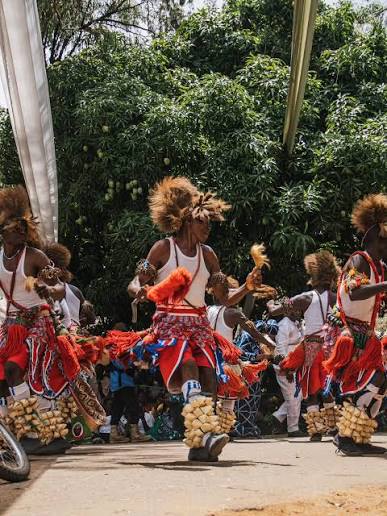
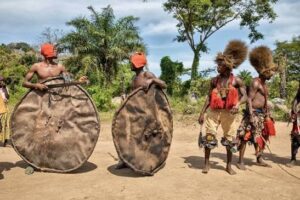
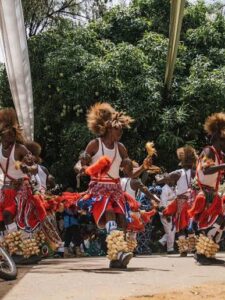
Cultural expressions include traditional music, drumming, flute performances, festivals, dances, and symbolic attire, all reinforcing unity, discipline, and moral upbringing.

Marriage Customs
Among the Eggon, marriage is regarded as a sacred social institution, binding not just individuals but entire families and clans.
Marriage processes involve family introductions, negotiations led by elders, bride price (often in farm produce, livestock, or symbolic items), blessings, and moral instruction for the couple. Ceremonies are marked by music, dance, and communal feasting.
Polygamy existed traditionally but has declined due to religious influence and economic realities. Today, marriages often combine traditional rites with Christian, Islamic, or civil ceremonies, reflecting cultural continuity and modern adaptation.
Socio-Economic Life
Agriculture remains the backbone of Eggon livelihoods. The people are skilled farmers, cultivating yam, guinea corn, maize, millet, cassava, rice, beans, and vegetables.
Livestock rearing, trading, pottery, blacksmithing, and weaving also form part of traditional economic life.
In modern times, Eggon men and women are active in education, civil service, politics, healthcare, entrepreneurship, and religious leadership, contributing meaningfully to Nasarawa State and Nigeria at large while remaining connected to their roots.
Modern Times
Like many indigenous communities, the Eggon face challenges such as urban migration, language decline among youth, land pressure, economic hardship, and cultural erosion. However, they continue to preserve their identity through cultural festivals, churches, mosques, traditional councils, community associations, and youth organisations.
Efforts to promote the Eggon language, document oral history, and celebrate cultural heritage remain strong.
Ceremonies and Cultural Practices
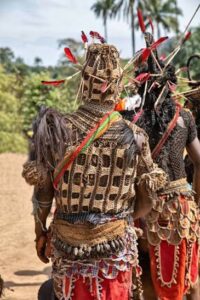
Eggon ceremonies reflect faith, unity, and respect for ancestry.
Key events include harvest celebrations, naming ceremonies, marriages, funerals, communal labour days, festivals, and elder-led conflict resolution gatherings. These practices reinforce values of hard work, respect, courage, cooperation, and social responsibility.
From the hills and plains of Nasarawa to modern cities across Nigeria, the Eggon people continue to demonstrate that tradition and modern life can coexist, sustaining a proud legacy built on resilience, unity, and cultural strength.
Follow the Neptune Prime channel on WhatsApp:
Do you have breaking news, interview request, opinion, suggestion, or want your event covered? Email us at neptuneprime2233@gmail.com