


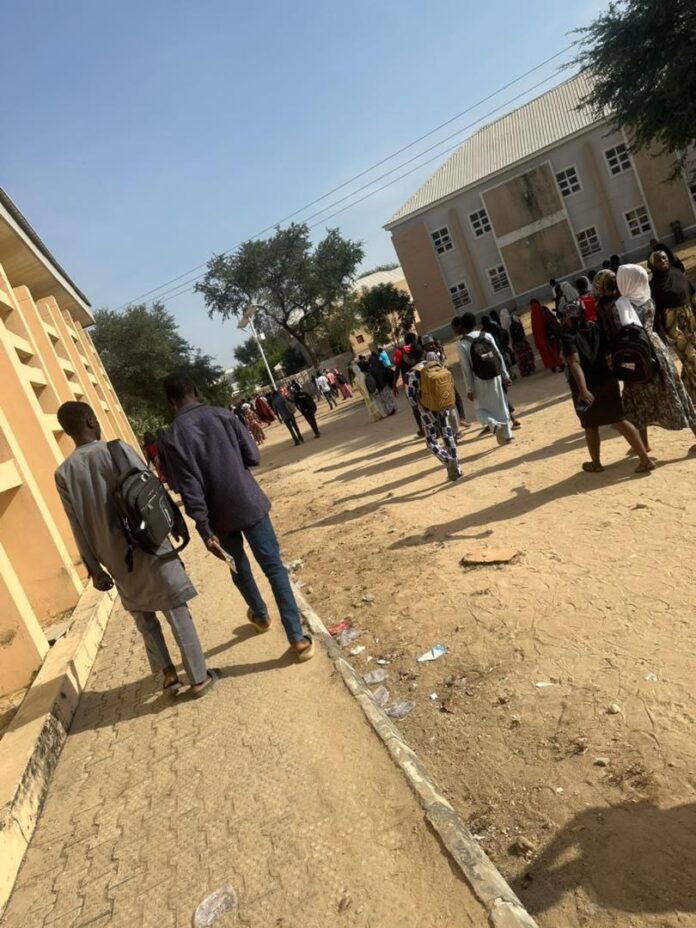
Delayed Return: How financial hardship is preventing many UNIMAID students from resuming, by Aisha Waziri Kidaji
As the academic session resumes at the University of Maiduguri, Borno State, many students are still absent from campus not out of laziness or lack of interest in education, but because of serious financial challenges.
For a large number of students, the cost of returning to school has become an overwhelming burden with school fees remaining one of the major obstacles.
With the recent hike in the cost of living, many parents and guardians are struggling to meet basic household needs, let alone afford tuition fees, departmental dues, and other compulsory charges.
READ ALSO: Aminu Waziri Tambuwal: Celebrating a man of many worlds at 60, by Ayuba Ahmad
For students from low-income backgrounds, obtaining these funds before resumption is often impossible. Accommodation is another pressing issue. The high cost of rent off-campus and limited hostel spaces on campus have made housing an unaffordable luxury for many students. In addition to rent, students are expected to pay for electricity, water, and transportation, further increasing their financial strain.
Transportation costs also play a significant role. Students travelling from distant states face rising transport fares, making the journey back to Maiduguri financially demanding. For some, transport alone costs as much as a semester’s allowance.
Beyond fees and transport, daily survival expenses such as food, textbooks, internet access, and medical needs cannot be ignored. Many students depend entirely on their families, who are themselves affected by economic hardship, insecurity, and unemployment.
These financial difficulties have forced some students to delay resumption, while others consider deferring their studies entirely. This situation threatens academic performance, mental well-being, and the future aspirations of students who are willing to learn but lack the financial means to do so.
Education is a right, not a privilege reserved only for those who can afford it easily. There is a need for increased support through scholarships, flexible payment plans, student loans, and expanded hostel facilities. Without meaningful intervention, many capable students risk being left behind not because they lack ability, but because they lack resources.
Aisha Waziri Kidaji studies Industrial Chemistry at the University of Maiduguri, Borno State.
Follow the Neptune Prime channel on WhatsApp:
Do you have breaking news, interview request, opinion, suggestion, or want your event covered? Email us at neptuneprime2233@gmail.com