

Eid-el-Kabir: Nigerians express mixed reactions over fluctuating ram prices nationwide
Story by Aisha Waziri Kidaji, Asma’u Yahaya Mustapha, Tawheed Yakub
As the 2026 Eid-el-Kabir draws nearer, market surveys conducted across Nigeria has revealed instability in the prices of food items and rams amid rising economic hardship across the country.
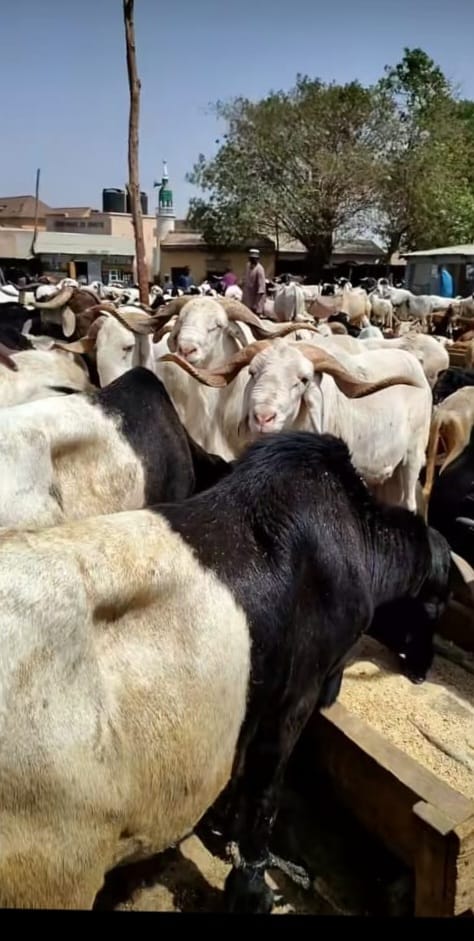
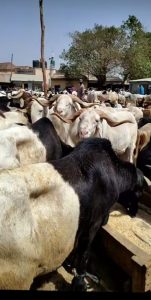
Market surveys conducted in Suleja, Borno and some parts of Katsina across several livestock markets show a slight decrease in the price of rams compared to last year, while the number of buyers has significantly increased.
In other axis, the rising cost of rams has become a major concern for many families planning for the celebration.
Investigations show that ram prices in Suleja markets are relatively cheaper this year. Medium-sized rams, which previously sold between ₦180,000 and ₦320,000, are now going for around ₦100,000 to ₦230,000, depending on size, breed, and condition.
Speaking with our correspondent, a livestock dealer, Alhaji Usman Bello, attributed the drop in prices to increased supply from northern parts of Nigeria and neighbouring countries.
“This year, the market is full of animals. We have more suppliers bringing rams from places like Sokoto, Zamfara, and even across the border. Because of that, we have to reduce prices so that sales will move,” he said.”
Another seller, Sadiq Mohammed, noted that while transportation costs are still a challenge, they are not as volatile as last year.
“Last year was very difficult because of fuel issues. Now, even though things are not perfect, movement is easier, so prices are not too high,” he explained.
In a twist that has surprised many traders, customer turnout has improved compared to last year. Many residents say the reduced prices have made it easier for them to purchase rams individually rather than in groups.
A buyer, Malam Lawal Adamu, expressed satisfaction: “I didn’t think I would be able to buy a ram this year, but when I came to the market, I saw prices I could afford. It’s better than last year.”
Another resident, Hajiya Rukayyatu, shared a similar sentiment: “We were expecting things to be worse because of the economy, but the prices are manageable. Many families are buying this time.”
The survey also observed a shift in purchasing behaviour. While joint contributions for a single ram remain common, more individuals are now buying their own animals due to improved affordability.
Some traders have also introduced flexible payment options, including partial payments and negotiated pricing, encouraging more people to make purchases earlier than usual.
Traders in Suleja anticipate that prices may rise slightly due to last-minute demand. However, the current market trend suggests that rams will remain more affordable compared to last year.
Overall, the Eid livestock market in Suleja presents a rare situation where increased supply and competitive pricing have outweighed economic pressures, resulting in higher participation among residents preparing for the festival.
Findings from major markets and price surveys across Borno shows a noticeable increase in the cost of rams compared to prices recorded during last year’s Sallah period. Small-sized rams, which sold for about ₦70,000 to ₦120,000 last year, are now estimated to cost between ₦100,000 and ₦200,000. Medium sized rams that previously sold within the range of ₦180,000 to ₦300,000 are now being sold between ₦300,000 and ₦500,000, while bigger rams now cost between ₦600,000 and over ₦1 million in some markets.
Livestock traders and market reports attribute the increase to several factors, including rising transportation costs, inflation, high feeding expenses and supply challenges affecting livestock movement from northern parts of the country to major markets.
The increase in prices is already affecting Muslim families preparing for the celebration. Some buyers are reportedly delaying purchases, while others are considering smaller animals or shared purchases due to financial pressure.
With Sallah drawing closer, many families hope prices may become more affordable, although traders suggest market conditions
may continue to influence costs in the coming days.
Buyers in Katsina decry high prices
On the other hand, ram sellers in Katsina have expressed concern over the sharp increase in the prices of rams compared to last year, a situation they say is affecting patronage and reducing the number of buyers in the market.
A market survey at a local livestock market in Katsina showed significant increases in the prices of small, medium, and large-sized rams.
According to findings from the survey, small-sized rams currently sell for about ₦150,000, compared to between ₦70,000 and ₦80,000 during last year’s Sallah period. Medium-sized rams now cost around ₦350,000, up from ₦200,000 last year, while large-sized rams are being sold for as high as ₦700,000, compared to about ₦500,000 in 2025.
Speaking with Neptune Prime, a ram seller, Malam Sani Abdullahi, attributed the increase in prices to the rising cost of feeding and maintaining livestock.
“Feeding the rams costs more now, and that is why the prices are higher this year,” he said.
He also noted that the number of buyers has dropped significantly compared to previous years due to the current economic situation.
“The number of buyers is significantly lower this year,” he explained. “The economy is affecting the purchasing power of people, so they are not buying as many rams.”
Buyers in the market were seen bargaining heavily with sellers, while others expressed concern over their inability to afford rams for the Eid sacrifice.
This price hike comes amid increasing economic challenges affecting many Nigerian households, with traders and buyers alike hoping for improved conditions in the coming months.
Follow the Neptune Prime channel on WhatsApp:
Do you have breaking news, interview request, opinion, suggestion, or want your event covered? Email us at neptuneprime2233@gmail.com