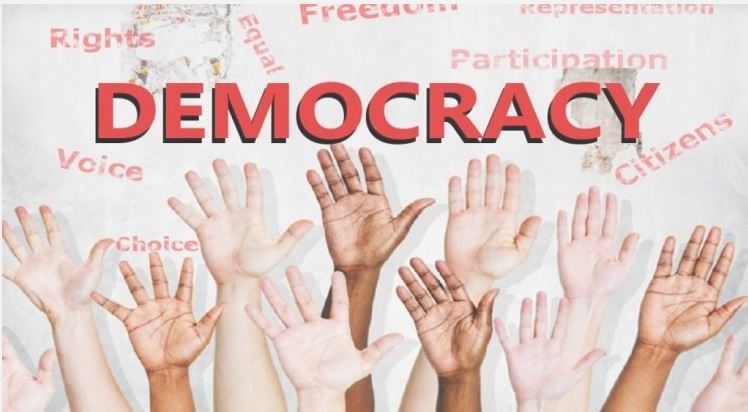
Democracy Under Strain: Abuse of the rule of law and the crisis of global leadership, by Love Obiani Arugu
Democracy, once celebrated as the most legitimate system of governance, is today under profound strain. Across continents, the threat to democratic order no longer comes primarily from military coups or overt authoritarian takeovers, but from a more insidious danger: the abuse of the rule of law by those entrusted to uphold it. This phenomenon has produced a global crisis of leadership and governance, hollowing out democratic institutions while maintaining the outward appearance of legality.
At the heart of democracy lies a simple but powerful principle: no one is above the law. The rule of law is meant to protect citizens from arbitrary power, guarantee fundamental rights, and ensure accountability. Yet, in many modern states, the law has been transformed into a political weapon. Constitutions are selectively interpreted, courts are pressured or captured, security agencies are deployed against political opponents, and emergency powers are normalised to suppress dissent. What emerges is not the absence of law, but its manipulation.
This trend is visible in both established and emerging democracies. In parts of Africa, Latin America, Eastern Europe, and even the Global North, elected leaders increasingly govern through legal coercion rather than popular consent. Opposition figures are arrested on questionable charges, protests are declared illegal under vague security laws, and electoral frameworks are adjusted to favour incumbents. These practices create what scholars describe as “legal authoritarianism”—a system where repression is cloaked in legality.
READ ALSO: When Justice Collides with Sovereignty: The U.S and Venezuelan leaders, by Love Obiani Arugu
The crisis is fundamentally one of leadership. Democratic leadership demands restraint, respect for institutional boundaries, and commitment to the public good. However, contemporary politics has elevated personal survival, elite interests, and power retention above democratic ethics. Leaders who fear accountability often undermine judicial independence and weaken oversight institutions. In doing so, they erode public trust and deepen political polarisation.
Equally troubling is the role of weak or compromised institutions. Where courts lack independence, legislatures are submissive, and civil society is constrained, the abuse of the rule of law becomes normalised. Citizens begin to view the law not as a shield but as an instrument of oppression. This disillusionment fuels apathy, radicalisation, and in extreme cases, violent resistance—further destabilising democratic systems.
The international dimension of this crisis cannot be ignored. Global governance structures often apply selective standards, condemning abuses in weaker states while overlooking similar practices among powerful allies. This inconsistency undermines the credibility of democracy promotion and international law. For many in the Global South, democracy increasingly appears less as a universal value and more as a geopolitical tool.
Yet, democracy under strain is not democracy defeated. History shows that democratic renewal often arises from moments of crisis. The path forward requires reclaiming the rule of law as a moral and legal principle, not merely a procedural tool. Judicial independence must be safeguarded, security agencies depoliticised, and constitutionalism strengthened. Most importantly, citizens must remain vigilant, engaged, and unwilling to surrender their rights in exchange for false promises of stability.
In conclusion, the abuse of the rule of law represents one of the gravest threats to democracy in our time. It signals a failure of leadership and a warning to societies across the globe. Democracy cannot survive where law serves power instead of justice. The challenge before the international community, national leaders, and citizens alike is clear: either restore the integrity of democratic governance, or risk witnessing its gradual collapse under the weight of legalised repression.
Follow the Neptune Prime channel on WhatsApp:
Do you have breaking news, interview request, opinion, suggestion, or want your event covered? Email us at neptuneprime2233@gmail.com