Finding order abroad, missing home within, by Falmata Ma’aji Muhammad
Have you ever wondered why studying in a Nigerian public university can be so difficult? From my own perspective, the main issue is a lack of organisation from all parties involved. I enjoyed my first year in Nigeria because I was part of everything and understood the language quite well. I loved
the social aspect of campus life, but the academic side was very challenging. There was little time management and many obstacles. For example, a class might be scheduled by a lecturer, but he could arrive half an hour late or sometimes the class would be cancelled altogether.
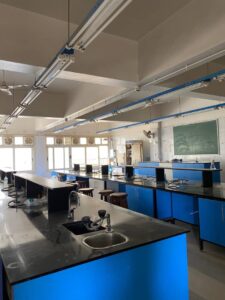
By contrast, my experience at Helwan University in Egypt has been very different. I believe everyone’s journey can be unique, but I am speaking only about mine in the Faculty of Pharmacy. During my three years of study here, we have always had a timetable, and not a single day has passed without a lecturer attending. If there is ever a cancellation, we are informed ahead of time, and even when clashes occur, they are managed properly. The lecturers are punctual and very aware of their responsibilities. As for facilities and equipment, they are managed well within a structured programme.
Another important difference is the attitude of lecturers toward students. Here in Egypt, lecturers genuinely care about their students and their performance. They carry out their duties responsibly and consistently. Being one of the few English speakers in my class, I have noticed how lecturers make an effort to balance between English and Arabic to be fair. On several occasions, they have reminded us that if we face any problems, we are free to meet them during office hours for further explanation. This level of support makes the academic environment feel more inclusive and encouraging.
READ ALSO: From tossing pills to pharmacy school, by Falmata Ma’aji Muhammad
On the clinical and practical aspects, it seems quite convenient and much easier for students to understand and get along. In a class of about 150 students, practical sessions are not conducted with everyone crowded into the same laboratory. Although we all have the same practicals scheduled on the same day, the class is divided into three groups. For example, if there are three practicals in a day, the 150 students are split into three groups for each course. Each group attends for the first few hours, then we rotate after two hours, repeating this three times. This arrangement gives us more room to concentrate, reduces overcrowding, and makes the sessions more effective.
However, my biggest challenge in Egypt is that it doesn’t feel like home, where I could easily be part of the social aspect of campus life. Because of language barriers which I am gradually improving, I often feel left out. The hardest part is being the only Nigerian in my year and just the second in the entire department. At times, the world feels small and isolating. While the academic environment is well-organised and supportive, the social and cultural adjustment has been far more difficult.
I believe my beloved country can do much better in many aspects, but the education sector should be prioritised above all, because it represents the future of the nation. Knowledge is the seed, and the outcome will be the fruit, it can be sweet or bitter depending on how well it is nurtured. By investing in education, we invest in the strength, progress, and prosperity of our society.
Falmata Ma’aji Muhammad studies Pharmacy at Helwan University, Cairo, Egypt.
Follow the Neptune Prime channel on WhatsApp:
Do you have breaking news, interview request, opinion, suggestion, or want your event covered? Email us at neptuneprime2233@gmail.com