


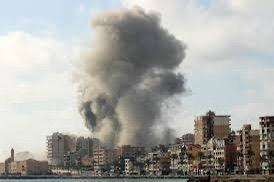
Iran, Israel trade fresh Missile attacks as fragile ceasefire nears collapse
Iran and Israel have exchanged missile strikes in a renewed escalation that is further straining an already fragile ceasefire agreement reached in April.
The latest confrontation began after warnings from Tehran that Israel must halt its ongoing military operations in Lebanon or face continued retaliation. In response, multiple waves of Iranian strikes hit Israeli territory on Sunday evening, with the Islamic Revolutionary Guard Corps (IRGC) describing the operation as the “beginning of a full week of continuous strikes.”
The escalation marks the first direct exchange of attacks between the two countries since the ceasefire took effect earlier in the year.
READ ALSO: Iran launches missile barrages on Israel after Beirut strikes as IRGC declares week-long campaign
According to Israeli authorities, the strikes followed earlier Israeli attacks on Hezbollah positions in southern Beirut. The Israeli Defence Forces (IDF) said those operations were carried out in response to rocket fire from Hezbollah into Israeli territory.
Before Israel’s counterstrikes, US President Donald Trump urged restraint, calling for both sides to avoid further escalation. He said the initial Iranian strikes did not cause casualties and suggested that both countries had already “had their fun,” warning against further retaliation.
Despite these appeals, the IDF later confirmed it carried out strikes on military targets inside Iran, including facilities in western and central regions. Explosions were reported in cities such as Tehran, Tabriz, and Isfahan, while an Iranian petrochemical facility in Mahshahr was also reportedly hit.
READ ALSO: Iran’s ‘Monster Missile’ that exposes Israel’s weakness
Iran has maintained that the ceasefire arrangement involving the United States and Israel should extend to Lebanon, while Israel insists its military campaign against Hezbollah in Lebanon is not covered by the truce and will continue.
The renewed exchange of fire has heightened fears of a wider regional conflict in the Middle East. International actors, including the European Union and Canada, have called on both sides to exercise restraint and prevent further escalation.
Follow the Neptune Prime channel on WhatsApp:
Do you have breaking news, interview request, opinion, suggestion, or want your event covered? Email us at neptuneprime2233@gmail.com