


Gidan Makama Museum: Inside Kano city’s rich heritage and enduring cultural significance, by Asma’u Yahaya Mustapha
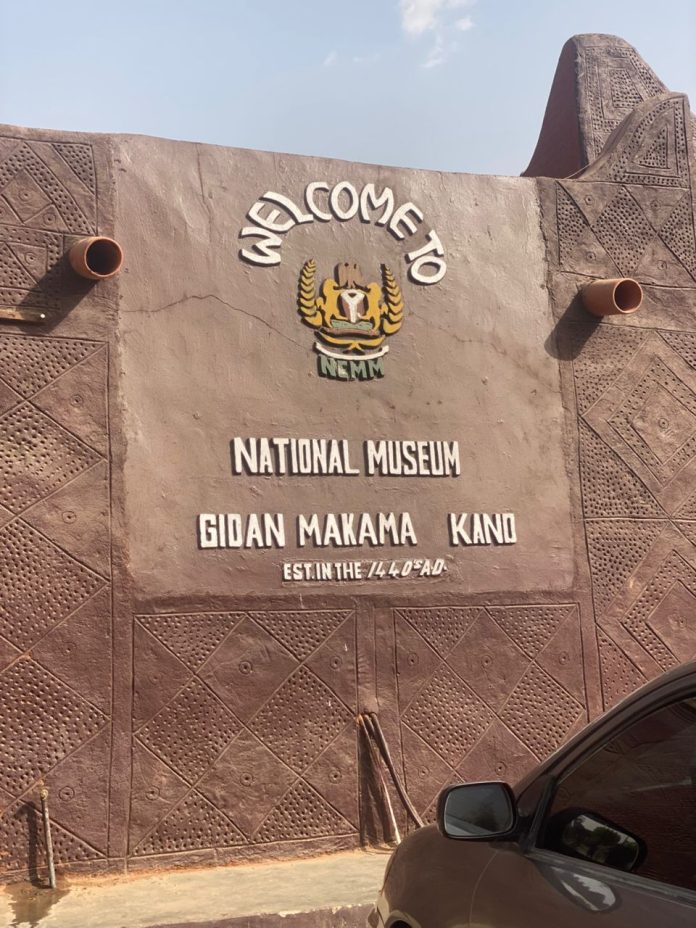
Nestled within the ancient city of Kano, Gidan Makama Museum stands at the heart of Kano’s old city as one of Nigeria’s oldest cultural landmarks.
Beyond its mud walls and traditional architecture lies centuries of history that continue to shape cultural identity in Northern Nigeria.
History
Originally built in 1442 AD by Emir Abdullahi Dan Rumfa (Abdullahi Burja) as the residence of his grandson Rumfa (later Emir Rumfa), the mud-brick palace served as the seat of the Makama (a senior emirate chief) for centuries.
After the British conquest of Kano in 1903, the building was briefly used as colonial offices, then later divided into a school, a residence and a museum section. It was declared a National Monument in 1959 and officially converted into a public museum in 1985.
Today the museum is managed by Nigeria’s National Commission for Museums and Monuments (NCMM) and is recognised as a tangible link to Kano’s past.
Significance to Kano’s Rise
Gidan Makama’s history reflects Kano’s rise as a Hausa kingdom. The site began as a 15th-century palace in the era of Muhammad Rumfa (Emir 1463–1499), who moved the royal court nearby but retained the old residence for his Makama.
Local tradition and research confirm its age – one curator notes the house was “built in 1442 AD by the sixteenth King of Kano”.
For over four centuries, it was a centre of traditional power. In 1903 the British captured Kano and repurposed the palace as colonial offices. By the mid-20th century, the Department of Antiquities stepped in: in 1959 Gidan Makama was gazetted as a national monument.
The final transformation came in 1985 when the surviving wing was outfitted as a state museum for Kano. (The other sections became a school and private quarters.) These milestones – construction, monument status, and museum opening, mark its formal history.
Traditional Architecture
The museum’s structure is a textbook example of Hausa–Sudanese architecture. Thick sun-dried mud walls, timber columns and decorative plasterwork combine in an intricate plan of interlocking rooms and courtyards.
Its 15th-century marvel design has earned it National Monument status. The layout includes the Zaure (main reception hall) at the entrance, which is adorned with carved wooden beams and historical maps of Kano.
Beyond, a sequence of halls and chamber galleries radiates around open courtyards. As the MoMAA guide notes, the palace “echoes the architectural sophistication of the era” and retains its original mud-brick walls despite some later renovations.
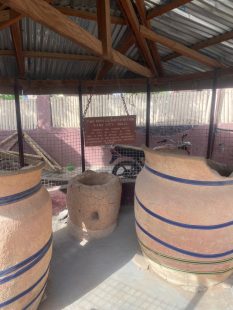
Even the heavy entrance gates are themselves exhibits: they display pots unearthed at the old city gate (Kofar Kabuga) and two 19th-century colonial cannons. In short, the building’s very fabric – from earthen walls to carved doorways is part of Kano’s living heritage.
Collections and Exhibits
Inside, Gidan Makama’s eleven galleries present Kano’s cultural legacy. The museum houses an impressive collection of arts, crafts and historical artefacts related to the region’s past.
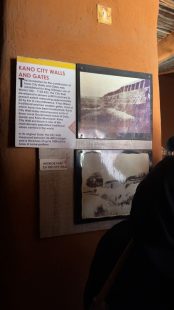
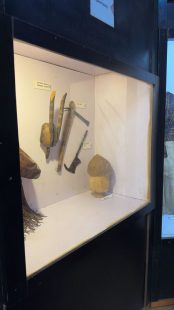
Exhibits cover a range of themes: traditional architecture with building materials on display, Kano’s walls and gates, the Fulani conquest in the 19th century, the colonial period and more.
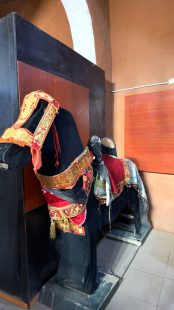
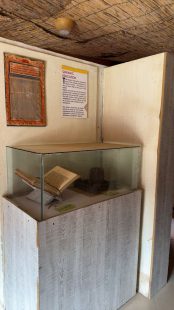
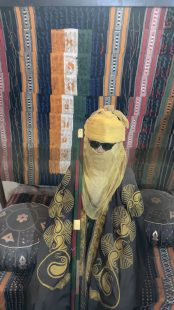
Key galleries include the Zaure–showing city maps and royal symbols and rooms devoted to statecraft, economy and music. Artefacts include Kanawa musical instruments, local textiles, farming tools, historical costumes and photographs. Notable treasures are the royal sandals, slippers and ostrich-feather fan introduced by Emir Muhammad Rumfa in the 15th century.
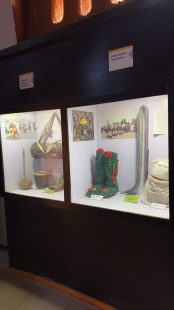
Other highlights are architectural fragments, tribal costumes and relics of the city’s traditional industries. The museum even stages live performances: its central courtyard doubles as an open-air stage for the Koroso dance and drama troupe. Each gallery offers a “portal” into a different chapter of Kano history.
Preservation and Modern Relevance
Today, Gidan Makama Museum serves as both a tourist attraction and an educational centre. Located near Kano’s historic Emir’s Palace, it forms part of the city’s rich heritage landscape, which includes the ancient Kano City Walls on UNESCO’s Tentative World Heritage List.
Managed by the National Commission for Museums and Monuments (NCMM), the museum welcomes students, researchers and visitors interested in Hausa history and culture.
Despite Kano’s rapid urban growth, the museum’s centuries-old mud walls remain intact, offering a glimpse into the city’s past. Its galleries, cultural events and historical collections continue to connect new generations with the traditions of the old Kano Emirate.
Written by Asma’u Yahaya Mustapha (Student at Al-Qalam University, Katsina).
Follow the Neptune Prime channel on WhatsApp:
Do you have breaking news, interview request, opinion, suggestion, or want your event covered? Email us at neptuneprime2233@gmail.com