


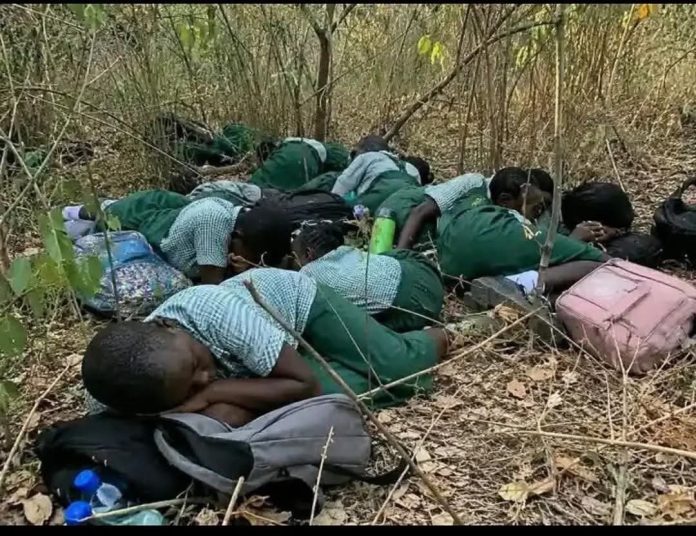
Children as Prey: Nigeria’s devastating school attacks in the first half of 2026, by Martha Gwary
From Niger to Borno, Oyo and Zamfara, Nigeria’s schools have once again become theatres of fear. Barely halfway into 2026, attacks on educational institutions have left pupils missing, teachers abducted, communities traumatised and parents questioning whether schools remain safe places for learning.
The incidents, occurring across different regions of the country, underline the persistent security crisis confronting the education sector and the growing vulnerability of children and teachers.
St Mary’s Private Catholic Primary and Secondary Schools, Papiri, Niger State
Although the mass abduction at St Mary’s School occurred in late November 2025, its consequences dominated the opening months of 2026. More than 300 students and teachers had been kidnapped during the attack, forcing the closure of schools across parts of Niger State.
As schools reopened elsewhere in January, St Mary’s and many institutions in high-risk communities remained shut because authorities could not guarantee the safety of pupils and staff.
The lingering trauma from the Papiri attack became a symbol of the dangers facing education in northern Nigeria. Parents remained reluctant to send their children back to boarding schools, while many pupils lost months of academic activities.
READ ALSO: From Power to the Dock: The high-profile trials defining Nigeria’s anti-graft war, by Martha Gwary
Mussa Primary and Junior Secondary School, Askira-Uba, Borno State
In May, suspected Boko Haram and ISWAP fighters reportedly attacked Mussa Primary and Junior Secondary School in Askira-Uba Local Government Area. The assault reignited fears of insurgent violence targeting educational institutions in the North-East, a region that has endured years of attacks on schools and pupils.
The attack came amid renewed militant activities in several parts of Borno State, reinforcing concerns that schools remain soft targets despite years of military operations against insurgents.
Gwoza Community School Borno State
On 15 May, suspected Islamist militants attacked a school in Gwoza Local Government Area. In the aftermath, at least 42 schoolchildren were reported missing, triggering frantic search efforts by families and security agencies.
The incident once again evoked memories of previous mass abductions in the North-East and highlighted the continuing threat posed by extremist groups.
The disappearance of dozens of pupils sent shockwaves across the country and renewed calls for stronger protection of schools in conflict-prone communities.
READ ALSO: From Cartwheels to Calm-Downs: Goal celebrations that became national trends, by Martha Gwary
Community High School, Ahoro-Esinele, Oriire Local Government Area, Oyo State
One of the most shocking incidents of 2026 occurred on 15 May when armed men invaded Community High School in Ahoro-Esinele. The attackers simultaneously targeted two nearby primary schools, creating panic across the community.
Reports indicated that 39 students and seven teachers were abducted during the coordinated attacks. Other accounts placed the total number of victims at 46, most of them children between the ages of two and sixteen.
The raid forced many residents to flee their homes, while teachers later withdrew services in protest over worsening insecurity. The attack demonstrated that school violence was no longer confined to the insurgency-ravaged North-East but had spread to parts of the South-West.
Two Primary Schools in Ahoro-Esinele Community, Oyo State
The same coordinated assault that struck Community High School also affected two primary schools within the Ahoro-Esinele community. Armed men stormed the schools, causing confusion and forcing children to flee in different directions. Witnesses described scenes of terror as parents searched desperately for missing children.
The attack underscored the vulnerability of even the youngest pupils and exposed glaring gaps in school security arrangements.
READ ALSO: Nigeria’s Public Transport Gap: Daily struggles, fatigue, and dangerous journeys, by Martha Gwary
Off-Campus Student Residence, Kaura Namoda, Zamfara State
The latest incident occurred in June when gunmen abducted seven students from an off-campus student residence in Kaura Namoda. Although not a direct attack on a school compound, it further highlighted the dangers faced by students in Zamfara State, where banditry and kidnapping have become routine. One student escaped while efforts continued to rescue the remaining victims.
The abduction reinforced concerns that students remain targets even outside the classroom environment, with criminal gangs increasingly exploiting weak security structures.
Kidnap Scare Forces School Closures in the FCT and Parts of Nasarawa State
Beyond actual attacks and abductions, fear itself became a major disruption to education in 2026. In communities bordering the Federal Capital Territory (FCT) and neighbouring Nasarawa State, widespread reports and rumours of impending kidnappings triggered panic among parents, students and school authorities.
Several schools in satellite towns around Abuja and parts of Nasarawa temporarily suspended academic activities as anxious parents rushed to withdraw their children from classrooms. In some communities, attendance dropped sharply as fears of possible abductions spread through social media and word-of-mouth reports.
Although security agencies later moved to reassure residents and increase surveillance in affected areas, the episode highlighted the psychological impact of Nigeria’s insecurity crisis. Even where no actual abduction occurred, the fear of kidnapping proved sufficient to disrupt learning, force temporary school closures and deepen public anxiety about the safety of children in educational institutions.
The incident demonstrated how insecurity now extends beyond physical attacks. Across many communities, the mere rumour of kidnappers operating near schools is enough to empty classrooms, disrupt academic calendars and undermine confidence in the education system.
READ ALSO: Dying at Home: Why many Nigerians choose alternative care over hospitals, by Martha Gwary
Classrooms Under Siege
From Papiri in Niger State to Gwoza in Borno, from Ahoro-Esinele in Oyo to Kaura Namoda in Zamfara, and from the outskirts of Abuja to neighbouring communities in Nasarawa State, the story of 2026 has been one of fear, disruption and uncertainty.
Thousands of children have seen their education interrupted, while teachers and parents continue to live with the constant threat—or fear—of violence. The attacks and scares serve as a grim reminder that until schools are adequately secured, education in many parts of Nigeria will remain under siege, and the nation’s future generation will continue to pay the price for the country’s enduring security challenges.
Follow the Neptune Prime channel on WhatsApp:
Do you have breaking news, interview request, opinion, suggestion, or want your event covered? Email us at neptuneprime2233@gmail.com