


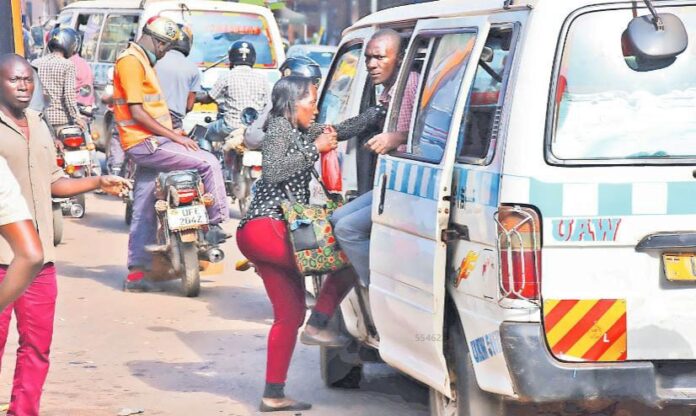
Nigeria’s Public Transport Gap: Daily struggles, fatigue, and dangerous journeys, by Martha Gwary
Every morning, long before offices open and factories hum to life, millions of Nigerians embark on a quiet struggle that rarely makes headlines. It is the daily commute — a ritual of uncertainty, exhaustion and risk — endured in silence by workers whose only aim is to arrive at their jobs on time and alive.
In cities such as Abuja, Lagos, Port Harcourt and Ibadan, the journey to work has become an ordeal shaped by the absence of an efficient public transport system. Although the provision of safe, affordable and reliable transportation is a core responsibility of government, the vacuum left by years of neglect has forced ordinary Nigerians to pay the price — financially, physically and psychologically.
For many workers, commuting now consumes a disproportionate share of their income. With no functional mass transit system, they depend on private commercial buses, taxis and motorcycles whose fares rise arbitrarily with fuel prices, scarcity of vehicles or even the time of day. A journey that once cost a few hundred naira can now swallow a significant part of a worker’s daily wage, leaving households to cut back on food, healthcare and education.
READ ALSO: Dying at Home: Why many Nigerians choose alternative care over hospitals, by Martha Gwary
A Daily Struggle
Beyond cost is the daily struggle to find a vehicle at all. At dawn, thousands gather at bus stops and makeshift motor parks, jostling for limited spaces. Tempers flare, dignity is bruised, and lateness becomes inevitable. Workers arrive at their offices already drained, having fought a battle simply to get there.
The insecurity attached to this daily movement is perhaps the most troubling aspect. Commuters are increasingly exposed to criminals who exploit overcrowded buses, poorly lit parks and isolated routes. Incidents of robbery, assault and abduction during early-morning or late-night commutes have become distressingly common.
For many Nigerians, the journey to work feels like an act of courage rather than routine.
READ ALSO: Gambling and the false promise of instant riches among young people, by Martha Gwary
One Step Forward, Two Backward
In the Federal Capital Territory, the irony is striking. The government has invested heavily in infrastructure such as the modern motor parks built in places like Kugbo and other parts of Abuja. These facilities, designed to bring order and comfort to urban transportation, stand as visible symbols of intent.
Yet, they remain largely underutilised for their true purpose because there are no government-owned buses to operate from them on a large scale.
Instead, commuters still rely on private operators who dictate fares and routes with little regulation. The absence of a coordinated public bus system means that these modern parks do not translate into relief for the average worker.
They are structures without a system — impressive in appearance, ineffective in impact.
READ ALSO: Homecoming to Death: The tragic fate of Nigerian returnees, by Martha Gwary
Health and Financial Consequences
The consequences of this failure ripple across the economy. Productivity suffers when workers spend hours stuck in traffic or stranded at bus stops.
Health deteriorates under the strain of long, stressful commutes. Family life is disrupted as parents leave home before dawn and return late at night, exhausted and frustrated.
Yet, Nigerians endure. They queue, they squeeze, they negotiate fares, and they pray for safety — all in silence.
READ ALSO: When Online Posts Become Fatal: Exposing the dark side of social media in Nigeria, by Martha Gwary
Endurance isn’t Acceptance
This quiet endurance should not be mistaken for acceptance. It is a symptom of resilience stretched to its limits.
A functional public transport system is not a luxury; it is a necessity for economic growth, social stability and human dignity.
Until government moves beyond building structures to providing services — affordable buses, regulated routes and secure commuting options — the silent commute will continue to define the daily lives of Nigerian workers.
And every morning, as the sun rises over crowded bus stops, the nation’s workforce will keep moving, quietly bearing a burden they should never have had to carry alone.
Follow the Neptune Prime channel on WhatsApp:
Do you have breaking news, interview request, opinion, suggestion, or want your event covered? Email us at neptuneprime2233@gmail.com