


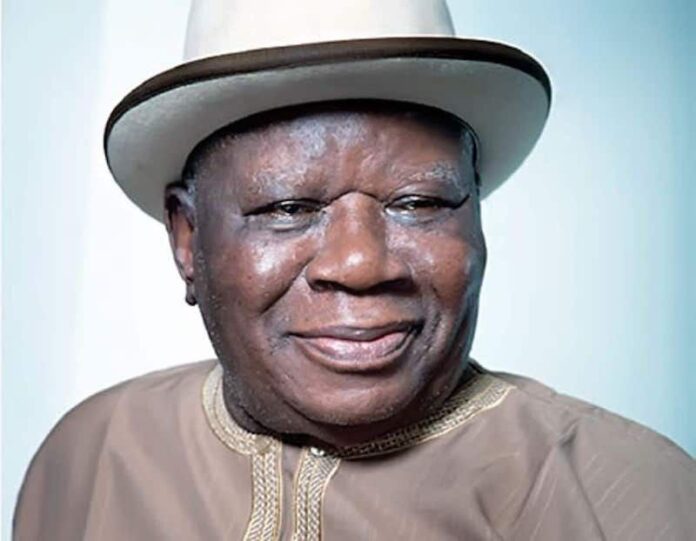
“Who Next Indeed: A Reality of Life,” the Iroko tree of the Niger Delta and the silence of the voiceless, by Love Obiani Arugu
Life, in its harsh honesty, eventually demands answers to questions we often postpone. One of such questions is “Who next?” a question that once sounded rhetorical, distant, even philosophical, but has now become painfully real with the passing of Chief Edwin Kiagbodo Clark, the Iroko tree of the Niger Delta and the uncompromising voice of the voiceless in Nigeria.
Who Next was the title of a book written in honour of Papa E.K. Clark, co-authored by Love Obiani Arugu, Chinelo Nwokolo, and Cletus Akenbor, as a tribute to his enduring legacy while he lived. Today, however, I write this piece personally, under the title “Who Next Indeed: A Reality of Life,” not as an academic exercise, but as a sober reflection on loss, leadership vacuum, and the frightening silence left behind by the death of a fearless advocate.
Papa E.K. Clark did not merely speak for the Niger Delta; he embodied its conscience. In an era when silence is often rewarded and compromise celebrated, he chose the lonely path of truth, justice, and resistance. He confronted power without apology, defended minority rights without fear, and remained unwavering in his belief that Nigeria could only survive through equity, justice, and respect for all regions.
His death has now turned a once-symbolic question into a national concern. Who next indeed? Who will rise to speak truth to power with the same moral authority? Who will challenge injustice without calculating personal cost? Who will defend the Niger Delta, not as a slogan, but as a lived responsibility?
Papa Clark was more than a regional leader; he was a national moral compass. He fought for resource control, environmental justice, federal equity, and the dignity of neglected communities long before these issues became fashionable in policy discourse. He spoke when it was dangerous to speak, and he remained consistent when many retreated into convenience.
The reality of his passing exposes a painful truth: voices like his are rare, and institutions have failed to produce successors of equal courage and credibility. His absence is not just biological; it is ideological, moral, and institutional. It raises urgent questions about leadership succession, intergenerational responsibility, and the culture of silence gradually consuming public advocacy in Nigeria.
Read also: Elder statesman Edwin Clark advises Wike to concentrate on FCT, leave Rivers alone
For the Niger Delta, his death is not merely the loss of an elder statesman; it is the loss of a shield. For the voiceless, it is the disappearance of a dependable defender. For the nation, it is a reminder that when principled voices die without replacement, injustice grows bolder.
Yet, who next indeed should not end in despair. Papa E.K. Clark’s legacy challenges scholars, activists, policymakers, and younger leaders to rise—not necessarily as replicas of him, but as carriers of his values. Courage must be institutionalised. Justice must be normalised. Advocacy must outlive individuals.
Reality teaches us that Iroko trees eventually fall. But wisdom demands that forests be raised, not mourned into silence.
Papa E.K. Clark has fought the good fight. The question before us is no longer theoretical.
Who next indeed? Has become the Reality of life’s journey.
Follow the Neptune Prime channel on WhatsApp:
Do you have breaking news, interview request, opinion, suggestion, or want your event covered? Email us at neptuneprime2233@gmail.com