
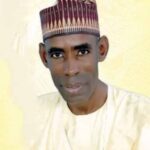
The Middle Belt trap, by
Engr. Bello Gwarzo Abdullahi, FNSE
In his provocative essay, “Is the Confusion of the ‘Middle Belt’ Coming Full Circle to Bite the ‘Middle Belt’?”, Cham Faliya Sharon argues that the “Middle Belt” is a geographically incoherent and politically self-defeating construct—one carefully amplified over time to erode Northern cohesion.
Long before colonialism, the peoples of present-day Nigeria were shaped by migration, commerce, and cultural exchange. Societies everywhere evolve through contestation and realignment; diversity is not inherently the problem, but rather how it is managed. What today’s rhetoric often obscures is that the Middle Belt narrative functions primarily as political leverage. It is less a settled identity than a bargaining tool—deployed to gain relevance, attract sympathy, and extract concessions.
Deep down, even its loudest advocates grasp a fundamental truth: when power is finally negotiated, their safest harbor remains the North. Even the bizarre “temporary excision” of five core Northern states—Kano, Katsina, Sokoto, Borno, and Bauchi—during the failed Orkar coup of 1990 now survives only as a tragicomic footnote. Nigeria moved on.
History is instructive. During the First Republic, Joseph Tarka’s United Middle Belt Congress (UMBC) aligned with the Action Group against the NPC, while Ibrahim Imam’s Borno Youth Movement and Aminu Kano’s NEPU similarly challenged Northern political dominance. Yet, the North did not fragment.
Then came 1966. Faced with an existential crisis, Northern factions closed ranks. Former rivals rediscovered a common purpose. This instinct for convergence under pressure has endured. The lesson is simple: the North may quarrel internally, but it unites when the stakes are highest.
READ ALSO: APC’s Atiku conundrum, by Engr. Bello Gwarzo Abdullahi, FNSE
Sharon’s critique hinges on four pillars:
First, the Middle Belt defies cartographic logic. Its boundaries shift opportunistically across states and local governments, producing a patchwork identity that cannot be honestly mapped. Geography is not optional. A resident of Auchi does not become Southern or Northern based on sentiment or religion; location is a physical reality.
Second, the central contradiction of the elite. Those who reject the “Northern” label are often the first to contest offices zoned to the North. One cannot disown a house and still demand a room within it; political privilege cannot coexist with selective belonging.
Third, Southern political engineering. When a Middle Belt figure secures federal office, they are branded “Northern” to sustain claims of Northern domination. Conversely, when it suits the moment, they are repackaged as “Middle Belters” to weaken Northern solidarity. Identity becomes a tactical switch.
Fourth, the logic of proximity. Immediate neighbours matter more than distant allies. Betting against Northern neighbours in favour of partners hundreds of kilometres away—who share no historical obligation to your welfare—is not strategy; it is political romanticism.
Applied to 2027, the question is unavoidable: after years of insisting they are not Northerners, how does one market a “Middle Belt” candidate to the North? You cannot repudiate a constituency for decades and then demand its trust at the ballot box.
READ ALSO: The Abba revolt, by Engr. Bello Gwarzo Abdullahi, FNSE
The larger truth is that disagreement does not equal disintegration. Even families quarrel; strength lies in the capacity for reconciliation. Despite its vast ethnic, religious, and cultural diversity, the North has repeatedly demonstrated this capacity. Its debates are real—sometimes noisy, sometimes bitter—but when core interests are threatened, alignment follows. That political muscle memory remains intact.
This is why portrayals of the North as irredeemably fractured ring hollow. It remains Nigeria’s most resilient political bloc, not because it lacks differences, but because it knows how to subordinate them to the collective interest.
As 2027 approaches, fixation on identity labels misses the point. The real emergencies are economic hardship, pervasive insecurity, and crushing living costs—burdens that do not discriminate by region. Nigeria’s task is not to recycle old fault lines, but to forge a broad coalition capable of delivering democratic change. This, and nothing else, should command the attention of Nigerians.
By Engr. Bello Gwarzo Abdullahi, FNSE.
Email: bgabdullahi@gmail.com
Follow the Neptune Prime channel on WhatsApp:
Do you have breaking news, interview request, opinion, suggestion, or want your event covered? Email us at neptuneprime2233@gmail.com